Translational Issues in Psychological Science (TPS) is a quarterly journal that is now a membership benefit for teacher affiliates in the APA. TPS can serve as an excellent resource in the classroom, or more generally, for keeping abreast of the latest developments in our field. Each issue is dedicated to translational research on a single theme drawn from across the field of psychology. The articles focus on relating basic science and clinical research to applied outcomes in educational, clinical, professional, and policy settings.
The topics covered by TPS can easily promote classroom discussion and integrate with an existing curriculum. For example, some of our upcoming special issues include the role of psychology in public policy, the coronavirus pandemic, global climate change, the impact of race, and creativity. Moreover, the journal has covered a range of topics in previous issues including language, sleep, humor, and even marijuana use. It is worth perusing the back issues for great supporting material for your existing curriculum or for ideas to expand to new topics of interest. TPS has also begun to accept General Topic articles that extend the reach of the journal by touching on topics that may not neatly fit into any of the special issue themes. In short, TPS is accessible to introductory or advanced students and can easily be integrated into your curriculum to demonstrate how psychological research in the laboratory translates to real world applicability and influence.
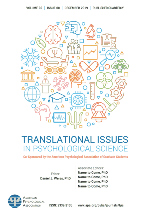 TPS also has a very unique training mission. TPS is the official journal of the American Psychological Association of Graduate Students (APAGS). Therefore, the topics for each of the special issues are chosen by the APAGS Science Committee in consultation with the editor and editorial board. Trainees (typically graduate students and postdocs) are able to glimpse behind the curtain of the publication process as they are involved in every aspect of publishing, at a much earlier stage in their career than is the norm. All submissions include at least one psychologist in training as an author. Moreover, trainees serve as reviewers and even associate editors, working alongside faculty guest editors who are experts in their respective fields. This experience can prove invaluable for promoting a much deeper understanding of the publication process, thereby filling a critical gap in many graduate training programs. Integrating TPS into the classroom can underscore the vibrance of psychology, demonstrating that students can make meaningful contributions to the field even early in their career.
As the new editor of TPS, I invite you to use our journal as a resource and feel free to get in touch if I can be of help. Instructions are available online on how teacher affiliates can access TPS.
About the author
 Daniel J. Weiss, PhD, is Professor of Psychology and Linguistics at Pennsylvania State University. Weiss is a graduate of University of Maryland and completed his PhD at Harvard University in Psychology through the program on Cognition, Brain and Behavior. He studies the cognitive abilities of human infants and adults, as well as non-human primates. One of his primary interests involves the cognitive mechanisms underlying language acquisition. This research focuses on statistical learning, the process of tracking distributional information in sensory input. This ability plays a role during development for learning sounds, words and other aspects of language acquisition. Dr Weiss' work has focused on issues relating to bilingualism, such as how learners track multiple patterns in the input. Weiss also investigates the commonalities between language and motor production, with an eye toward understanding the evolutionary origins of language. When not working, Weiss enjoys family time, photography, creative writing, his peloton, and when the stars align, a day out whitewater kayaking.