


skip to main content

Teacher Spotlight on Karen Brakke

Spelman College professor receives the 2025 American Psychological Foundation Charles L. Brewer Distinguished Teaching of Psychology Award
APA Style leaf logo Cite This Article in APA Style
American Psychological Association. (2025, August 11). Teacher Spotlight on Karen Brakke. https://www.apa.org/ed/precollege/psychology-teacher-network/spotlight/karen-brakke

What do you enjoy most about teaching psychology?
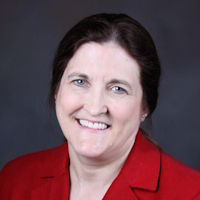
Karen Brakke Teaching lets me continuously learn, be creative, and interact with amazing colleagues at my institution and nationwide. At the heart of it, though, I love guiding students as they make connections, find meaning, and discover their paths forward while learning about psychology. Seeing the spark of joy or glimmer of dawning comprehension on a student’s face as they learn something new is really rewarding to me.

What course is your favorite to teach, and what about that course makes it your favorite?

My favorite course is whatever I am teaching at the time; I don’t really have one that stands out.  I have taught statistics, psychometrics, developmental psychology, learning and behavior, and research seminars multiple times and loved them all. In each course, I find things that excite or intrigue me, and I try to share that excitement with the students. If I teach a course for several semesters and start feeling ‘stale’ while teaching it, I switch to another course so that I can re-energize and share the love of discovery with that class. I’ve learned that if I’m not authentically excited about a course, chances are that my students won’t be either.

What does it mean to you to receive the APF Charles L. Brewer Distinguished Teaching of Psychology Award?

It’s very humbling to be nominated for and receive an award for doing the work that my peers and I do every day. At the same time, it gives me the opportunity to reflect on my career and affirm that all the work that I’ve done over the years has had meaning and purpose. That is a really good feeling. It’s also been nice to re-connect with several former students who have contacted me since the award was announced. Many of them have shared their success stories, and I’m honored that I could play a small part in their journeys.

You have a lot of experience studying animal cognition. How did you get into this area of research and how did you apply this knowledge to better understand human cognition?

Growing up, I was always interested in observing animal behavior and trying to imagine what their mental lives were like. I was fortunate to get an externship at the Language Research Center (LRC) in Atlanta during my senior year winter break in college, and then to work there full-time while I was in graduate school. It was fascinating to spend my days at the LRC learning from and communicating with great apes. The experience made me realize how complex and special human development is, with multiple factors interacting through nested timescales to support the emergence of a particular behavior or skill. I have carried this lens of systems-thinking with me through all of my subsequent research and teaching.

Given your depth of research experience and publications, what advice would you give to a recent graduate in psychology?

I know new graduates are facing a lot of challenges right now, but I think my advice for this generation remains the same as in recent years. Remember that everything you do contributes to who you are and what you bring to the table for the next opportunity. You may not end up on the direct professional path that you’d hoped for but you can learn something helpful from whatever you do. Learn to appreciate and communicate the connections between all your experiences—even the ones that you’ve already had in college and the ones that at first glance might not seem relevant to your goals. Those connections are what set you apart from all the other candidates for a grad program or job.

What do you hope students take away from your class?

No matter what class I’m teaching, I really want students to leave the class with two things on top of learning something about the course content itself. First, I want them to have an appreciation of what the course focus as a whole has to offer—an approach to knowledge, lens on human behavior, or problem-solving skills, for example. I hope that the skills and perspectives students learn will contribute to their learning toolkits throughout their lives. Second, I hope they leave the course with the confidence that they can effectively learn on their own as new challenges and new knowledge domains emerge throughout the course of their lives. Over the years, my teaching has focused less on specific facts or studies and more on how to integrate and interpret whatever material is at hand in order to make informed and productive decisions while contributing to society.

You've inspired many students. What advice do you have for a student who wants to follow in your footsteps?

Academic life is challenging in many ways but can also be highly rewarding. I’ve had many opportunities that I never dreamed would be possible. Like most of my colleagues, I’ve also experienced many failures that were frustrating at the time. In order to be successful—whatever that looks like for you—I think you have to embrace the challenges and not be afraid of the failures. You have to be persistent and patient. Having said that, there are things you can do to make the challenges more manageable. For example, I’m a big proponent of collaboration in research, writing, and other projects. Working with someone else lets you share the effort, take advantage of others’ expertise, and builds in some accountability to finish tasks on time. It’s also helpful to build good relationships not only with other scientists and faculty members, but with everyone who supports the work you do: administrative professionals, technology specialists, facilities maintenance staff, and research assistants. Your success will depend on their goodwill and efforts more than you might realize.