skip to main content
Teacher spotlight

Lindsey N. Herting, MA, receives a national 2021 APA TOPSS Charles T. Blair-Broeker Excellence in Teaching Award

Lincoln High School teacher recognized for commitment to psychology education.

APA Style leaf logo Cite This Article in APA Style
American Psychological Association. (2021, April 28). Lindsey N. Herting, MA, receives a national 2021 APA TOPSS Charles T. Blair-Broeker Excellence in Teaching Award. https://www.apa.org/ed/precollege/psychology-teacher-network/spotlight/teacher-spotlight-herting

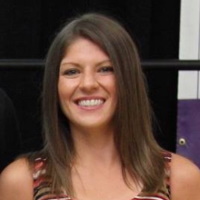
Lindsey Herting Lindsey N. Herting, MA, a psychology teacher at Lincoln High School in Lincoln, Nebraska, has been named a national winner of a 2021 APA TOPSS Charles T. Blair-Broeker Excellence in Teaching Award by the American Psychological Association's Committee of Teachers of Psychology in Secondary Schools (TOPSS).

Herting has been teaching for a decade and “quickly emerged as an advocate and a leader in the teaching of psychology in Lincoln Public Schools (LPS),” noted Jaclyn Kellison, MSE, MAHS, and Rob McEntarffer, PhD, of LPS. “Every year she serves as a mentor teacher for new psychology teachers in the district, helping them to become acquainted with the standards, learning objectives, and lesson plans needed to effectively teach psychology to high school students.” Herting also facilitates required professional learning for all psychology teachers in the district early in the school year and helped revise the district curriculum guide for psychology.

Herting teaches both Advanced Placement (AP) and International Baccalaureate (IB) psychology at Lincoln High School, and the IB Programme includes a research requirement. Her dedication and guidance in independent research are known and respected at her school. Students are able to bring concepts they learned from Herting into other classes. “I find myself applying the analytical and evaluative research skills I gained under Ms. Herting’s guidance within other disciplines such as in evaluating historical biases and contexts to determine the value of first and second hand sources, or while analyzing experimental data in chemistry,” Olivia Haller, a former student, noted.

“Ms. Herting is one of those teachers who stands out because she embodies more than just the title of ‘teacher.’ Other descriptors that come to mind are: mentor, ally, advocate, teammate, friend. You would be hard pressed to find someone as authentic, dedicated, and passionate as Ms. Herting,” said Haller.

In addition to her work with students and teachers in Lincoln Public Schools, Herting helped to establish the Nebraska Teachers of Psychology in Secondary Schools (NEBTOPSS), providing one of the only opportunities for collaboration and networking between psychology teachers in Nebraska.

Herting’s success in education “is also due in part to her ability to build positive relationships of trust and support with her colleagues... Through her patience, experience, and willingness to listen and collaborate, she has earned the respect of psychology teachers throughout Lincoln Public Schools, in Nebraska, and across the country,” Kellison and McEntarffer noted.

Herting “embodies all the characteristics of an amazing teacher of psychological science. She teaches students to think critically and evaluate deeply while simultaneously caring for them and nurturing their curiosity,” said APA TOPSS Committee chair Amy Ramponi.

For her passionate dedication to the field of psychology and teaching, TOPSS is honored to give Herting this award.
APA TOPSS Committee Member-at-Large Terri Lindenberg interviewed Lindsey N. Herting, MA, to ask about her experiences and advice as a teacher:

Terri Lindenberg: What do you enjoy most about teaching psychology?

Lindsey Herting: I enjoy the interactive nature of a psychology class. Psychology is designed to get students to examine theories and concepts through applications, demonstrations, and data collection. This student-centered emphasis leads to a more enjoyable and stimulating experience for the students and the teacher. I'd argue there are few other high school classes that offer such a participatory, experiential approach to learning.

What is your favorite lesson or topic to teach and why?

One of my favorite topics to teach is social psychology, specifically social cognition. As someone who is often guilty of underestimating the influence of social interactions and situations on my own behavior, I love contemplating the interplay between cognitive processes and various environments. I also find social cognition to be one of the best suited subfields within psychology to address a wide range of social issues because of its ability to provide insight into potential root causes and, more importantly, potential progressive solutions, of issues such as implicit bias, prejudice, and bullying. As a result of its real-world relevancy, students seem eager to apply social psychology concepts in innovate ways both on an individual and societal level.

What advice would you give to new psychology teachers?

Skills. skills. skills. Focus on teaching students the necessary skills to be inquisitive, independent consumers of information. Psychology is an inquiry-driven course in which students explore how we know what we know about ourselves. I spent too many early teaching years concerned with "getting through the content" rather than encouraging student curiosity. It took some time, but I am increasingly comfortable with prioritizing instruction and lessons that foster critical thought at the expense of covering every psychological term referenced in the textbook.

What does winning this award mean to you?

Winning this award means the world to me. There are many deserving psychology teachers, and I was lucky enough to have been nominated and selected this year. I'm honored to join a list of impressive educators who have won this award. It's a very special moment in my teaching career. This award also serves as a reminder of how fortunate I am to teach psychology at Lincoln High. Psychology curriculum is inherently relevant and almost effortlessly engages students. Who wouldn't want to participate in a course that results in a better understanding of your thoughts, your behaviors and, ultimately, what makes you, YOU?

Herting will receive a framed certificate, engraved award, cash prize of $500 and a complimentary TOPSS membership renewal for the 2022 membership year. Additionally, Bedford, Freeman & Worth Publishers is generously donating a $500 credit to Bedford, Freeman & Worth Publishers to each of the winning teachers.

Now in its 29th year, TOPSS is the voice of high school psychology teachers within APA. Through APA’s Education Directorate, TOPSS offers teaching materials, professional development, the Psychology Teacher Network quarterly newsletter and programs for high school psychology teachers and students. There are approximately 2,200 APA high school teacher affiliates in APA. High school psychology is a rapidly growing course option. In 2020, just over 295,600 students took the Advanced Placement (AP) psychology examination. Additionally, just over 24,280 high school students worldwide took the International Baccalaureate (IB) psychology exam in psychology last year. Other psychology courses are taught at the high school level, including on-level and dual credit psychology courses.

TOPSS’s mission is to promote the highest standards in the teaching of psychology as a science and discipline; promote professional development and other means for lifelong learning for high school teachers of psychology; facilitate networking among teachers from all teaching levels of psychology; encourage recruitment and retention of students in the field of psychology; enhance the visibility and legitimacy of high school psychology; and recommend the appropriate advocacy, education policy and certification issues that impact the quality or visibility of teaching of high school psychology. Learn more about TOPSS on the APA Teachers of Psychology in Secondary Schools webpage and on its Facebookopens in new window page.

For more information, please contact Emily Leary Chesnes.

Recommended Reading

You may also like