



In spring 2026, Eric Castro, MA (St. Ignatius College Preparatory), Alundra Dickinson, MEd (Little Rock Central High School), and Mark Minnick, MAT (Southside High School) were selected as the recipients of the 2026 APA TOPSS Charles T. Blair-Broeker Excellence in Teaching Awards. The three were asked to reflect on what they enjoy the most about teaching psychology, their advice for new psychology teachers, and more. A summary of their responses is provided below.
What do you enjoy most about teaching psychology?
 Eric Castro, MA: I feel that psychology courses are inherently useful to high school seniors. We cover topics that they need to know in the moment and for their immediate horizon. We teach them about memory and what study strategies help long-term retention; we teach about the sexual response cycle in the motivation chapter; we teach about sleep, and drugs and alcohol in consciousness, and love and hate in social psych. These topics and more are integral to their lives as young adults, heading off to college or full-time work.
 Alundra Dickinson, MEd: What I enjoy most about teaching psychology is introducing students to a possible future area of study or career. Psychology reaches every aspect of people's lived experiences and has the power to change the world. So many students come to my class not thinking psychology would be something they would be interested in studying. I love receiving updates from former students who have received undergraduate and graduate degrees in psychology, making meaningful contributions to society.
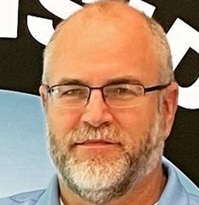 Mark Minnick, MAT: Without question, the thing I enjoy the most about psychology is the engagement and joy of the students. I know that this happens occasionally in other subjects. But I see it far more often in psychology than in history or the other social sciences that I have taught. I know that my class is affecting the lives of the students because they tell me about how it does. How it changes their worldview, alters their career aspirations, teaches them healthier habits, and allows them to engage in new content that is completely different than anything else that they learn in high school. I have always felt privileged to teach this course, and that feeling continues even after more than 20 years.
What is your favorite lesson or topic to teach and why?
Eric Castro, MA: In the behavioral neuroscience class that I teach, we spend almost a month on the topic of research methods. I happen to have access to some great demonstration equipment that can measure action potential, and even reroute action potential from one student's ulnar nerve to another's, but the real reason for spending so much time on methods is that psychology is not a set of findings but a domain of study and a way of proceeding as we attempt to better understand human thought and behavior. I really want students to become connoisseurs of research. This type of literacy acts as inoculation against, well, the media-saturated waters they swim in outside our classrooms. There is so much simplification of complex and nuanced science that it often morphs into misinformation by the time it can reach the average American—to say nothing of willful deception. And so, in my own small way, I am trying to build curious and critical learners who understand a little about how studies are conducted in the social sciences.
Alundra Dickinson, MEd: My favorite topic to teach is learning. Students have a lot of fun applying classical and operant conditioning to their own lives. And when students get the terminology down, it's great!
Mark Minnick, MAT: My favorite lesson is very different in AP psychology than in the non-AP course. With my AP students, my favorite lesson is to engage them in the topic of altruism and get them to consider whether true altruism exists. I always have students who argue both positions and delve into deep philosophical discussions. Frequently, these discussions continue outside of class. We give examples of prosocial behavior, assess motivations for volunteerism, and have a lively debate/discussion. But my reason for enjoying this lesson is really how we end it. Since we do it in the social psychology unit, and so much of that unit focuses on some unpleasant aspects of human behavior, like deindividuation and the bystander effect, I love this lesson because it is a bright light into the positive aspects of the human experience. I send the students from the room with the message that it doesn't matter if acts are truly altruistic or not—what matters is that people do things that help other people.
In my non-AP course, my favorite lessons are the ones for memory. I enjoy demonstrating concepts in class, instead of just talking about basic content. So, we engage in a variety of different memory assessments and exercises that show encoding strategies, serial position, limits of working memory, long-term memory retrieval, etc. Over the course of a solid week, we do eight to 10 different memory exercises that really let the students experience the ways in which their memories function and fail.
What advice would you give to new psychology teachers?
Eric Castro, MA: First and foremost, I'd say that a teaching career is a marathon and not a sprint; there are more miles to run tomorrow and so take care of yourself. Second, find a thought partner. In my experience, most schools only have one psychology teacher—but it's far better to have someone to bounce ideas off of, share the burden of creating curriculum with, or polishing instructional strategies with someone in your own field. Third, try hard to stay current in the field. Psychology is constantly evolving as an academic field, and very quickly what we learned in college becomes outdated. Fourth and finally, I'd remind new teachers that caring about students and doing what's best for them can be emotionally taxing, but it is the most important thing we do.
Alundra Dickinson, MEd: My advice to new psychology teachers would be to have fun with the content. There are so many hands-on activities and demos you can do to bring the content to life. Along those lines, I would encourage new teachers to reach out for ideas. There's so much out there and people are willing to share!
Mark Minnick, MAT: I always begin by congratulating them for getting the absolute best class to teach. Then we start by talking about pacing schedules, where to find lesson ideas (find, not create), and how to get support when you may be the only teacher of that content. In some of my workshops, this is really the focus of most of the time that we spend together, depending on the needs of the participants.
What does winning this award mean to you?
Eric Castro, MA: I am surprised by how much this means to me. Some students can articulate what the psychology classes have meant to them; others cannot. After 28-years of this, I'm used to being or not-being acknowledged by students for my efforts on their behalf. Getting this award though from folks who teach the same things as I do, to roughly similar students, across the country is gratifying, for lack of a better term.
Alundra Dickinson, MEd: Winning this award is very moving. I honestly did not believe I would as there are so many amazing psychology teachers with greater experience than me. I deeply appreciate the recognition for the work I have put in, and this award just motivates me to keep giving my best to students.
Mark Minnick, MAT: In one way, it means even more to me since my colleague Martin Hyatt received it a few years ago. I have told people for a long time that Martin is the best teacher I know, and to be given the same award that he received is a huge compliment. In another way, I see this really as an award that reflects all the other people who have helped me to become, however capable I may be in this subject area. From my initial mentor in psychology, Dottie MacMillan in Oklahoma, to Margaret Davidson, Chris Eadie, and Jeff Norby, who delivered the APSIs that I was privileged to attend over the years, and now to all of the fantastic teachers that I get to work with in my own workshops, I cannot thank these people enough for how much they have influenced me. So, this award is a testament to them, far more than I think it is to me.
Alundra, you wrote about wanting to reach students who have traditionally been left behind. How does that mission shape the way you design your classroom and your lessons?
Alundra Dickinson, MEd: My classroom dynamic is one of high expectations. I design my class and lessons to encourage critical thinking and personal exploration. I want students to believe they are capable of achievement and success, despite negative past experiences in school. When students know you have high expectations for them, they feel empowered and more often than not, rise to meet those expectations.
You have also worked to shift the perception of psychology from a "fun" elective to a rigorous science within your district. What has that process looked like, and what changes have you seen as a result?
Alundra Dickinson, MEd: When I was majoring in psychology, many people were telling me psychology is not a "real" science. That it's all pop fiction and common sense. I fear that sometimes in secondary schools the curriculum leans into the popularized, non-research supported topics to keep students engaged. I've always wanted my students to understand the role of empirical research within psychology and to value the scientific inquiry that is the backbone of the discipline. By making this a priority, I have seen an increase in students' critical thinking skills, research skills, and respect for the subject.
Eric, you cofounded NorCalTOPSS and have been involved in mentoring psychology teachers for years. What has that experience meant to you, and what do you hope it offers to new teachers entering the field?
Eric Castro, MA: Chuck Schalhorn and I just like talking shop with each other and have for years. Maybe 10 years ago we finally realized that if we like it so much, there might actually be other people who like gathering once a year to geek-out over psychology and psychology education. It turns out we were right!
Gathering to share ideas, curriculum, instructional strategies, and even assignments is critically important. And in the age of Generative AI, it's even more important because so many of our tried-and-true assessment strategies are now useless. My hope is that NorCalTOPSS—and all of the other regional networks around the country—can help new psychology teachers with these significant challenges: keeping current within the field, developing new curriculum, sharing instructional strategies that work for psychology in particular, and adapting to radically shifting technological advances.
What do you want your students to carry with them after they leave your classroom?
Eric Castro, MA: This is the tough one. I know, in 10 years, they won't remember the bulk of the content from the classes. I hope they do remember that their high school psychology teacher worked hard to build meaningful and engaging classes that both met them where they were and paved the road ahead of them a little in terms of things they'd need to know for the next steps in their lives after high school. And I hope wherever their lives take them after leaving my classroom, they not only remember that they were cared for, but that they pay that forward to the next generation in whatever ways possible in their lives.
Mark, you have spent much of your career mentoring and supporting other psychology teachers, from leading College Board workshops to helping start a regional teacher network in Arkansas and Oklahoma. What drives you to invest so much in other educators?
Mark Minnick, MAT: I realized a number of years ago that, just like I really enjoy teaching my students in class every day, I also really enjoy working with other teachers. So, I sought opportunities to do that more often. It is every bit as rewarding to me personally as engaging with my high school students, but in different ways. Spending time mentoring and learning from other teachers, regardless of their experience level, often makes me realize things that can help me be a better teacher (and person) that I might not get just from my own classroom. Whether it's improved classroom management, new lesson ideas, or just different ways to interact with diverse people, I know that I benefit from these experiences with other teachers at least as much as they do, if not significantly more.
You also teach both AP psychology and intro to psychology to different groups of students. What do you hope each group takes away from your class?
Mark Minnick, MAT: The common goal for both classes is that they leave with a better understanding of what psychology really involves. So many students begin the class with the idea that it is just about the clinical aspects. They don't realize all the ways psychology can benefit them in everyday situations. So, intro to psychology is really focused on helping them see the breadth of the field and its practical applications to their own existence. In AP psychology, because we have twice the time, we try to accomplish that same goal but with increased depth. We get to cover more topics, in greater detail, with extra time and highly capable students. And of course, we work to make sure that all the students successfully get their college credit with a passing AP exam score.