Since 2000, the American Psychological Association’s Committee of Teachers of Psychology in Secondary Schools (TOPSS) has presented to its most dedicated and successful teachers, the APA TOPSS Charles T. Blair-Broeker Excellence in Teaching Award. This year TOPSS was proud to recognize three outstanding educators in the field of psychology: Rachel Chapman, Stephanie Franks and Casey Swanson. These three educators are dedicated to the field of psychology in their classrooms and well beyond. The TOPSS committee congratulates them on their selection as 2019 award winners. Each received a framed certificate, an engraved award, $500 and a complimentary TOPSS membership renewal. Worth Publishers generously donated the “High School Psychology Anthology DVD” and a $500 credit to Bedford Freeman and Worth Publishers to each of the three winners. These teachers are shining models of excellence within the profession, as evidenced by their individual profiles.
Dana Melone, TOPSS Committee member-at-large, interviewed each recipient in 2019. The interviews are provided below.
 Rachel Chapman (Freedom High School, Orlando, Florida)
What do you enjoy most about teaching psychology?
I am a firm believer that I teach the best class available for high school students. I enjoy how the students grasp on to knowledge that is immediately and visibly applicable to their own lives. The rich conversations and “aha” moments that each student experiences throughout the year fuels me through any stressor that is common in the world of education. The material covered in this class helps students understand themselves and others, and truly has the potential to change their lives. It doesn’t get any better than that.
What is your favorite lesson or topic to teach and why?
I love teaching anything related to cognitive psychology, especially when it comes to memory. I teach this at the beginning of the year so that students can gain important and helpful insights that can help them throughout the year in all their classes, and not just mine. Seeing students work through how human memory works and how to best tap into their own memory in order to improve academic retention is one of the highlights of each year.
What advice would you give to new psychology teachers?
My advice is to read, read, read and watch your sources. In psychology, it is vitally important to make sure that you are exposed to the ever-growing compendium of research. Knowing your subject deeply will help make you a more confident teacher and will inform your instruction in positive ways. Also, make sure to practice evaluating the resources that you are reading. There is so much out in the world that isn’t actually research-based psychology, and it can be difficult to parse out valid reporting on the research from sensational headlines.
What does winning this award mean to you?
I am truly humbled to be receiving this award. It means a great deal to me because it validates that I am doing right by my students. My focus is the kids and how I can make sure that they are becoming informed critical thinkers about their lives. I am pleased that my students are now a focus of a larger population, and I will brag on them any chance I can get.
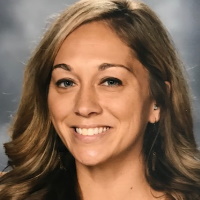 Stephanie Franks (Springboro High School, Springboro, Ohio)
What do you enjoy most about teaching psychology?
Oh psychology. I think we all go into teaching for the right reason. We want to leave a positive impact on society and help and encourage students to see what they are capable of becoming — both personally and professionally. Psychology is that subject that introduces students to a curriculum based on science that can provide them with the skills they need to be successful students, friends, partners, leaders and humans. Never have I felt so connected to a subject matter. I also love the relationships that I have developed with other teachers through professional development opportunities. I have found that many of the teachers I have met have become some of my best friends because of the commonalities we share. I'm blown away by the caliber of teachers of psychology, and their willingness to empower and support other psychology teachers.
What is your favorite lesson or topic to teach and why?
In honor of the Charles T. Blair-Broeker award, I do tend to agree with Charlie — whatever I am teaching now. There isn't a unit that I don't get really into while teaching. With that said, I am most likely to read about bio and cognition outside of class for leisure. I also think that sensation and perception are the most underrated units in psych. It is incredible how our senses provide us with an avenue to feel, love and experience life so deeply. I also think it's so interesting that we can look at an illusion and know that our brain is playing a trick on us. And it's black and white. It's such an easy way to relate this to our own cognition and how we interpret our world.
What advice would you give to new psychology teachers?
I am so happy that you get to be a part of this amazing curriculum. There are so many opportunities for you to grow and expand your knowledge base and ensure that students in your class have the best experience with psychological science. Join TOPSS. Apply for Clark. Go to a local or regional conference. Join NCSS. The high school teachers before us have paved a path based on continued learning and support like no other content that I have taught before.
What does winning this award mean to you?
Winning this award has been such a humbling experience. I am so honored to know and to have met so many qualified teachers and professors throughout the nation, that I was just humbled to be considered. I do feel empowered that while I still have so much to continue to learn and improve upon, that I'm headed in the right direction and I truly believe that I have surrounded myself with other teachers who constantly inspire me to do better. And I look forward to opportunities ahead.
 Casey Swanson (Plymouth High School, Canton, Michigan)
What do you enjoy most about teaching psychology?
I value supporting students in learning content and developing skills that will help in transforming them into citizen psychologists. Regardless of their career, they must understand that human behavior and cognition are complex. Helping students to internalize this as part of their schema, assisting them to recognize the limitations of their own perceptions (now and as adults) and encouraging them to ask questions are all important to my classroom community.
What is your favorite lesson or topic to teach and why?
Research methods. While it isn’t a specific topic, it is by far the most rewarding element of the course. Helping students to understand the epistemological underpinnings of our discipline is rewarding. In choosing a specific topic, I enjoy exploring Social Identity Theory with students. Helping young adults understand intersectionality and its impacts on their schema, their cognition, and their behavior helps to create a classroom community where individuals’ whole selves are seen and recognized.
What advice would you give to new psychology teachers?
- Step 1: Join TOPSS and STPopens in new window. The resources that they curate and provide are unmatched. Many of the authors are on Twitter; find them, follow them and begin participating in the discourse.
- Step 2: Reach out and connect. Many psychology teachers are by themselves at their schools. If your school doesn’t have another psychology teacher, create your own Professional Learning Network by connecting with a nearby teacher.
- Step 3: Read more. The Books for Psychology Class blogopens in new window has curated and categorized many books linking them to relevant topics. Reading trade books will help boost your content knowledge, your storytelling and your excitement for the subject.
What does winning this award mean to you?
I am fortunate to have participated in the APA’s Summit on High School Psychology. In a room full of leaders in the world of high-school psychology, the reverence for Charlie Blair-Broeker was palpable. In almost every conversation where Charlie’s name came up, it centered around something that he gave or provided to another teacher. Winning this award serves as both a recognition of my participation in a beloved professional network, but more importantly reinforces the expectation that I (and all of us) give, provide and serve the greater good. Thanks, Charlie!