

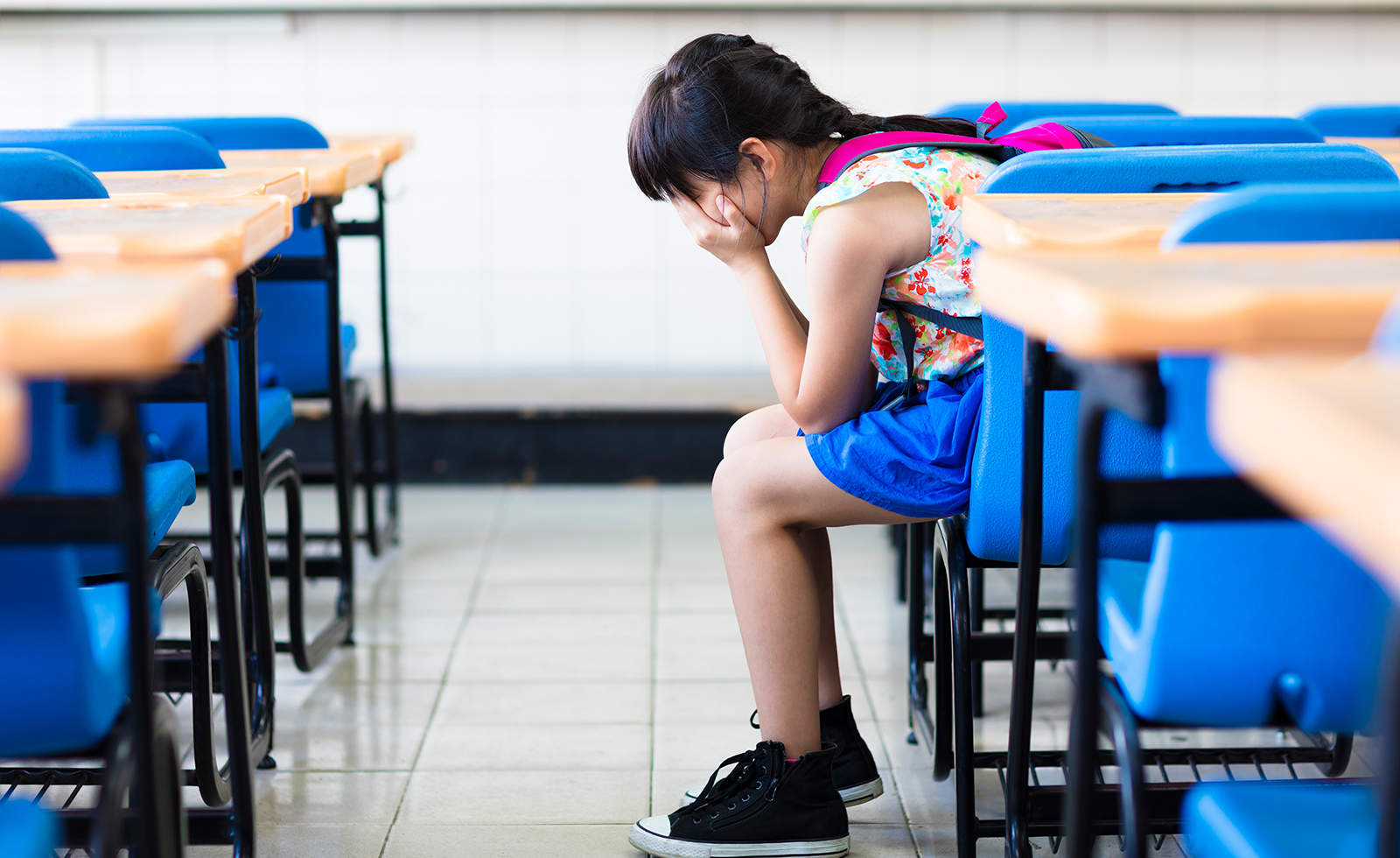
Teachers are an important part of establishing and maintaining healthy environments for students to learn and grow. They also play an important role in guiding students suffering from excessive stress to professionals in the building who can be of assistance. Avoiding students who display signs of stress do not help them in any way. Teachers can assist students who are expressing stress by providing emotional support, promoting positive peer relationships, and connecting students with other professionals in the school who may be helpful resources.
Disclaimer
This information is designed to help teachers respond to students who may be in need of support. It is not intended to be used as a diagnostic tool or to replace the use of formal assessments employed by mental health professionals. Additionally, it is important to consider the context of the situation, individual differences, and cultural and linguistic factors.
What is stress?
- Stress is the body’s emotional, physical, or behavioral response to environmental change.
- Stress can be a short-term reaction in response to an upcoming event, such as homework deadlines, an upcoming exam, or speaking in front of the class. Stress can also result from traumatic or ongoing experiences, such as coping with parents’ divorce, public health crises, natural disasters, or community violence, as well as adapting to different cultural or social expectations or values.
- Some amount of stress is beneficial and can motivate students to perform better.
- Too much stress can be harmful, even if it is associated with sowing the seeds for a positive event (e.g., academic/sports competition or going to college).
Left unaddressed, the negative effects of stress can disrupt a student’s behavior, physical and emotional well-being, school success, and friendships.
How might stress be expressed by students in school?
Students of any age can show the responses to excessive stress as described below. However, some responses are more commonly seen at certain ages. What a teacher might perceive as a minimal stress or even positive stressor may not be viewed similarly by the student. Refrain from making judgments about how much stress the student “should” be able to handle.
Students of any age can show the responses to excessive stress.
What can teachers do?

Do: Listen, express understanding, and (if appropriate) offer help. For example, “I notice you seem a bit stressed (or worried or distracted) lately. Is there something I can help you work through?”
Don’t avoid or ignore the student, express displeasure or make judgments.

Do: Offer ways for students to cope. A “peace area” in your room where students can quietly reflect or engage in calming activities can help. Young students may enjoy tactile activities (e.g., zen garden, calming jar, buddha board, blowing a pinwheel). Older students may respond well to writing in a journal or meditating.
Don’t automatically send the student away (e.g., to the principal’s office).

Do: Speak to the student privately (but with the door open if you are in a physical space).
Don’t address or share the student’s behavior publicly.

Do: Remind students you care about their academic and social success. For example, “I care about you, and I know the great work you’re capable of.” Be mindful not to exacerbate their stress if it appears to be related to academic performance.
Don’t ignore or avoid the student and the issue.

Do: Confer with colleagues who also work closely with the student. This may reveal a fuller picture of the issue and help determine if the behaviors are persistent in other classes, between classes, or during extra-curricular activities as well.
Don’t gossip about the student’s behavior.

Do: Continue to monitor the student. If they continue to demonstrate stress-based behaviors for an extended period of time, or the behaviors reemerge after seeming to have abated, consult with the school counselor regarding introducing stronger support resource opportunities.
Don’t assume that if stress-based behaviors diminish or appear to have disappeared, that they might not return or be re-triggered.
Refer students to further help if needed
- Review your school policy for seeking student supports.
- Contact school counselors, psychologist, social worker, and other personnel.
Additional resources
Empirical research
Chrousos, G. P. (2009). Stress and disorders of the stress system. Nature reviews endocrinology, 5(7), 374-381.
Heissel, J. A., Levy, D. J., & Adam, E. K. (2017). Stress, sleep, and performance on standardized tests: Understudied pathways to the achievement gap. AERA Open, 3(3), 2332858417713488.
Jennings, P. A. (2015). Mindfulness for teachers: Simple skills for peace and productivity in the classroom (the Norton series on the social neuroscience of education). WW Norton & Company.
Jennings, P. A., & Greenberg, M. T. (2009). The prosocial classroom: Teacher social and emotional competence in relation to student and classroom outcomes. Review of educational research, 79(1), 491-525.
McEwen, B. S. (2008). Central effects of stress hormones in health and disease: Understanding the protective and damaging effects of stress and stress mediators. European journal of pharmacology, 583(2-3), 174-185.
Related Mental Health Primers
The Mental Health Primers are developed by the Coalition for Psychology in Schools and Education. This resource was updated in October 2021 with support from cooperative agreement NU87PS004366 funded by the Centers for Disease Control and Prevention (CDC). Its contents are solely the responsibility of the authors and do not necessarily represent the official views or endorsement of the CDC or the Department of Health and Human Services.