



Live webinar air date: November 19, 2025, 1 p.m., Eastern time
Date
CE credits
1.5
Exam items
9
Description
Climate changes unprecedented in human history are increasingly harming our health and well-being, including mental health. Psychological research shows that both climate-driven extreme weather events and more generalized concerns are impacting mental health. This program will provide a basic grounding in climate change concepts—informed by psychological research on how people respond to climate change—to facilitate engagement with this challenging public health issue, and will prepare mental health professionals for working with patients on climate-related concerns.
Learning objectives
- Explain basic climate science and effective personal and societal responses.
- Name some of the principal mental health impacts associated with climate change.
- Describe current evidence for effective self-care, therapeutic interventions, and advocacy related to climate change.
Presenters
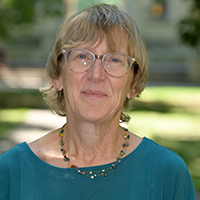
Susan Clayton, PhD
Clayton is the Whitmore-Williams Professor of Psychology at the College of Wooster in Ohio. Clayton’s research examines people’s relationship with the natural environment, how it is socially constructed, and how climate change affects mental health and well-being. She is author of the widely used Climate Change Anxiety Scale and Environmental Identity Scale. A fellow of APA and the International Association of Applied Psychology, she was a lead author on the Sixth Assessment Report of the Intergovernmental Panel on Climate Change.
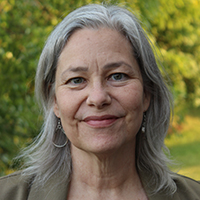
Laura Carter Robinson, PsyD
Robinson is a clinical psychologist known for her clinical and other work at the intersection of climate change and mental health. She is in APA’s Climate Change Psychology Advisory Group and has served on the executive committee of the Climate Psychology Alliance of North America. An advocate for using psychology to address the climate crisis, she teaches mental health professionals and trainees, provides climate psychology consulting and workshops through her business Humanity & Planet. Robinson received her BA from Duke University and her doctorate from the Graduate School of Applied and Professional Psychology at Rutgers University.

Leslie Davenport, MS, LMFT
Davenport is an internationally recognized climate psychology educator, consultant, and therapist whose work bridges climate science, psychology, education, policy, media, and social justice. She is the author of five books, including Emotional Resiliency in the Era of Climate Change, All the Feelings Under the Sun and What to Do When Climate Change Scares You, both published by APA. Her forthcoming Climate Emotions Workbook for adults will also be released by APA in early 2027. Leslie leads the only university-based Climate Psychology Certification program in the United States, offered through the California Institute of Integral Studies.

Scott Barstow, MS
Barstow is a senior director of Federal and Congressional Relations in the advocacy office of APA Services, Inc. He is a member of APA’s staff team focusing on climate change-related issues, and was a staff liaison to the APA Task Force on Climate Change that produced the 2022 report “Addressing the Climate Crisis: An Action Plan for Psychologists.” Barstow helped lead the development and delivery of prior APA climate events, including the 2022 APA Services advocacy summit. Scott received his MSc degree in Environmental Sciences and Policy from Johns Hopkins University’s Zanvyl Krieger School of Arts and Sciences.
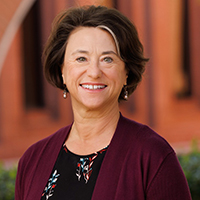
Gale M. Sinatra, PhD
Sinatra is the Stephen H. Crocker Chair and Distinguished Professor of Psychology and Education at the Rossier School of Education at the University of Southern California and a member of the National Academy of Education. She received her BS, MS, and PhD in psychology from the University of Massachusetts, Amherst. Sinatra heads the Motivated Change Research Lab at USC. Her recent research is in climate change education and communication. Her co-authored book with Barbara Hofer, a psychologist of Middlebury College in Vermont is entitled: Science Denial: Why It Happens and What to Do About It (2021, Oxford University Press).
