



1.25
CE credits
Exam items
6
Description
This program was presented at the Practice and State, Provincial and Territorial Psychological Association (SPTA) Leaders Conference (PSLC), the premiere event for APA and SPTA leaders to co-create transformational impact for the psychology profession and for critical societal issues.
State licensure at the master’s level may represent one of the most significant changes to the practice of psychology since the Boulder Conference in 1947. It has the potential to increase the number of psychology professionals available to provide some types of 12 psychological services to clients and their families in need. It also has potentially far-reaching implications for the doctoral level practitioner, including raising the “value added” question of a doctoral degree. This presentation will focus on expanding the current role of direct service provider—and envisioning future roles—of the doctoral psychologist in health care, including health care management, and the expertise that doctoral psychology can bring to an expanding array of practice opportunities.
Other PSLC programs available: Navigating the AI Frontier: Ethical Guidance and Strategic Leadership in Psychology and The Road Ahead: Advocacy, Policy, and Psychology’s Next Chapter.
Learning objectives
- Identify three strategies for advocating for increased reimbursement and/or coverage of psychological services in their state.
Presenters

Kathleen S. Brown, PhD
Brown is a licensed clinical psychologist, specializing in rehabilitation and health psychology. She is currently involved in consulting, teaching, and supervision in her independent consulting practice in Fort Myers, Florida. A fellow of APA (APA; Divisions 22, 31, 38, 55), Brown served on the APA Board of Directors as recording secretary, is a member-at-large on the Board of Directors of the Foundation of Rehabilitation Psychology, was president of the Division of Rehabilitation Psychology (22) and the Hawai’i Psychological Association (HPA), and chair of the Advisory Committee and faculty for the APA Leadership Institute for Women in Psychology. Brown received her PhD in clinical psychology from the APA-accredited Rosalind Franklin University of Medicine and Science following her internship at the University of Alabama Birmingham Medical Center.

Lynn F. Bufka, PhD, ABPP
Bufka is head of practice at APA. She oversees the practice team in its efforts to ensure psychologists are leaders in behavioral health care with the necessary resources and support so that psychology and psychologists are integral to the solutions addressing today’s challenges. She leads APA’s efforts to create opportunities for psychologists to best meet the needs of the public and advance population health. Her career professional focus has been on utilizing psychological knowledge to inform programs and policies relevant to practice, with the ultimate aim of supporting and improving the quality of care. Bufka is board certified in clinical psychology and maintains licensure as a psychologist in Maryland. She is a fellow of both APA and the Association of Behavioral and Cognitive Therapies, in addition to a member of the Maryland Psychological Association and Asian American Psychological Association.
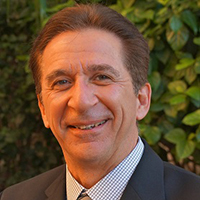
Raymond A. Folen, PhD, ABPP
Folen is the executive director of the Hawai‘i Psychological Association. He received his doctoral degree from the University of Hawai‘i and worked at Tripler Army Medical Center (the U.S. Army’s tertiary military medical center responsible for more than 50% of the Earth’s surface) for 32 years, first as chief of the behavioral medicine service and then as chief of the Department of Psychology with a staff of 150. At Tripler, Folen developed and implemented a number of original behavioral health projects and was able to secure over $16 million in special project funds. He was one of the early Department of Defense (DoD) psychologists to prescribe medications, prescribing several thousand medication orders without a single adverse incident. Folen served as president and chair of the National Register of Health Service Psychologists from 2013–18. Following his retirement from the DoD in 2016, he was selected to be the executive director for the Hawai‘i Psychological Association, a position he has held since that time. Folen is a recent past chair of the Council of Executives of State and Provincial Psychological Associations, is past-president of APA Division 31, and he currently serves on the APA Council of State Leaders. Folen is the author or co-author of more than 65 peer-reviewed professional publications and he has presented more than 140 peer-reviewed papers at state, national and international conferences. Folen is a fellow of APA and was designated a distinguished practitioner by the National Academies of Practice.

Chuck Hollister, PhD
Hollister is a licensed psychologist, consultant, and three-time APA fellow, who serves as chief executive officer and director of professional affairs for the Missouri Psychological Association (MOPA). A past MOPA president and former legislative chair, he has worked closely with advocacy partners to help pass more than a dozen state laws and regulatory changes advancing psychological practice and access to care. His efforts include legislation guaranteeing the coverage of audio only telehealth under commercial insurance—benefiting more than one million Missourians—authorizing psychology interns to bill Medicaid, which accelerated the growth of internship programs statewide, and adopting the health and behavior codes under Medicaid to expand integrated care. Hollister was named the 2025 SPTA Outstanding Psychologist by Division 31. He is a current member of APA’s Council of Representatives and a past member of APA’s Advocacy Coordinating Committee as well as its Strategic Plan Update Committee.

Syretta James, PhD, ABPP
James is a board-certified licensed psychologist, executive leader, educator, and mentor committed to reimagining how mental health care is delivered across communities. As the executive director of business development at Respire Behavioral Health, she guides the operational and strategic vision of a nonprofit group practice that serves children, adults, and families in the DC Metropolitan Area. With a doctorate from Howard University and specialized certifications in trauma, early childhood mental health, and family court evaluations, James’ work lives at the intersection of science, social justice, and service. She is passionate about improving outcomes for system-involved and marginalized populations, while shaping trauma-informed practices that are both compassionate and evidence-based. Her empirical works have appeared in publications for the Centre for Policy and Practice, the Society for Prevention Research, the Center for Substance Abuse and Prevention, and the National Association of African American Studies and Affiliates. She has also delivered numerous presentations for local, state, and national organizations.
