


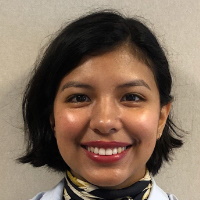
Isabelle Orozco, Program Assistant
Alma mater: Penn State
Wondering whether to pursue a bachelor’s degree in psychology? Meet 13 graduates who landed great jobs thanks to their psychology degrees.
 What attracted you to psychology?
I can say I was already prepped to study psychology from the very beginning. My mother graduated from university with her degree in child psychology, and in Colombia (as well as many other countries), you can practice psychology with your licensure, basically the equivalent to a bachelor’s degree. On the other hand, academically, my decision was made after I took multiple psychology courses in high school, from two very different but equally admirable teachers.
What was your experience like at Penn State?
Because of my brief exposure to psychology in high school and my interest in biology, I initially decided to study neuroscience. Within a semester, I changed my major to neuropsychology. As I saw it, this way, I would get the best of both worlds, psychology and neuroscience combined.
What did you enjoy most about getting your degree?
What I enjoyed the most about neuropsychology was how recent and evolving the research is, and I appreciated having access to high-quality facilities and equipment at Penn State. Two particularly memorable classes were one cultural psychology class, which touched on topics of upbringing, race, and social development and a neuropsychology course which more definitively covered my psychology major.
Based on my artistic interests and cultural fascination, I decided to study French as a minor. I found it relatively uncomplicated to handle both my major and minor courses, mainly because of interest in both fields.
My experience was incredible in every way. I was lucky enough to have made many lifelong friendships through the different extracurricular programs offered at the university. And academically, initially there was a small fear I wouldn’t be able to be in touch with professors because of the copious number of students, but my professors always made themselves available to their students.
Tell me about what you did during your time in school to start preparing for your career?
During my time at Penn State, I belonged to multiple clubs, two of which were directly related to my major and minor. The club directly related to my major was the psychology club, which didn’t meet often but our meetings consisted of discussing articles and research (it was much more exciting than that!). The second club aligned with my minor was the French club, which could be described as more of a social club.
While studying, I hadn’t given grad school much thought, not as much as I do now, but I did, in fact, keep in touch with a few professors (everyone highly emphasizes you keep in touch) and, in case grad school was to be an option later, I worked in a research lab studying code-switching amongst Spanish-English bilinguals. Although I didn’t use career services as much, I was lucky enough to have had a relatively painless postgraduate to job transition. If you are considering grad school or not, I highly recommend gaining research experience. Although I only worked in a lab on campus during my last year at Penn State, I had past research experience from Georgetown University, during my summers. This research experience I obtained through a family friend’s parent who put me in contact with the principal investigator (PI). Networking is very important.
What are you doing now? Talk a little bit about the process of getting your job
I used multiple job sites, three of which were my favorite: Idealist, LinkedIn, and Zip Recruiter. My initial keyword search was anything relating to psychology, but the longer the job wait became, the more I expanded my search to multiple interests and skills of mine.
After having graduated, I applied for an internship at APA, stayed for a few months, and transferred to a temp position. The internship was a novel experience for me. I was accustomed to working in labs and retail but working at APA was completely different. I learned much about the organization and nonprofits in general. What surprised me the most was the healthy work-life balance and seeing the productivity and impact of APA. After I finished my internship, I began a temp position in the Public Interest Directorate and worked as a communications assistant. And this is where everything changed for me. I liked working in an environment where creativity was encouraged while simultaneously being treated as an equal and trusted with projects.
Post temp position, I backpacked through South America for a few months, and upon my return I applied for a full-time position as a Women’s Program Office assistant at APA. When summarized, the whole process may seem smooth, but the time between my return and working as a full-time employee wasn’t necessarily stress-free. I was unemployed for about five months, unsure of where I would end up. The best recommendation I can give about applying to jobs is reaching out to people who can connect you with others; you never know what opportunities they may have. Secondly, keep applying, even though at times it seems no one is looking at your resume, somebody out there needs your experience and work ethic. The last piece of advice was from a few recruiting companies I contacted!