



Many psychology doctoral program advisors seem oriented toward one of two career tracks for doctoral students: clinical practice or the academic life, full of research and teaching.
Yet a graduate degree in psychology can open doors in many different fields. If treating clients or living the university life is not for you, there are other possibilities — as these psychologists can attest. Their nontraditional career paths may just inspire yours.
The psychology advocate: Stacey Larson, PsyD, JD, Washington, D.C.
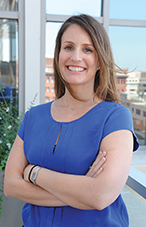 What types of patient records are practitioners permitted to release — and to whom? Which psychological services will Medicaid cover? Those are the kinds of questions Stacey Larson answers daily in her job as director of legal and regulatory affairs in APA's Practice Directorate.
"I really like the member interaction and I especially like the challenging, complex questions that require me to do a little research and problem-solving," says Larson, who earned a joint PsyD/JD at Widener University in 2007.
Larson's job also requires her to advocate on behalf of psychology practitioners on all things legal and regulatory. That means, for example, working with federal agencies to make sure policymakers keep psychologists in mind when they develop rules, standards or anything else that could affect psychology. She also helps state psychological associations to ensure psychologists get full inclusion in Medicaid.
Larson relishes the ability to work as part of a team (her department has six people; APA overall has more than 600). "It's nice to be able to have someone right across the hall if you have a question or something you can't figure out," she says.
Larson always wanted to make a difference in the world — "my mother calls it my ‘do-gooder instinct,'" she says — but wasn't sure how until she took a job in applied behavioral analysis with autistic children. She was heartbroken watching parents fighting school districts and insurance companies to cover their children's services and decided that degrees in law and psychology could best position her to address such problems.
Her advice for others who want nontraditional careers is to talk to their internship directors. "A lot of them have slightly nontraditional positions themselves, doing advocacy on the side or administration on the side," she notes.
Overall, finding the job you want requires you to get out of your comfort zone, she says. "It's about being open and asking questions, rather than thinking, 'Oh, I don't have time for this,' or 'I'm too embarrassed.'"
The video game researcher: Tim Nichols, PhD, Redmond, Wash.
Tim Nichols is the envy of many a gamer: He is a senior design research manager for Microsoft Game Studios, where he puts his PhD in engineering psychology from the Georgia Institute of Technology into practice as he studies user experience while helping test and design video games.
"Our role is to deeply understand the people who are playing these games: what they come to video games for, what they want to get out of them and to understand how we can best provide that experience they're looking for," says Nichols, who grew up playing games on the Commodore 64.
During his career at Microsoft, he's helped create games such as Mass Effect, Ninja Gaiden 2 and Viva Pinata, and worked on the Kinect gesture-based system.
One top goal is bringing "truth about the customer" to the design team, showing how real people are likely to respond to games. That often involves watching them play games in development.
"The fun part of my job," says Nichols, "is we get to tell compelling stories about how humans think and behave and share this with incredibly bright, talented people, things we picked up during our years of research."
In the coming decade, Nichols says he may end up following his passion for cutting-edge technology into "content and software that's both entertaining but solves other problems, such as how to better organize household activities or how to stay connected to loved ones in other countries."
The toy researcher: Kathleen Kremer, PhD, East Aurora, N.Y.
 As a child, Kathleen Kremer loved playing with her Little People Schoolhouse. Today, she conducts research on new Little People and other toys for Fisher-Price Inc., as senior manager of user experience.
Little People toys have evolved with modern technology. An award-winning toy she helped create is a case in point: The "Apptivity Barnyard" integrates an iPad in its base, allowing children to interact with the app using conductive figures, conductive parts of the playset, or their fingers. For example, children can open the playset's barnyard door and see digital animals scurry out or press on the playset's water pump to create a "mud pit" for virtual finger painting.
Kremer and her colleagues developed the toy after observing young children in the Fisher-Price Play Lab try to make physical toys interact with their iPads. Such research is just one of Kremer's duties at Fisher-Price. Others include testing products and developing curricula for educational toys. She currently works on the company's core preschool and toddler categories, including toys, apps and websites.
In her 10 years at Fisher-Price, Kremer has had a direct impact on the development of such well-known toys as Imaginext playsets, Power Wheels ride-on toys and Kid-Tough electronics.
Kremer, who earned her PhD in developmental psychology at the University of Minnesota, says she's frequently contacted by students who don't realize that a psychology background can prepare them for a vast array of jobs.
"Psychology is the study of human behavior, which gives us skills and knowledge that can be applied to any profession focused at some level on people," she says. "People need to think more broadly about how their background can be used in a way that adds value."
The NTSB member: Mark Rosekind, PhD, Washington, D.C.
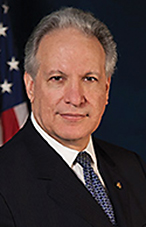 The National Transportation Safety Board (NTSB) determines the probable cause of accidents and issues recommendations to ensure they don't happen again. Since 2010, Mark Rosekind — an expert in human fatigue — has helped bring his psychology expertise to the process, which is especially needed given that 70 percent to 80 percent of accidents are caused by human error, not by faulty technology.
"We have a lot of technology [to help prevent accidents], yet it's really all about the humans, their attitudes and behavior," says Rosekind, the first psychologist to be appointed by the president as a board member of the NTSB since 1995. "So, being a psychologist provides a real advantage for me because I've trained in human behavior, in understanding it and how to change it."
Rosekind earned his PhD in clinical psychology and psychophysiology from Yale University and completed a postdoctoral fellowship in sleep and chronobiology at Brown University. He has worked at NASA as a principal investigator researching pilot fatigue, run his own consulting company called Alertness Solutions and directed the Center for Human Sleep Research at Stanford University.
"There are a lot of opportunities outside of the traditional areas that are in need of folks with PhD psychology expertise, including public service," says Rosekind. "I don't think this gets highlighted enough."
The psychology consultant: Amy Mack, PsyD, Washington, D.C.
 Amy Mack had never been interested in hanging out a shingle as a psychology practitioner. Instead of serving one client at a time, she wanted to help people on a broader level by ensuring that professionals in the field have the information and resources to do their jobs and to do them well.
Now, Mack is doing just that as a consultant who works with clients — often the federal government — to identify their needs and develop research-based solutions to meet them.
"I like to think of my job as building the capacity of others," Mack says.
She had her first experience in this type of work as a staff psychologist at the Washington, D.C., Department of Mental Health where she evaluated the city's school-based mental health program. That became a leaping off place for consulting work.
Since then, her projects have included evaluating a middle-school sexual violence/harassment prevention program for the National Institute of Justice, assessing a program that teaches students about sun exposure for the Environmental Protection Agency and analyzing data on a Department of Health and Human Services project designed to improve outcomes for children and families in the child welfare system.
She loves being able to help improve the lives of thousands of people. "I'm very passionate about what I do, and in particular I care a lot about helping the underserved," Mack says.
The range of services that she can provide thanks to her psychology training is impressive: research, data analysis, survey development, staff leadership and development, mentoring, fiscal planning and stewardship, to name just a few.
Among her favorite assignments was a five-year Substance Abuse and Mental Health Services Administration contract to develop and run a national disaster behavioral health training and technical assistance center that provides behavioral health professionals with the information they need to prepare for and respond to disasters.
Mack was involved with every project detail, including developing and conducting a national needs assessment survey of state and local level disaster behavioral health providers, analyzing the data and using the findings to develop a suite of psychoeducational materials, including tip sheets, webinars and podcasts. "It was a dream come true to be able to run a national center that supported all the states, all the territories and all the federally recognized tribes," she says.
This summer, she started working with the U.S. Energy Information Administration, part of the U.S. Department of Energy, to help with revising some of its surveys of energy manufacturers and users so that it can glean higher response rates with fewer errors.
Her advice for students who want such nontraditional careers? "Follow your heart and be persistent," she says. "I know this is what I needed to do."
The environmental designer: Nicholas Watkins, PhD, Raleigh-Durham, N.C.
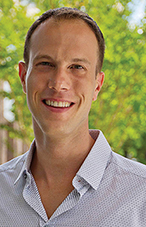 Nicholas Watkins brings psychology principles to the design of health-care facilities — helping them improve patient care — in his role as director of research at BBH Design in Raleigh-Durham, North Carolina.
Watkins works with hospitals on nearly every aspect of their design, from identifying sites for new facilities to reconfiguring existing ones. He's helped hospitals orient new buildings so patients can see nature out their windows, ensure rooms have sightlines to nursing stations, install sinks in patient rooms so that patients can see medical staff washing their hands, and provide room for chairs at the head of patient beds to improve visitor access.
All of these design considerations have been proven by research to foster better care, says Watkins.
His day-to-day job duties include observing health-care providers' and patient behaviors, collecting questionnaire data, sampling for bacteria and viruses, and running time-motion studies to observe how long it takes staff to walk to areas and perform activities, says Watkins, who earned his environmental psychology PhD at the University of Illinois in Urbana-Champaign.
The data Watkins collects help him find links between design and patient outcomes; for example, he says, poorly laid-out facilities can lead to poor workflow and user dissatisfaction, while well-designed patient rooms can result in fewer medication errors.
"One of the gratifying aspects of this job is that it's very comprehensive," says Watkins, a member and former chair of the Environmental Design Research Association. "It goes from the minutiae of door handles and materials and furnishings all the way to where we put the hospital."
The science advisor: Barbara Wanchisen, PhD, Washington, D.C.
Barbara Wanchisen's job is to advise the federal government and others on matters related to experimental psychology as the senior board director at the nonprofit National Academy of Sciences' (NAS) Board on Behavioral, Cognitive and Sensory Science.
Her team of 14 volunteer experimental psychologists consults experts and examines evidence to come up with recommendations. For example, she recently worked on a project determining how to help miners make better decisions to protect themselves in mine accidents. Another task: helping scientists at the National Science Foundation determine how to best promote research in an interdisciplinary team environment.
Wanchisen hasn't always been in a nontraditional field. After earning her PhD in experimental psychology from Temple University, she became a psychology professor and researcher at Baldwin-Wallace College in Ohio. But after 16 years, Wanchisen had grown tired of academia.
"I thought, ‘I just can't do this the rest of my life,'" she recalls.
So she took a sabbatical working in then-Rep. Dennis Kucinich's Washington office. That experience opened a new career path for her, beginning as the executive director of the Federation of Behavioral, Psychological and Cognitive Sciences, an advocacy organization in Washington, D.C., and continuing into her current role, where she's been for six years. "Once you give up tenure, you say to yourself: ‘Anything in the world is possible,'" she says.
The pilot trainer: Liz Gehr, PhD, Mesa, Ariz.
What's the best way to train military pilots? It's a question Liz Gehr has studied for much of the past 10 years in her career at Boeing.
Gehr, who earned her experimental psychology PhD from Washington University in St. Louis, investigates innovative training technologies, such as personalized learning and intelligent tutoring systems, for the military division of the aerospace giant. Before taking on that role, she worked for Boeing assessing fighter-pilot training in F16 simulators at an Air Force research laboratory in Arizona.
Gehr started college as an electrical engineering and physics major, earning her bachelor's degree in engineering. But she became interested in psychology and went back for her PhD, taking a job after graduation as a human factors expert for Sprint, designing surveys and overseeing university research. After a layoff, Gehr parlayed her hard science background with her psychology PhD into the job at Boeing — even though she is not a pilot and, at the time, knew nothing about training them.
While her engineering degree gives her "street cred" with Boeing pilots and engineers, Gehr says she couldn't have gotten the job without her PhD in psychology. "I don't think enough graduate students consider opportunities outside of academia," she says. "People don't realize it's good training for a nonacademic career, too."
The NASA researcher: Kathryn Keeton, PhD, Houston, Texas
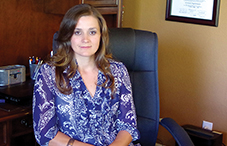 Growing up in Texas, Kathryn Keeton loved "everything about space" and dreamed of a job at NASA. After earning her PhD in industrial and organizational psychology from the University of Houston in 2008, her wish came true: She was hired at Johnson Space Center in Houston as a behavioral health and performance research scientist.
In the position, Keeton oversaw research on the challenges space teams might encounter on missions, such as personality conflicts and sleep issues.
For the past three years, Keeton has worked for NASA contractor Wyle Laboratories as an innovation and strategy specialist helping to develop NASA's crowdsourcing site, the Center of Excellence for Collaborative Innovation. The site invites the public to help solve various problems NASA faces, offering cash prizes for the best solutions.
"It's a way of taking a problem and reaching a much broader base to solve it," says Keeton.
Part of her job involves helping NASA engineers make peace with the idea that a retired auto engineer in Vermont can provide assistance with a solar radiation problem they've struggled with for years, as happened recently.
"I really think it's going to change the way organizations solve problems through collaboration," she says.