'A huge part of who I am'
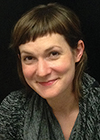 As an art student at the Pratt Institute in the mid-2000s, Kristin Cellone Lindquist was already showing an interest in psychology. While many of her fellow students' works were abstract, her paintings emphasized faces and figures that expressed sadness, fear and disgust.
"I don't remember anyone else who did figurative painting that showed feelings and emotions," she says.
Soon after, Lindquist decided she wanted to combine her interests in art and psychology. She earned a master's degree in art therapy from the Adler School of Professional Psychology in Chicago in 2009. She then got a job at a therapeutic day school for young people with developmental, intellectual and emotional problems.

While she felt adept at using art to help these youngsters work through their feelings, she wanted to learn more about psychology. So she applied for and was accepted to Adler's doctoral program in clinical psychology, where she is now in her fourth year.
Having a strong background in both disciplines allows her to apply both skills with flexibility and confidence, she says.
During a practicum at a domestic violence shelter, for example, she set up art projects so immigrant moms could have some creative relief from such ongoing worries as finding a job and getting naturalized.
The art also helped these women and their children express aspects of their relationships. One young mother had a tentative connection with her young daughter, the partial result of a troubled marriage. As a consequence, the girl had gotten good at taking care of herself, and she liked to express herself through drawing. Using her knowledge of art therapy, Lindquist had them work together using the same piece of paper. Emblematically, the daughter drew a line down the middle so they worked on separate sides of the paper.
 As she continued her work with them, Lindquist encouraged the mom to draw a picture of what she envisioned for her daughter's future.
"The mother put in all of these things about her being healthy and happy," she says. The daughter followed suit, drawing pictures of her mom also looking happy and healthy. Their bond was further cemented when a staff member scolded them for making a mess, giving them a good laugh.
Such experiences make it clear to Lindquist that art will always be part of her therapy work. "It's a huge part of who I am," she says.
Catching butterflies
 These days, Jaclyn Levy enjoys making art with a purpose — using cooking tools and herbs as decoration until they're ready to be used, sewing clothing, handbags and other functional but beautiful gifts for friends and relatives. And when the situation calls for it, she uses art in her work with clients.
It wasn't long ago that Levy was more fully entrenched in the arts. In high school, she interned with Calvin Klein and Shoshanna, the bathing suit company, and from 2006-08, she attended the prestigious Pratt Institute in Brooklyn for design.
"My best attributes came out when I did art," says Levy, now a fourth-year clinical psychology student at The New School in New York City. "I grew up with verbal and reading disabilities, so I didn't know how to do my best work through academics."
 As it turned out, psychology was a stronger calling. At Pratt, she remembers being more interested in a roommate's psychology textbooks than in going to class. She also found herself questioning the importance of a strictly visual take on life, a feeling reinforced during a lengthy class on the color gray. She also had learned from a friend how to study and get good grades, allowing her to contemplate an academic path for the first time.
"I'm not sure exactly what made the change, but retrospectively, I think I wanted to express myself verbally as opposed to just through art," she says.
Going to a therapist herself solidified the idea that talking can lead to healing and growth, and she put her energy into getting into and earning a psychology doctorate at The New School.
 There, her favorite clients include at-risk preschoolers who have attachment disorders and trouble with verbal expression. "I love the idea of giving them tools that will help give them resilience for life," she says.
One of those tools, she says, remains art.
"Using art as another way to help people express themselves," she says, "is like catching a few butterflies with one net."
Developing her passions
 When Erin Sadler attended high school in rural Indiana, she discovered a dual love of art and psychology, and she happily took classes in both. She was particularly enamored of photography: Entering the darkroom, soaking the film in chemicals and seeing what emerged was magic to her.
At the same time, another key event was occurring in her personal life. A close friend had developed renal cancer, and several months after her initial diagnosis, she died.
"It was a big roller coaster ride: She's going to be OK, she's not going to be OK, she's going to be OK. Then all of a sudden, she wasn't," says Sadler, a fourth-year counseling psychology student at Ball State University.
Being with her friend through this difficult time, Sadler deliberately put aside her discomfort to allow her friend to express her fears and feelings.
"My first thought was, 'I don't know if I can handle talking about this,'" she says. "But that's not what my friend needed."
 This awareness remained in her mind when she entered college at Ball State. She became increasingly interested in finding and expressing meaning and in helping others do so, and she decided to major in psychology. But her need for artistic expression was equally strong, and it became another powerful way to express meaning.
She earned part of her living selling her photography prints and shooting weddings, and she developed a signature style — taking pictures of things "that speak at the same time," as she puts it. In one work, Scrabble letters spelling "dream" sit on top of piano keys, and in another, ravens' feathers float over a manuscript signed by Edgar Allen Poe.
When she decided to pursue her psychology doctorate at Ball State, she found her niche at a practicum working with cancer patients and soon discovered that art could play a profound role in helping people with cancer and their children express meaning in the experience.
In fact, for her dissertation she will give cameras to childhood cancer survivors and encourage them to take pictures that reflect how their illness helped them find meaning or grow.
Looking at her life so far, she's somewhat amazed at the way her passions and experiences have come together to light her path, she adds.
"I'm one of those blessed people who has found and been given the opportunity to do what I was meant to do with my life," she says. "I'm right where I need to be."