


 The awe we feel when touched by nature, art or spirituality may give a boost to the body's defense systems, according to a study led by Jennifer Stellar, a postdoctoral researcher at the University of Toronto, who conducted the research as a graduate student at the University of California, Berkeley. In two experiments, more than 200 young adults reported on a given day the extent to which they had experienced such positive emotions as amusement, awe, compassion, contentment, joy, love and pride. Samples of gum and cheek tissue taken that same day showed that those who experienced more of these positive emotions, especially awe, wonder and amazement, had the lowest levels of the cytokine interleukin 6, a marker of inflammation (Emotion, online Jan. 19opens in new window).
- College students taking online courses give their instructors higher marks if they think the instructors are men, finds research led by Lillian MacNell, a doctoral student at North Carolina State University. The team divided the study's 43 students into four discussion groups of eight to 12 students each, two led by a female instructor and two led by a male instructor. However, the female instructor told one of her groups she was male and the male instructor told one of his groups he was female. At the end of the course, students were asked to rate their instructors on 12 traits related to their effectiveness and interpersonal skills. The researchers found that, regardless of who was actually teaching them, both male and female students who thought they were being taught by a woman gave lower evaluation scores than students who thought they were being taught by a man (Innovative Higher Education, Decemberopens in new window).
- Stress may increase desire for a reward, but it may not make the indulgence more enjoyable, according to a study led by Eva Pool, a University of Geneva doctoral student. Researchers randomly assigned 36 self-proclaimed chocolate lovers to keep one hand in either ice-cold or lukewarm water while being videotaped. Afterward, all participants had to press a handgrip for the chance to smell chocolate when they saw a certain symbol. The researchers found that the "stressed" participants who had their hands in ice-cold water exerted three times more effort to smell chocolate than the unstressed participants, but both groups reported about the same level of enjoyment of the aroma (Journal of Experimental Psychology: Animal Learning and Cognition, online Dec. 22opens in new window).
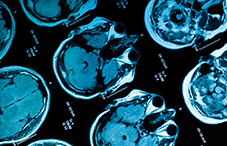 Brain imaging can predict how well psychotherapy may work for depression, according to research led by University of North Carolina graduate student Andrew Crowther. In the study, 23 patients with major depressive disorder who had not yet begun treatment underwent a resting-state functional connectivity MRI, which identifies brain regions that activate in unison. After the patients were scanned, they met with counselors for 12 sessions of behavioral activation psychotherapy, which focuses on helping people address behaviors associated with depression, such as difficulty with getting to work on time or not spending time with loved ones. Crowther and his colleagues then analyzed the scans to see whether there were relationships between brain connectivity patterns and responses to treatment. They found that the participants who benefited most from the psychotherapy had greater connectivity between the anterior insular cortex (a region involved in assigning importance to events) and the middle temporal gyrus (a region that plays a role in the subjective experience of emotion). These patients also had stronger connections between the intraparietal sulcus (which is involved in maintaining perceptual focus) and the orbital frontal cortex (a region involved in assigning positive or negative values to events) (Neuropsychopharmacology, Jan. 12).
- Drug users who have a history of attention-deficit hyperactivity disorder begin using substances one to two years earlier on average than those without ADHD, finds research led by Eugene Dunne, a third-year clinical and health psychology doctoral student at the University of Florida. Researchers analyzed data from more than 900 adults who had used illicit drugs in the past six months, with 13 percent of participants reporting receipt of a diagnosis of ADHD. Dunne and his colleagues found that, on average, people with a history of ADHD said they first drank alcohol at age 13, about one and a half years earlier than their counterparts. Participants who used cocaine began doing so, on average, at age 22, about two years earlier than those who did not have a history of ADHD (Addictive Behaviors, Decemberopens in new window).
- Stress reduces the body's ability to control pain, according to a study co-authored by Tel Aviv University doctoral student Nirit Geva. Researchers evaluated 29 healthy men as they underwent several commonly accepted pain tests, including measurements of heat-pain thresholds. The men were evaluated before and immediately after completing timed arithmetic exercises that were designed to induce acute psychosocial stress. The researchers found that psychosocial stress does not affect sensitivity to pain but does reduce the ability to modulate pain, especially for participants with stronger reactions to stress (PAIN, Novemberopens in new window).
Research Roundup