



Philip G. Zimbardo, PhD
Professor emeritus of psychology, Stanford University, president and founder of the Heroic Imagination Project, APA 2002 president
I will allow the luxury of seniority to expand this invitation to two major setbacks that each had a transformative impact on my life and career.
The first happened when I was a kid of age 5 to 8 years old. The second when I was an 18-year-old Brooklyn College freshman. The first was literally almost a mortal blow; the second one was almost a terminal blow to my career as a psychologist.
As recent research has shown, children who grow up under adverse economic circumstances often have their immune systems compromised and become vulnerable to a variety of diseases. That was true for me, having grown up in poverty in an inner city ghetto of the South Bronx in New York City. At age 5, I had to be quarantined for having whooping cough and double pneumonia. I lived in a special hospital arranged to deal with hundreds of children suffering every conceivable contagious disease. I was there for nearly six months. At the time, there were no medications to treat my condition, or the conditions of the other kids. Many children died on a regular basis, both from their diseases, but also from loneliness and from giving up on this sad life without meaning and its random injustice.
The hospital conditions then are really unimaginable now: No mail, no phone calls, no games, no exercises, no music and no movies — nothing to fill the endless void of 24 solitary hours. The hardest part was that family visits were limited to one hour, once a week. Sometimes my mother could not come at all because of heavy snow, having to walk many blocks to and from the subway with my younger brothers in tow — but she could not call since poor folks had no phones. So I had to make it on my own, supplemented with daily doses of praying to God for some of his help.
I decided that I would survive no matter what and continually imagined all the things I would do when I was healthy enough to be released: playing with my brothers and my new sister, going to school to become smart and traveling around the world to places I had only heard about in stories. That future orientation helped me to become more resilient, to rise above the daily tedium and to live in my make-believe world.
There is much more I could say about other survival tactics I developed — such as learning to read and write from comic books before going to school, creating games I would lead my bed mates in playing, and of course, practicing ingratiation tactics of complimenting the nurses — that reaped many benefits. In addition to developing resiliency, there was also a side order of hardiness, topped off with grit. So I managed to make a heaven out of that hellish experience.

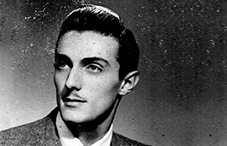

Now to my second setback: Before I went to college and discovered there was such a thing as psychology, I was already an intuitive child psychologist. I tried to figure out why some of my friends gave in to the temptation of making money by doing illegal things, while I and others did not. I also tried to figure out what some kids did to become leaders rather than exist as followers, since obviously leadership had many desirable perks that I knew I would enjoy.
I was really excited to take Psychology 100 my freshman year in 1950. However, I was quickly disappointed to discover how boring psychology was at that time — the textbook was boring, the lectures were boring and the research was boring. Everything was disconnected and there was no core to this field. Nevertheless, I tried hard to learn as much as I could to get a good grade, but instead I got the only C grade of my entire academic career.
For me this was a failure (incidentally, I graduated summa cum laude, and was Phi Beta Kappa in my junior year). So it was goodbye psychology forever, hello sociology and anthropology — my new majors.
Then, in my senior year, my friend Jerry Platt talked me into taking experimental psychology with him because the course required working with a partner and he knew I would be a hardworking one. OMG, it was amazing, it was exciting, it was fascinating to design research, to replicate classic studies and organize data to prove hypotheses. It was the kind of psychology that I had hoped to discover earlier, but was delighted to have found it in time to add psychology as my third major.
The problem was that I had some other required courses to complete so there was a limited number of courses I could take to fill my new major requirements. When I applied to graduate school, I had only the minimum number of psychology courses under my belt and only a few psychology professors knew me well enough to write strong letters of recommendation. I managed to get into Yale University with the hope of getting a PhD from such a prestigious place — an Ivy League school, or as my uneducated mother said, an "Ivory League" school.
However, I soon realized that I was unprepared to compete with my fellow graduate students, who had been reading psychology journals in college, used terms that I did not understand, and simply had the sophistication far beyond mine in this domain of psychology. I barely made it through the first six months and decided to quit and perhaps reapply to a good sociology program.
When I told my mother I was quitting and coming home, she said that I would have to wait until springtime because my sister was using my room until then. I resigned myself to gutting it through for the second term, and an amazing thing happened — I began to perform with distinction. I had misattributed my lack of knowledge with lack of smarts. As I learned more, I performed better, earned more respect from my peers and teachers, and began to feel more self-confident, and my childhood resilience bounced back. Again, a lot of psychology was still rather boring, being dominated by a conservative behaviorist orientation, but I immersed myself in doing original research on exploratory behavior (in rats) and published a number of articles in top-cited journals (including Science) where I was usually the senior author. Then dissonance theory emerged in 1957, when Leon Festinger came to Yale to spread his gospel, and I became an apostle. I did my PhD dissertation showing it to be a better predictor of behavior than existing theories of judgment.
What did I learn in the process?
First, trade in fixed mindsets for growth mindsets that enable you to improve with effort and practice. I still believed then (and now) that I was not as smart as my peers, but I simply worked harder and longer than them all, and let my published ideas speak on my behalf. I now have published more than 500 articles and over 50 text and trade books. Some of them have won major awards for their creativity and breadth of focus.
Second, when at first you don't succeed, do a situational analysis to figure out how to make the situation work for you rather than against you.
Third, press pause before you make major decisions that might be life changing, share your concerns with others, admit your fears of failure, and be happy that there is no room at your old inn to slide back into when your future might take you to new destinations well over the rainbow.
For me at 82, the best is yet to come.
Derald Wing Sue, PhD
Professor of psychology and education, department of counseling and clinical psychology, Teachers College, Columbia University
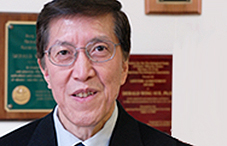 Five years after receiving my doctorate, I was flattered to be appointed the youngest editor of a major national counseling journal. Having been strongly influenced by the "black, brown, yellow and red power" movements of the 1960s, I wanted very much to make the journal multicultural and social justice oriented.
Being editor, I pushed to appoint many racial and ethnic minorities to the editorial board, radically altered the appearance of the journal, and moved to include topics on social justice. I did not anticipate the huge backlash from many senior members of the profession who found the focus on racial, gender and sexual orientation topics challenging and controversial. Some found my editorial decisions offensive, and there was talk about removing me as the editor. Although I finished my three-year term as editor, I chose not to continue for another three years.
Since then, I have been haunted with the question "Did I quit?" The truthful answer is "yes." I realized that I was not prepared on a personal and professional level to continue the multicultural journey. The struggle took a terrible psychological toll on me. From that experience, however, I learned some valuable lessons.
First, going against the prevailing practices of the times and advocating for social justice can have detrimental professional and personal consequences. One has to arm and immunize oneself for the upcoming challenges that are likely to present themselves.
Second, the movement for social justice requires valuable personal and professional allies. I was naïve in believing that I could change the profession of counseling through my own efforts, alone.
Third, change inevitably involves a political struggle or realigning power relationships.
Last, I realize that everyone will suffer setbacks and failures, but they are valuable lessons in life. It is what you do afterward that is equally important.
Nadine J. Kaslow, PhD
APA's 2014 president, and a professor and vice chair for faculty development in the department of psychiatry and behavioral sciences at Emory University School of Medicine and chief psychologist at Grady Memorial Hospital
 My greatest setback occurred at my first faculty job. I was moved into a major leadership role before I had the requisite maturity. I was younger and more junior in terms of academic rank than the people I had to lead.
I made countless mistakes. For example, my boss instructed me to talk with a colleague about her attire. I did so awkwardly and without clarity. More significantly, to "make friends," I shared things that should have been held in confidence. While my mistakes were not major, they piled up.
Added to this, I didn't know how to form a collaborative team. My faculty colleagues, who didn't trust or respect me, were upset that their prior leader was too incapacitated to lead and that they did not choose me to lead.
One day when sitting at my desk, the faculty appeared at my door, stood there and verbally attacked me for my errors and the ways I failed them. Humiliated, I shut down, felt hopeless and became depressed. I vowed I would never be a leader again.
Finally, I reached out to a respected senior leader, who became my coach. Our conversations helped me understand my role and the interpersonal and systemic factors involved, enabled me to take appropriate responsibility and genuinely apologize, and facilitated my efforts to form an effective team. Similar conversations with my therapist were invaluable.
Rather than shying away from leadership roles, I began to assume more such responsibilities, recognizing I could only improve by practice, self-reflection and interpersonal feedback. I participated in formal training programs to develop competence in leadership. When I ran for APA president I grappled with my vulnerability to feeling ashamed and helpless in response to negative feedback and recognized the importance of having the courage to learn from my mistakes and grow as a leader, psychologist and human being.