


The PsychSolutions Competition highlights innovative, science-based initiatives aiming to address the burden of suffering caused by mental health challenges around the world.
The selected winner is awarded $10,000 USD and the opportunity to work with APA to create a promotional video highlighting their global health initiative.
APA’s Office of International Affairs (OIA) invited eligible contestants to submit a project proposal with emphasis on impact and innovation. Current members and affiliates of APA and national psychological associations with which APA has a Memorandum of Understanding (MOU) were eligible to participate in this competition as individuals or in small groups.
Why global mental health?
Mental health remains neglected around the world despite its clear importance to global health, economies, and human rights. About 80% of people with severe mental disorders receive no treatment for their disorder in low-income and middle-income countries; 25–50% receive no treatment in high-income countries. Globally, annual spending on mental health is less than two dollars per person and less than 25 cents per person in low-income countries (World Health Organization, 2013).
It is clear that we need to implement innovative solutions to improve global mental health and reduce the suffering and economic harm associated with mental illness. Addressing this global burden is not just a moral imperative—investing in global mental health initiatives can produce significant positive economic outcomes, with benefit to cost ratios of approximately 2.3–3 to 1 across countries. This benefit to cost ratio increases to 3.3–5.7 to 1 when the value of health returns (i.e., the economic value of healthy life-years) is included (Chisholm et al., 2016).
The PsychSolutions Competition provides an exciting opportunity to elevate the field of psychology and its critical role in improving mental health outcomes across the globe. In line with APA’s strategic goals of utilizing psychology to make a positive impact on critical societal issues, elevating the public’s understanding of the field, and preparing the discipline for the future, this innovative competition enhances the partnerships between APA and national psychological associations around the world with which APA has signed a formal MOU.
Winner
Senegal
Tampsy was developed in Senegal. It provides a culturally relevant training to social workers and psychotherapists to address mental health issues. Tampsy stimulates conversations about mental health issues and provides space for community intervention. It is adaptable to individual and group settings. The project will be developed in Senegal aiming to train social workers to use Tampsy as a psycho-educative tool at a community level, and psychotherapists to use it as a projective method to apprehend patients’ associations in a culturally relevant approach. Ismahan S. Diop is a Clinical psychologist, teacher-researcher at UCAD (Dakar), and president of the association of psychologists in Senegal.
Contact: Ismahan Diopopens in new window
People's Choice Award Winner
Climate Change and Mental Health
Ukraine
The National Psychological Association of Ukraine presents an online educational program “Climate change and mental health: connections and influence” for psychologists, teachers and medical workers from Eastern Europe. The course will be in Ukrainian and English and answer the following key questions: 1. What is climate change and how it affects people in Eastern Europe? Why is the scientific community worldwide concerned about this problem? 2. How does climate change affect mental health? What research supports and explains the connection between climate change and mental health? 3. What skills may be developed and steps be taken in the field of prevention and treatment in order to inform and empower the populations who suffer climate change consequences right now? Ecologists, climatologists, psychologists, and psychotherapists will contribute to the creation of the course in order for it to be engaging and provide solid knowledge. After the course the participants will take a test and get a certificate. This project will raise awareness about connections between climate change and mental health issues among psychologists, teachers and medical workers from Eastern Europe.
Contact: Valeriia Palii
Finalists
The PsychSolutions Competition finals judging committee
Germán Gutiérrez, PhD
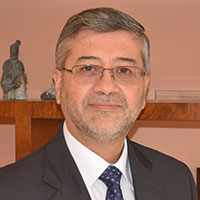 Gutiérrez received a degree in psychology from the National University of Colombia (NUC), and an MA and PhD in behavioral neuroscience from the University of Texas at Austin. An associate professor at NUC, he has been director of the Animal Learning and Behavior Laboratory, psychology graduate coordinator, chair of the Department of Psychology, and associate dean for research at the School of Human Sciences. He was project author and coordinator of the Master and PhD programs in psychology.
Vikram Patel, PhD
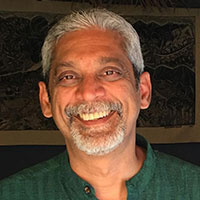 Patel is The Pershing Square Professor of Global Health and Wellcome Trust Principal Research Fellow at the Harvard Medical School. He co-leads the GlobalMentalHealth@Harvard initiative.
Vivek R. Shinde Patil, PhD
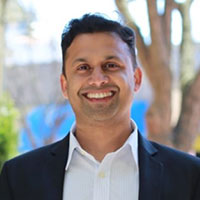 Patil is the CEO and co-founder of EXOForce Robotics, Inc, a soft-robotics and AI startup. Patill has extensive experience as a biotech industry professional, scientist, and entrepreneur.
Shekhar Saxena, MD
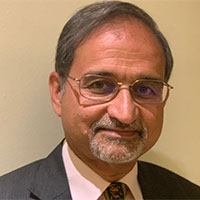 Saxena is professor of the Practice of Global Mental Health at the Department of Global Health and Population at the Harvard T. H. Chan School of Public Health. A psychiatrist by training, he was in the faculty of AIIMS, New Delhi before he joined World Health Organization (WHO) in 1998. From 2010 to 2018 he was the Director of the Department of Mental Health and Substance Abuse at WHO.
Sandra L. Shullman, PhD
 Shullman is APA Past President, managing partner of the Columbus Office of the Executive Development Group, an international leadership development and consulting firm, and has written and presented extensively on the topics of performance appraisal, performance management, strategic succession planning, career development, management of self esteem and motivation, team building, diversity management, and sexual harassment.
MOU Partners
References
Chisholm, D., Sweeny, K., Sheehan, P., Rasmussen, B., Smit, F., Cuijpers, P., & Saxena, S. (2016). Scaling-up treatment of depression and anxiety: A global return on investment analysis. The Lancet Psychiatry, 3(5), 415–424.
Lancet Commission on Global Mental Health and Sustainable Development. (2018). The Lancet Commissions, 392(10157), 1553–1598.
Vigo, D., Thornicroft, G., & Atun, R. (2016). Estimating the true global burden of mental illness. The Lancet, Psychiatry, 3(2), 171–178.
World Health Organization. (2013). Mental Health Action Plan, 2013–20. Retrieved from https://www.who.int/publications/i/item/9789241506021.