skip to main content

Adam Leventhal uses policy-focused research to address addiction

APA Style leaf logo Cite This Article in APA Style
O'Hara, D. (2024, December 4). Adam Leventhal uses policy-focused research to address addiction. https://www.apa.org/members/content/addressing-addiction

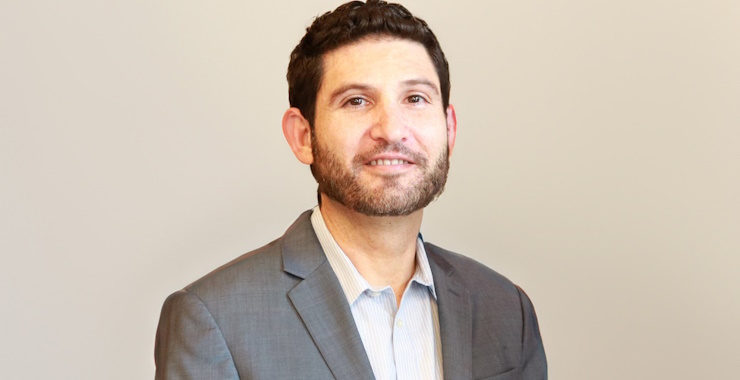
Adam Leventhal, PhD
(Photo: University of Southern California Institute for Addiction Science)

Adam Leventhal, PhDopens in new window, a professor of preventive medicine and psychology at the University of Southern California (USC) in Los Angeles, and executive director of USC’s Institute for Addiction Scienceopens in new window (IAS), specializes in policy-oriented research in the complex, high-stakes field of addiction. A clinical psychologist, he is an APA fellow in three divisions —Division 12 (Society of Clinical Psychology); Division 28 (Society for Psychopharmacology and Substance Use); and Division 50 (Society of Addiction Psychology)—and the recipient, in 2022, of the American Psychological Foundation’s Gold Medal Award for Impact in Psychology. 

Leventhal has helped assemble, in the IAS, the country’s first university-wide, interdisciplinary team charged with addressing addiction epidemics like the ongoing opioid crisis, which claimed the lives of 565,000 Americans who died of overdosesopens in new window of powerful pain medications derived from opium, or its synthetic versions, between 1999 and 2020. The IAS comprises 80 faculty members across 10 USC schools and colleges, and provides an infrastructure for research, education, and community engagement.

When you take down the silos that separate various academic disciplines, “addiction science is an all-hands-on-deck approach,” Leventhal says. 

Opioids epitomize addiction’s potential for damage. Along with tobaccoopens in new window and alcoholopens in new window, which also cause hundreds of thousands of deaths each year in the United States, opioids are somewhat on the decline these days, in part thanks to intensive educational campaignsopens in new window to inform the public about their potential harmopens in new window. However, more young people are now using cannabis, hallucinogensopens in new window and new nicotine products. Social mediaopens in new window, which didn’t exist 30 years ago, is proving to be addictive and sometimes harmful as well. 

Perhaps half of humans are addicted to somethingopens in new window, including gambling, sex, exercise, shopping, or their jobs, Leventhal’s USC colleague Steven Sussmanopens in new window has shown, and it’s devilishly hard to disrupt those dependencies. 

From a public health perspective, “I don’t think addiction will ever be eradicated,” Leventhal says. “People have an inherent drive to feel good.” 

There is “some promising data” for the ability of GLP-1 (Glucagon-like peptide-1) agonist drugs like Ozempicopens in new window and Wegovyopens in new window, now used for diabetes, weight loss, and other conditions, to curb addictive behavior, Leventhal says, but he adds that the science around GLP-1 drugs to treat addiction is in its infancy. 

Addiction is extremely lucrative, as the opioid crisisopens in new window has shown. In addition to legal products, there are others provided by unfettered criminal enterprises, like heroin, cocaine, and illicitly distributed oxycodone and fentanyl, a synthetic opioid. 

“The commercial and illegal markets that supply addictive agents move much faster than science,” Leventhal says. “If we don’t do something different, this gap between addiction science and practice is only going to grow.” 

In defining addictionopens in new window, the “key piece is paradoxical behavior,” Leventhal says—consuming a substance or engaging in an activity that has negative consequences the addicted person recognizes and does not want to continue, but does. Addictive behaviors are initially pleasurable, and “are characterized by unusually powerful reinforcers, often because they are engineered to be,” Leventhal says. 

Targeting the supply side

Leventhal is increasingly zeroing in on commercial interests that design substances and products that people cannot help but become addicted to—perhaps especially the most vulnerable people. Just in terms of nicotine, newer productsopens in new window include not only e-cigarettes, or “vapes,” which contain nicotine but not tobacco, but also oral nicotine pouches like Zyn, and nontherapeutic gum, lozenges, and gummies that might appeal to teenagers and even preteens. Leventhal has advised both the National Academy of Science, Engineering, and Medicine, and the U.S. Surgeon General Reports, on tobacco use. In 2020, the Surgeon General, then Jerome M. Adams, MD, MPH, called for smokers to quitopens in new window, as “smoking remains the leading cause of preventable disease, disability, and death in the U.S.” 

While noncombustible nicotine products can help smokers wean off cigarettesopens in new window, Leventhal and his fellow researchers have shown that e-cigarettesopens in new window can also increase the likelihood that teens and preteens who use them will eventually smoke cigarettes and use other drugs. Even when divorced from tobacco, nicotine is highly addictiveopens in new window and can interfere with the optimal development of the adolescent brainopens in new window. Leventhal, a member of the Food & Drug Administration’s Tobacco Product Scientific Advisory Committeeopens in new window, advises limiting the use of these products to adults who  already smoke tobacco and want to switch to non-combustible nicotine. 

He has also concluded that we need to address the lucrative supply side of addiction, with better surveillance of the markets and a research infrastructure that will allow a quicker pivot when a new substance or trend emerges—assembling data, fashioning targeted prevention messages, and creating policies to stop “dangerous patterns of use.” E-cigarettes were on the market for years before a federal law required their consumers to be adults, he notes. 

In a recent paper,opens in new window Leventhal supports a recommendation by the World Health Organization to ban additives like coolants and flavors that make smoking more appealing to young people. 

In 2019, Juulopens in new window Labs, a San Francisco, California-based e-cigarette manufacturer that has been accused of deliberately marketingopens in new window its products to teens and preteens, stopped selling mint-flavored e-cigarettes, which accounted for three-quarters of its U.S. e-cigarette sales, after a studyopens in new window Leventhal headed showed that the mint vape was high school students’ favorite flavor. Leventhal also showed that young people who used candy-flavored e-cigarettesopens in new window were more likely to persist in vaping than those who used other flavors, or no flavor. 

Cannabis can be addictive

Twenty-four states have legalized the recreational use of marijuana, which has the potential to be addictive as well. Marijuana has numerous mental health consequencesopens in new window, especially for teenagers, whose brains are still developing. Less-restricted accessopens in new window where cannabis is legal can expand the pool of people who use the drug, researchers have found. Thanks to edibles, vapes and other products that lack the odor and harsh lung irritation of marijuana smoke, people who otherwise might be deterred from smoking marijuana might use the drug in other, more palatable forms. Leventhal has found that some teenagers who use cannabis do go on to use illegal drugsopens in new window. 

And in a recent paperopens in new window in the Journal of the American Medical Association, Leventhal and colleagues found that more than 10% of the 2,000 12th-grade students they interviewedopens in new window around the country were using hemp-derived cannabis products, such as gummies and vapes, which have been on the market only since the 2018 Farm Bill legalized (again) the growth and sale of hemp, a close relative of marijuana. Hemp-derived cannabis products are not as strictly or as widely regulated as marijuana but are psychoactive and may have addiction potential and other health effects. 

Digital media is another area that needs attention, Leventhal says. In 2023, Surgeon General Vivek Murthy, MD, warned that social media is jeopardizing children’s mental health as a result of overuse and exposure to negative experiences, like violent and sexual context, and cyberbullying. Leventhal, whose work showing that excessive use of social media and other digital platforms might contribute to ADHDopens in new window (attention-deficit/hyperactivity disorder) symptoms was cited in the Surgeon General Report, says research is needed to inform regulations to protect teens and preteens from social media’s harmful components. 

Not all addiction is alike, he says; not everyone will become addicted to every addictive agent. However, some general risk factors are known, including a propensity for impulsive risk-taking, difficulty tolerating distress, and genes, to an extent.  Some people can have one drink every so often, for example. For other drinkers, any consumption can lead back to addiction. 

Environmental factors and the social determinants of health are also essential contributors to addiction and health disparities associated with drug use, Leventhal says. “Addiction is one of the largest contributors to health inequities,” he said.  He believes that if we can reduce the disproportionate impact of addiction on underserved communities, the economic and racial gaps in life-expectancy can be significantly narrowed. 

Leventhal was a biopsychology and pre-med student at the University of California at Santa Barbara when he realized “the psychology piece” was the one he wanted to pursue. However, he did bring an interest in pharmacology with him to graduate school at the University of Houston in Texas. 

Leventhal structures his research to focus on policy, because he values the chance to formulate some “reasonable regulations to protect vulnerable populations,” he says. While clinicians help thousands of individual patients throughout their careers, Leventhal notes that when research informs policy, “you have the potential to help millions of people at a time.” 

Recommended Reading

APA Member Benefits

Connect with peers

APA Community


Save 35% off pay now rates

Avis and Budget


New products available

APA Merch Store opens in new window


Competitive low rates

Student Loan Refinancing

You may also like