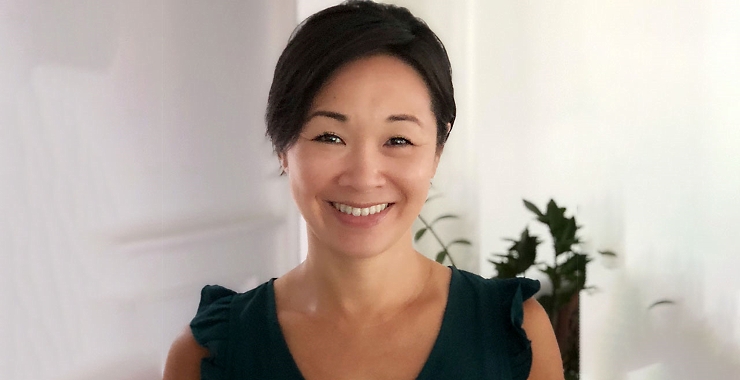
Tiffany Yip, PhD, wishes it hadn't taken a series of violent attacks against Asian Americans for the large, diverse ethnic group of which she is a member to become the focusopens in new window of national attention.
“I think it's so unfortunate that it has taken all this pain to make the community visible,” says Yipopens in new window, a psychology professor, department chair, and researcher at Fordham University in New York City.
Yip, who is Chinese American, says she believes that no one of Asian or Pacific Island (AAPI) heritage grows up in America without experiencing discrimination, “othering,” and racism, yet in more typical times, because they present a different profile in general from other minority groups, Asian Americans are not thought of as being marginalized, treated unfairly, or threatened.
“We're excluded from the conversation. We're not in the room; we're not at the table. It's very invalidating,” she says.
Yip, whose researchopens in new window centers on how identity is forged, especially under cultural stress, is one of the guest editors of the first-ever special issue of American Psychologist to focus on AAPI psychology. Expected late this month, the special issue will explore both the complexity of the Asian American community and some of the persistent myths our society holds about them.
“It's long overdue,” Yip says of the special issue.
The 23 millionopens in new window Americans of Asian ancestry, who hail from more than 20 countries, are the fastest-growing group in the United States, their numbers more than doubling since the year 2000. AAPIs presently account for 7% of our nation's population, but they are not well understood by the larger society, Yip says.
Misleading stereotypes persist
A common stereotype of Asian Americans is that they are “a model minority” that has achieved economic and social success, and so are basically doing fine and are problem-free. At the same time, however, AAPIs are cast as “perpetual foreigners,” perceived as not being really American by Whites, even if they have lived in the United States their entire lives. Both those views contribute to the group's invisibility—and to the psychological stressors Asian Americans experience. The larger society often looks right past them, Yip says.
Asian Americans are tremendously diverse, and not only in terms of their cultures, Yip notes. In the past 50 years, a chasm has opened up in the standard of livingopens in new window between high-earning members of the community and its poorest members, who earn 17% less than low-income Whites (though they're better off for the most part than Blacks and Hispanics), according to a 2018 Pew Research Center report. Low-income Asian Americans are likely to have many of the problems poverty creates and exacerbates, yet their health is not being studied. Clinical researchopens in new window focused on AAPI people represented less than .2% of the budget of the National Institutes of Health between 1992 and 2018, during a period when the federal government committedopens in new window to reducing health disparities.
The special issue of American Psychologist will explore these topics, Yip says; her team received 150 submissions, from which the editors chose seven papers and four other articles. “It's clear there is no shortage of research,” she says.
A goal for the issue was to challenge stereotypes. “I'm sure there is a segment of Asian American students who are successful, but what is the mental health cost of that high performance? We're showing another side, and we're also expanding notions of what it means to be AAPI,” Yip says.
Many things have changed in the two years since the editors embarked on this special issue, including the emergence of a powerful new social justice movement around Black Lives Matter and a global pandemic that provided political fuel for blaming the Chinese, and other Asians by extension, for the spread of the COVID-19 virus.
A steep rise in hate crimes
One result of that rhetoric has been a shocking increase in violence that has raised the level of concern and even outright fear among Asian Americans, for their own safety and that of their loved ones, to an unprecedented level.
The nonprofit group Stop AAPI Hateopens in new window tallied 6,603 self-reported incidents against Asian Americans since the beginning of the COVID-19 pandemic; a different survey (PDF, 3MB)opens in new window pegged the spike in hate crimes in large American cities in the first quarter of 2021 at 164% compared with the first, pre-COVID-19 quarter of 2020. Most events reported by Stop AAPI Hate involved verbal harassment, but nearly 13% of the incidents were physical attacks, very often against women, the elderly, and children. An 84-year-old Thai man was murderedopens in new window in San Francisco, and eight people, six of them women of Asian descent, were shot to death in three spas in and near Atlanta, Georgiaopens in new window in March.
Political rhetoric that blames the Chinese for the pandemic, and that disparages Asians in general, is “absolutely” a factor in the upswing of attacks against Asians, Yip says. “It would be a mistake not to make that link,” she says.
Yip's own research on Asian American identity indicates that “people who have a clear and strong sense of ethnic identity are better adjusted overall” and “better able to buffer the mental health impact of discrimination,” she says.
For the past several years, Yip has been studying the human need for sleepopens in new window as “a biological pathway through which racism leads to disparities.” African Americans have been shown to get about one hour less sleepopens in new window than Whites. Yip's researchopens in new window shows a relationship between discriminatory incidents during a particular day and a student's sleep disruptions that night, which can affect mood, health, and function. In one studyopens in new window, Asian American students reported the highest levels of daytime dysfunction, among diverse subjects, after a disordered night of sleep.
Asian American issues need attention
Yip hopes the special issue of American Psychologist she helped edit signals the beginning of a new visibility for AAPIs in psychology, and for publication of research on Asian Americans that will represent their true profile and place in society.
One article is by the Sue brothers, Derald Wing Sue and Stanley Sue, who co-founded the Asian American Psychological Associationopens in new window in 1972, to bolster research, education, and policy on behalf of Asian American communities.
Stanley Sue was an author of the first paperopens in new window in American Psychologist (with Derald Wing Sue) to focus on AAPI psychology, in 1975, and he also co-authored the most recent such paper,opens in new window way back in 2012, Yip notes. In those intervening years, the journal ran only five other articles with the words “Asian American” in the title, she says.
“I am also very excited about the conclusion, penned by Vivian Tsengopens in new window and Richard Lee,opens in new window [which] charts a new path for AAPI psychology,” she says.
Yip, who lives in Connecticut, has two daughters, ages 11 and 14. She is seeing current events affect her daughters' understanding of their relationship with their society, and understands that she has a role as a parent to help them feel good about who they are in a world where some people may view them with hate or envy—or don't see them at all.
Yip's parents came to the United States from Hong Kong in the 1970s as graduate students. She was born in Redwood City, California, and her family also lived in Illinois and Texas before moving back to Hong Kong when Yip was in middle school. She returned to the United States to go to Cornell University in Ithaca, New York. Moving between those two cultures during her formative years was confounding at times, but it also informed her interest in identity, she says.
“It really drove home for me how instrumental context is to the formation of identity,” she says. “People find a way to fit in.”