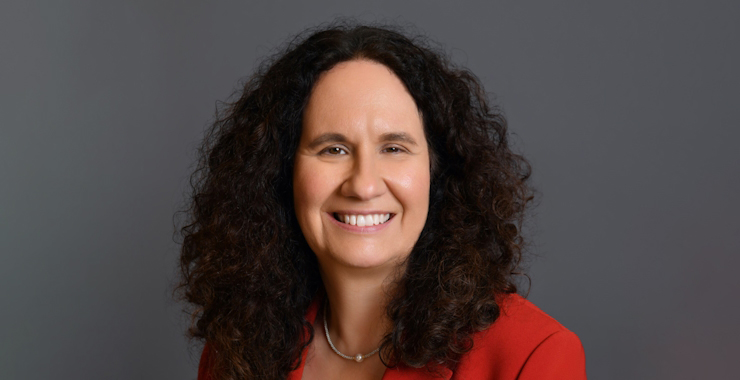
Photo credit: American Society for Reproductive Medicine
Lauri Pasch, PhD,opens in new window a clinical psychologist and professor of psychiatry and behavioral sciences at the University of California in San Francisco (UCSF) School of Medicine, has spent her career counseling men and women undergoing infertility treatments, researching how best to help them, and training others in those skills. She’d like to see mental health resources made available as an integral part of fertility treatment nationwide.
“We need to change the view of what an excellent IVF (in vitro fertilizationopens in new window) clinic is, to one that is excellent not only at getting people pregnant, but also at supporting them both during treatment and after treatment ends,” says Pasch. She is embedded at the Center for Reproductive Health at UCSF, where any patient who wants support from a mental health professional can get it. That kind of support is not common, she says.
Pasch recently served on the Board of Directors for the American Society for Reproductive Medicine (ASRM), based in Washington DC, and is the first mental health professional to have done so. She loves working in infertility because new technologies are constantly being introduced. “It’s never boring,” she says.
However, new opportunities bring fresh concerns for the mental health and well-being of the individuals who must plan and strategize and perhaps throw money at conceiving a child, ordinarily a simple, natural human achievement.
Pasch has studied the decision-makingopens in new window that goes into women freezing their eggs in hopes of later conceiving children. In that research, and in a “reflectionopens in new window” she recently wrote in the journal Fertility and Sterility, Pasch noted that women operating under constraints of time, money, and emotional energy often must make crucial, fraught decisions without enough information, guidance, or support.
One in eight couples faces infertility
About one of eight couples has a hard time getting pregnant, with men and women about equally likely to be affected by infertility. The problem may be easy to resolve, but a couple might need to resort to IVF, the most common type of assisted reproductive technology, in which eggs are fertilized in a petri dish—in vitro—and then transferred to a woman’s uterus. The first IVF baby, Louise Brown, was born in England in 1978. The technology is now responsible for about 1.6% of births annually in the United States.
Many women over 40, and some younger women as well, may decide to use another woman’s healthy eggs to conceive. Egg donation emerged in the 1980s, but insemination with donor sperm has been around for more than a centuryopens in new window; its earliest reported use in a medical facility occurred in Philadelphia in 1884opens in new window. Hundreds of thousands of babies have been born using donor gametes.
Infertilityopens in new window can cause shame, depression, and other negative emotions, and gamete donation in particular has been shrouded in secrecyopens in new window. In the 20th centuryopens in new window, gamete donors’ identities were rarely revealed, and there was typically no plan for contact among the parties. Even now, many children are not told that their conception has involved donor gametes. Until recently, parents received little guidance about whether or how to tell their children, Pasch says.
“They weren’t told it was important,” she says, and many parents kept the story to themselves. “Maybe they wanted to preserve the infertile person’s privacy, or they thought it would be disruptive to the child’s development.”
Genetic testing and gamete donation
But with the advent of direct-to consumer genetic testing services like 23andMe and AncestryDNA, people conceived with donor gametes may discover their true origin stories, and the news can be “highly shocking and distressing,” Pasch says. Genetic testing services have “changed the conversation completely” in gamete donation and make telling children the truth a matter of urgency, she says.
There are good reasons to tell the truth in any case, she says. Children have a right to know their true medical history and identity, and lies and secrets can damage families’ trust.
Parents who use donated gametes may no longer be able to control whether their children will find out, “but you do have control over how you share the story,” Pasch says. “It’s so much better when this information comes from loving parents.”
Children who learn earlyopens in new window about being donor-conceived have been found to have more positive feelings about the information than those who learn later. Teenagers and especially adults often feel angry or hurt about having been lied to, Pasch says. Research is scanty on what is the best age, but it has been shown that waiting for “the right timeopens in new window” can cause parents anxiety, and increase the likelihood they will put it off.
Pasch favors sharing the true story right away, so it is part of the child’s narrative from the very beginning. Another benefit to that approach is that relating the facts to very young children presents “an opportunity for parents to get comfortable with what it feels like to say these words,” even before the child understands them, she says.
IVF practice is tracking, to an extent, the late-20th century push for disclosure in adoptionopens in new window. Pasch tells her patients that if they feel confident and comfortable with building a family through donor conception, they will be able to convey the message to their children that conception with donor gametes is a good and common way of coming into the world. “Confident and comfortable—that’s what we want,” she says.
The TELL Tool
Pasch is part of a team of researchers, led by Patricia Hershberger, PhDopens in new window, that is working to develop a digital “Tool to Empower Parental Telling and Talkingopens in new window” (TELL), to help parents think about, and move forward with, sharing origin stories with their children conceived with donor gametes. The TELL tool is still in development, but when it’s ready, parents will be able to download it from the internet.
Pasch suggests that parents seek support from their pediatrician or a mental health professional in sharing the story of donor conception with their children. However, there aren’t many doctors or therapists in the United States who have been trained to address the mental health issues associated with gamete donation. Pasch is chairing a task force for the ASRM on the needs and interests of donor-conceived people, and one goal is to develop materials to help physicians and mental health professionals acquire those skills and understandings. She invites readers interested in the topic to contact her for help identifying resources in their own communities.
Every person involved in fertility treatment has a potential need for help and supportopens in new window, Pasch says, and that includes gamete donors. Because of direct to consumer genetic testing, many donors who never intended to meet the children conceived with their gametes are being contacted; some donors welcome this, while others may feel anxious and betrayed by the medical facility or sperm bank for not warning them about this possibility, Pasch says.
For all parties, Pasch says, “We need to be thinking about how they’re going to incorporate what happened in fertility treatment into their vision of themselves, their future, and their families.”