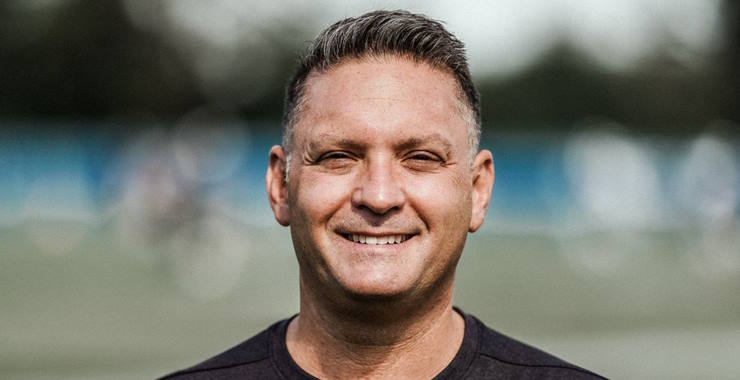
An elite athlete is a valuable performer, but also a human being like any other, says sports psychologist Scott Goldman, PhDopens in new window, consulting performance psychologist for the Golden State Warriors, San Francisco’s National Basketball Association (NBA) team.
“I see my role as a psychologist for a sports organization as being an embedded 360-degree resource,” serving the athletes, coaches, and front office managers whose job it is to evaluate talent and onboard staff, says Goldman. He was one of the first clinically trained psychologists to serve as an integral part of a college and then a professional sports organization. His early full-time positions at the National Collegiate Athletic Association (NCAA) level were with the University of Arizona (UArizona) and the University of Michigan. His professional team engagements included being embedded with the Miami Dolphins and Detroit Lions, as well as consulting for the Washington Wizards and Chicago Cubs.
“Sport psychology” (PDF, 86KB)opens in new window used to refer to the cognitive wing of exercise science, which uses tenets of psychology to optimize athletes’ performance. But in recent decades, organizations have sought licensed clinicians to address diagnostic issues as well. “Some people will only receive training in one end of the spectrum,” Goldman says, but the ideal model is when the two functions are blended, which is more consistent with human behavior and human interactions. Goldman, who has PhDs in both clinical and school psychology, as well as training in kinesiology, says he sees the two approaches not as binary but synergistic. “When someone is upset, that has the potential to impact their productivity, and vice versa. When their productivity is suffering, they might bring it home with them,” he says. He finds himself tapping industrial-organizational psychology principles as well, to “help the organization set up a systemic flow and function,” he says.
A new emphasis on mental health
The importance of protecting athletes’ mental health has gained considerable attention in the past decade. Goldman was a contributing author for the 2013 National Athletic Trainers Association consensus statementopens in new window on how to address psychological concerns among college athletes, and was also part of the mental health task force that developed “best practices” in 2016 for the NCAA. In 2019, the NBAopens in new window and NFL began to require teams to make behavioral health clinicians available on a regular basis at the team’s facility; most NFL teams hired psychologists for that role. These clinicians diagnose and treat conditions, educate players and coaches about good mental health practices, and develop plans for addressing mental health crises, should they arise.
And while performance is still a top concern for sports psychologists, athletes themselves have elevated their psychological well-being in recent years, including stars like tennis player Naomi Osakaopens in new window, gymnast Simone Bilesopens in new window, and defensive tackle Lane Johnsonopens in new window of the Philadelphia Eagles, who have all publicly prioritized their own mental health over professional achievements at crucial points in their careers. That has had a big impact on the sports world in general—and on fans as well.
“I love the fact that they are using their forum to educate about mental health, not just for themselves, but for everyone,” Goldman says. He also thinks these actions help remind fans that support is the proper stance to take with athletes, or teams, that are struggling. “It humanizes the players. It cues everyone to remember players are human beings, not just numbers,” he says.
The Athletic Intelligence Quotient
Goldman’s signature achievement may be the development of the Athletic Intelligence Quotient (AIQ)opens in new window assessment tool for the “performance-specific” cognitive traits that contribute to athletic success. He worked on the AIQ, a “side passion” of his, with James Bowman, PsyD, a friend from the Albert Ellis Institute in New York City, for 15 years before they published it in 2012. Clients for the test, which a 2020 article in the New York Times Magazineopens in new window characterized as “a comprehensive user’s manual to an elite athlete’s brain,” include the NCAA, professional teams in all the major leagues, international clubs, and first responder departments.
Goldman’s team identifies intelligenceopens in new window as “the ability to acquire, process, and apply information.” Goldman and Bowman mined the Cattel Horn Carroll theory of intelligence to develop the AIQ. They defined sport as “this constantly mutating puzzle, and then we said, ‘What are the cognitive abilities that are most relevant and impactful in navigating that?’” Goldman recalls.
Of course, an athlete might excel because of extraordinary speed or strength, or have a terrific work ethic, or be the beneficiary of stellar coaching. However, “intelligence is one of the greater predictors of success” in sports and life, Goldman says.
The AIQ has only 15 data points, including decision making, reaction time, and learning efficiency. The test helps teams identify prospects who might fit well with their organization and guide their athletes to reach their full potential, Goldman says. “We hope it helps people understand how athletes succeed,” he says.
The AIQ takes about 35 minutes to complete on an iPad, but it’s not text based. “It’s kind of like playing a game of Tetrisopens in new window,” he says. Goldman says that helps the AIQ assess athletes who come from diverse backgrounds.
A love of sport and a fascination with human behavior
Goldman’s career is a pastiche of his early interests. He was a good enough soccer player growing up in Albuquerque, New Mexico, to be tapped for the Olympic Development Program, and he says he has always been fascinated by human behavior, especially the fact that “all behavior has meaning.” He worked with troubled teens at a psychiatric hospital in Albuquerque after college at Tulane University in New Orleans, Louisiana, and paid for graduate school at Hofstra University in Hempstead, New York, in part by coaching youth soccer and playing on a semiprofessional soccer team.
“Is there a place to merge these two worlds?” Goldman recalls wondering. “I was really enjoying both.” Mentors at Hofstra included Kurt Salzinger, PhD, who waved him on to additional training in exercise science and kinesiology, and Richard O’Brien, PhDopens in new window, who helped him tailor his dissertation around working with athletes. Goldman also interned and later worked for Albert Ellis, PhDopens in new window, the influential developer of rational emotive behavior therapy, a forerunner of cognitive behavioral therapy, at the Albert Ellis Instituteopens in new window in New York City.
Goldman started out on his present course at St. Louis University in Missouri, where sports medicine was tied to the counseling center. That gave him the chance to be the school’s sport psychologist, though the role was not yet formalized there. UArizona hired him away a few years later; he worked in Tucson for eight years. The University of Michigan brought Goldman on in 2014 to build their sport psychology department, serving roughly 1,000 student-athletes playing for a total of 31 teams.
A specialization, not a special population
Goldman joined the Miami Dolphins full time in 2017; for a while, he worked full time for both the Dolphins and the Detroit Lions. “To my knowledge, I’m the only [psychologist] who has worked for two NFL teams at the same time in an embedded way,” he says. He has also worked for the Washington Wizards NBA team and Chicago Cubs Major League Baseball team.
Goldman says he sees sport psychology as “a specialization, not a special population,” but one thing that is different for athletes is that the performance they prepare for will go on with or without them. And when a college’s or a city’s or a country’s hopes depend on one performance, those athletes take on a psychological burden few people will ever experience. For the psychologists whose job it is to support elite athletes, Goldman says, “that requires a different level of training and understanding.”