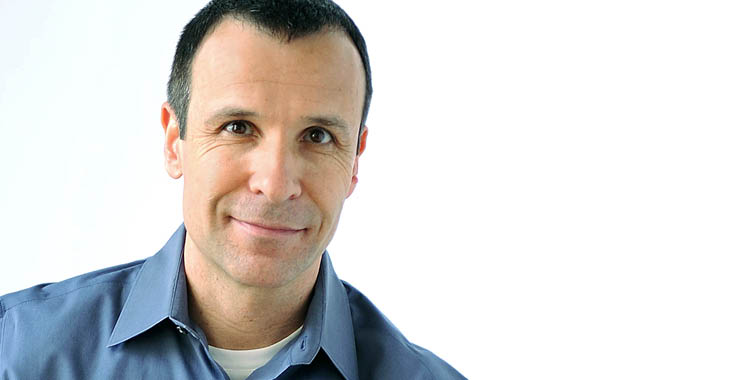
Guy Winch, who speaks to people from all walks of life about psychology, says he nearly always starts out a presentation by making a case for why mental and emotional health are important.
"I always assume, and I think I assume correctly, that a lot of people don't ever stop to take their emotional pulse. Their emotional health doesn't mean anything to them at all," he says.
A New York City-based clinical psychologist, author, Psychology Today blogger and popular keynote speaker with two mainstage TED talks under his belt, Winch thinks every psychologist should be an evangelist for the "necessary science" they practice.
He has made common, painful conditions like loneliness, rejection, failure and heartbreak his particular bailiwick. Psychology has produced research that not only tells us why these emotional events occur and how they affect us, but also provides some effective strategies for managing them. Winch aims to share those through books, personal appearances and videos that he has demonstrated can reach millions of people.
"Everyone knows smoking can kill you, but virtually no one knows that loneliness is a dangerous conditionopens in new window" that can significantly increase an individual's risk of dying early, he says. "There's not much you can do for a friend who smokes, but loneliness is one thing everyone can help with."
Even well-intentioned people don't always know what to do in fraught situations, though. For example, a parent might be tempted to say to a child who's being rejected by his peers, "Oh, honey, it doesn't matter what people think." But Winch says numerous studies have shown that human beings are hardwired to experience rejection as painful, so a better strategy might be to help the child identify potential friends and build a social circle around them.
Simple interventions like that one can change lives, Winch says, but it's up to psychologists to teach the public about the evidence-based research behind them. Knowledgeable psychologists can bring an informed and accurate voice to discussion that otherwise might devolve to strategies that don't work and can even harm.
Born in London, England, and an identical twin (his brother Gil Winch, PhD, is also a psychologist), Winch has lived in other places, but he has been in New York for 30 years. He originally went there to get his doctorate from New York University (NYU) and stayed for postdoctoral training that included family and couples therapy with Salvador Minuchin, and with Diana Fosha, who developed accelerated experiential dynamic psychotherapy (AEDP). He then set up a practice that at this point is comprised of about half couples and family therapy, half individual therapy. He doesn't practice full time, though; he leaves himself space for his other pursuits.
Winch was trained in the Boulder Model as a clinician–researcher, but he says writing his dissertation cured him of any desire to do research himself. He taught a course on statistics and research methods for a while at NYU, and he appreciates rigorous methodology in others' work. He spends some time every day reading journal articles, a long-standing habit.
"From the beginning, I've been interested in regular people, in how to make their lives better," Winch says. "There wasn't much attention paid to that in graduate school. We never studied rumination or loneliness, but to me, those things were really interesting. That meant I had to go to the journals and look up the research," he says.
In his practice, when clients had particular problems, Winch began recommending studies for them to read, but sometimes he would have to translate a little. "I found that when you break it down into English, and give them practical takeaways, people find that very interesting," he says.
In order to take a break from thinking about psychology, he started doing standup comedy and writing screenplays that had nothing to do with his profession. After some frustrating experiences trying to get screenplays produced, he thought, why not write about psychology?
His first book, The Squeaky Wheel,opens in new window was about how to complain effectively, both in relationships and in the world at large. His other books are Emotional First Aidopens in new window and How to Fix a Broken Heart.opens in new window He is working on a fourth.
"I have a real passion for writing. It's not tortuous for me," he says. He never gets writer's block, and he tends to hand in his manuscripts well in advance of his deadlines.
Winch's public speaking grew out of his writing, and he was comfortable doing it because of his experience with standup. He seldom speaks to groups of psychologists, taking his message instead to businessmen, law enforcement officials, physicians—all sorts of civilians who may not spend much time thinking about their feelings. He takes the same approach in his speeches that he uses in his books, examining common experiences that often throw people for a loop, while giving his audiences tools and different ways of thinking about their problems.
Winch's first TED talk in 2017 was a high point of his life, he says. He had followed the TED organization since 2009, hoping one day to be invited merely to attend the prestigious annual conference. But in 2014 he began a successful campaign, geared to the publication of his second book, to land a gig at one of the second-tier TEDx talks, which happened the following year. After the videoopens in new window of that appearance, "Why We All Need to Practice Emotional First Aid," garnered 1 million views within a few weeks, Winch was invited to the TED main eventopens in new window in Vancouver, British Columbia. There, he presented a "really prescriptive" take on how to fix a broken heart.
After that one, "I got letters from all over the world that said 'Thank you, you saved me,'" Winch says. Winch's TED talks have received more than 10 million views so far.
His books have been translated into 25 languages, which suggests that cultural differences aside, humans all have the same vulnerabilities when it comes to our emotional lives. Winch believes that's true.
"Under the hood, we're all more similar than dissimilar," he says.