

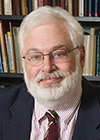

Geisinger's video statement
BiographyI am proud to be a psychological scientist, educator, practitioner and advocate nominated to serve as APA's president. I am director of the Buros Center for Testing and Meierhenry Distinguished University Professor at the University of Nebraska. Previous positions include professor/chair of the psychology department at Fordham University and psychology professor/dean of arts and sciences at SUNY–Oswego, and psychology professor/vice president for Academic Affairs at two institutions. I helped bring about positive change at each institution.
In APA, I served two terms on the Council of Representatives and then on the Board of Directors. I represented APA on the International Organization for Standardization's Test Standards Committee, and have served on seven other APA task forces, including the Good Governance Project. I have performed about 20 APA accreditation visits. I was an APA delegate and chaired the Joint Committee on Testing Practices (1992–96), served on APA's Committee on Psychological Testing and Assessment and APA's Committee on International Relations in Psychology and was president of the Coalition for Academic, Scientific and Applied Psychology caucus in 2009. I have been elected president of a division of the International Association of Applied Psychology.
My primary academic interests concern proper test use, testing individuals with disabilities and language minorities, and adapting tests across languages and cultures. I chaired the College Board's Research Advisory Committee, the Graduate Record Examination Board, and the GRE Technical Advisory Committee, was a member of the SAT Advisory Committee a member of the National Council of Measurement in Education's Committee to Develop a Code of Ethical Standards, and numerous other task forces and panels. I am a council member and treasurer of the International Test Commission, editor of Applied Measurement in Education, and have served on the editorial committees of eight other journals. I edited "the "APA Handbook of Testing and Assessment in Psychology," "Psychological Testing of Hispanics," "Test Interpretation and Diversity" and "High Stakes Testing Science and Practice in K–12 Settings" with APA books, and the 17th, 18th and 19th "Mental Measurements Yearbooks" as well as "Tests in Print VIII." I recently edited the "Psychological Testing of Hispanics: Clinical and Intellectual Issues" (in press). My work cuts across virtually all areas of psychology. I have published approximately 130 chapters and journal articles.
I have worked my entire 37-year career in higher education and loved it, teaching at every institution where I worked. I have also operated outside the academy. For about 10 years, I was largely responsible for building the New York City Police and Fire Fighter examinations and directed the study that brought women on the Philadelphia police force.
My awards include APA fellow status and charter fellow status in the American Educational Research Association and the Association for Psychological Science. APA's Div. 5 (Measurement, Evaluation and Statistics) awarded me the Jacob Cohen Award for Distinguished Teaching and Mentoring; the Northeastern Educational Research Association gave me the Donlon and the Doherty Awards for mentoring and service, respectively; and SUNY–Oswego honored me with their Distinguished Research Award.
Geisinger's candidate statement
I am honored to be nominated for the APA presidency. Our organization has been historically structured around, and divided by, its four directorates: Science, Practice, Education and Public Interest. I ardently believe that we as members need to integrate them to a greater extent if APA and psychology are to flourish.
My nomination for APA's presidency reflects my commitment to unify our profession after the splintering and polarization that has occurred since the 1980s. It also reflects my desire to continue to advocate for these four foci of psychology.
My campaign theme reflects the unifying goal: One psychology, with APA as its core. Psychology must bridge seamlessly across its different domains and portray them as an integrated whole. If we advocate for practice by emphasizing our scientific underpinning, clinicians, researchers and teachers of psychology all become more effective and assume higher status. If we advocate for scientific research funding for psychology with the belief that psychology can improve people and society, we demonstrate our strength. We must also advocate both for funding for graduate education and the critical importance of undergraduate psychology. My career has prepared me to serve as a major spokesperson for all areas of psychology, as I have for departmental, school, and academic units at the universities where I served and to collaborate effectively with APA staff and others in this role. I am especially eager to advocate for and empower the underserved in society. My career has included a unique balance of science, practice, education and public interest activities; integrating my efforts in these four key psychology domains remains of paramount importance to me. My work primarily concerns psychological testing, and I have and will continue to support more appropriate and equitable levels of reimbursement for psychologists and other practice needs.