
Bumper-to-bumper traffic, distracted drivers, ill-timed lights. Who wouldn't like to revamp their daily commute? Imagine instead reclining your seat, sipping a coffee and checking your email while your vehicle drives you to work.
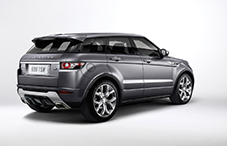
So far, driverless cars are legal only in California, Nevada, Michigan, Florida and the District of Columbia. Still, new partially automated vehicle systems are hitting the market every year. Cars ranging from the budget-friendly Ford Focus to the luxury Range Rover Evoque can parallel park themselves. Automakers including Mercedes and BMW have released cars that speed up and slow down automatically in stop-and-go traffic.
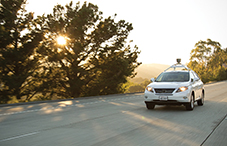
Google's self-driving cars have gone even further: A fleet of about a dozen fully autonomous test cars have logged more than 700,000 miles on public and private California roads, ferrying passive passengers safely down city streets, pulling into parking spots and cruising through the drive-thru to pick up tacos. The latest iteration of Google's car doesn't even have a steering wheel.
From a psychological perspective, says University of Utah psychologist David Strayer, PhD, the changes afoot may very well be revolutionary.
"I suspect [vehicle automation] will be as transformational as the Internet was," he says.
But this transportation transformation won't come without challenges. To safely put driverless cars on the street, researchers first need to understand how people interact with these automated systems. On the road to fully driverless vehicles, the first stop will be semi-automated systems that still rely on human operators. Psychologists can help figure out how to keep drivers alert and aware, even as the car does much of the work for them.
While the engineering issues of automated cars are being addressed, says Strayer, "the tough psychological problems have yet to be solved."
Tuned out
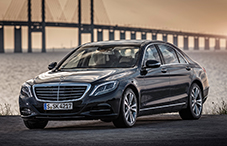 Automotive designers have a good incentive to get human drivers out from behind the wheel: public safety. In 2012, according to the most recent figures from the National Highway Traffic Safety Administration (NHTSA), 33,561 people were killed in car crashes in the United States, and an estimated 2.36 million were injured. According to NHTSA, a number of major crash studies have found that human error caused more than 90 percent of those crashes. In a perfect world, technology would take driver error out of the equation.
"One of the most dangerous things we do is get behind the wheel," notes Strayer.
Yet while safety is a prime motivation, it's not the only potential benefit of automated cars. Driverless vehicles could improve mobility for the elderly and people with impairments that prevent them from driving. Case in point: A video on the Google website shows a legally blind "driver" zipping around town in one of the company's driverless test cars.
Automated vehicles may also offer environmental benefits. Self-driving cars could be programmed to cruise at speeds that maximize fuel efficiency, for example. And a fleet of vehicles that communicate with one another could limit congestion by steering cars to less clogged streets, minimizing time that cars (and their polluting emissions) are on the road.
But before society can reap those benefits, experts caution there are important problems to solve. Namely, since people interact with technology in unexpected ways, how will each individual driver engage with an automated car?
For some people, automation might lead to complacency, says Nicholas Ward, PhD, a human factors psychologist in the department of mechanical and industrial engineering at Montana State University. Drivers who put too much trust in automation may become overly reliant on it, overestimating what the system can do for them.
Ward also warns about the potential role of risk taking. According to some (albeit contentious) models of risk taking, people seek to maintain a preferred level of risk. If a vehicle system is designed to reduce risk by, say, braking automatically, drivers might adapt by driver faster or following closer. "If you make things safer, some people will find ways to get that risk back," he says.
Information overload may be another concern, says Neville Stanton, PhD, a psychologist at the University of Southampton in the United Kingdom, who studies human performance in technological systems. While automated systems are designed to take pressures off the driver, he's found that they may add complexity in some cases. In an automated system, drivers may feel compelled to monitor the behavior of the system as well as keep an eye on the driving environment (Safety Scienceopens in new window, 2014). That extra pressure might increase stress and error.
"You remove some of the physical and mental tasks, but load up a bunch of other mental tasks," Stanton says. "What is the trade that's being made?"
Given a nearly infinite combination of driver personalities, road conditions and vehicle technologies, the answer is anything but straightforward. In a study using a driving simulator, for example, Stanton found that adaptive cruise control — in which a car maintains a safe following distance from the vehicle ahead of it — can reduce a driver's mental workload and stress levels (Ergonomicsopens in new window, 2005). However, that technology also caused a reduction in drivers' situational awareness. And while a lower mental workload may be a good thing in tricky traffic jams, it could cause problems if drivers totally tune out.
Indeed, driver disengagement is a serious concern for automated-car designers. Users in such vehicles are expected to tune out. After all, the appeal of such cars is that they can transport us to and fro without our having to do the hard work. But that presents a problem for our busy brains.
"You change from being an active ‘doer' to being a monitor," Strayer says. "And that turns out to not be one of our best skills."
Detached from the activity of driving, most people soon begin to experience "passive fatigue," says Gerald Matthews, PhD, a psychologist at the Applied Cognition and Training in Immersive Virtual Environments Lab at the University of Central Florida. That cognitive muddling can be a big problem, Matthews says, if the driver has to take back control of the vehicle (when leaving a highway "platoon" of automated cars to re-enter city streets, for instance — or, in a worst-case scenario, if automated systems fail).
In a series of studies using driving simulators, Matthews and his colleagues have induced passive fatigue in volunteers as they experience a ride in an automated car. When control is suddenly handed back to the volunteer, people with passive fatigue react more slowly when they have to brake or swerve to avoid a crash.
Worse, Matthews says, passive fatigue kicks in alarmingly quickly. "We can see signs of it after only 10 minutes," he says.
In a fully automated system, the car itself does all the work and passive fatigue poses little problem. But right now, automakers are developing systems in which drivers handle some, but not all, of the driving duties, such as navigating city streets while allowing the car to deal with a long, boring stretch of open highway. Such partially automated systems are precisely the ones in which passive fatigue is most dangerous, many experts say. "Our biggest concern is that we'll end up with clumsy automation that solves the easy problems but leaves us responsible for the hard problems," Strayer says.
The weakest link
Researchers are still puzzling over the best ways to keep drivers engaged when they use features such as automated braking and accelerating — and how best to hand them the wheel when conditions get sticky. "Transfer of control is one of the burning questions," says Anuj K. Pradhan, PhD, a research scientist who studies driver behavior and injury prevention at the University of Michigan Transportation Research Institute.
For instance, Pradhan asks, how much time does the driver need to regain control of the vehicle if the automated system encounters a situation it's not equipped to handle? How should the car alert the driver to take over? Should the car monitor the driver's attention levels and tailor alerts accordingly — a beep if a driver is watching a movie, but a loud alarm if the driver is dozing?
Researchers are still in the early stages of answering such questions, he says.
Some scientists are exploring ways to keep drivers tuned into the driving environment. Matthews and colleagues have explored the benefits of using cellphones to keep drivers alert. They put volunteers into driving simulators that mimicked fully automated vehicles. As they "drove," some volunteers were periodically asked trivia questions via phone, and prompted to reply by voice or text. When the drivers later took back control of the simulated vehicle, those who had engaged in the trivia game braked more quickly in response to a hazard than did volunteers who weren't sent phone prompts (Proceedings of the Human Factors and Ergonomics Society 56th Annual Meetingopens in new window, 2012).
Of course, a large body of evidence has shown that cellphones, and especially texting, cause ample distractions of their own. More research is needed to understand the best ways to use technology to prevent passive fatigue, Matthews says.
Meanwhile, other researchers are exploring how best to present drivers with information about driving conditions without distracting them. "The last thing you want a driver doing in an event where they need to take over control is to not look at the road," says Gregory Fitch, PhD, a research scientist at the Center for Automated Vehicle Systems at the Virginia Tech Transportation Institute.
As automakers add more gauges, alerts and alarms, dashboards turn into virtual cockpits. Poorly presented information could confuse or distract drivers, Ward says. "When you have systems conveying lots of information, all competing for the driver's attention, that information may not be immediately understandable by the driver." In fact, in a study for the AAA Foundation for Traffic Safetyopens in new window (2014), Strayer and colleagues found that hands-free in-vehicle technology, such as voice-controlled systems for handling phone calls or tuning the radio, is more distracting than a traditional cellphone call.
A rocky road
 Such findings make some experts wonder whether we're coming at the idea of automated vehicles from the wrong direction. In Stanton's view, automation should hover in the background, ready to take over only when people make mistakes — preventing drivers from changing lanes if they've failed to check their blind spots, or helping them swerve to miss a person in the crosswalk on a dark, foggy night.
"Automation would be a safety net to catch you when you do something stupid," Stanton says.
In many ways, the role of automation is still up for debate, Ward says. Some think humans are hopelessly error-prone and that automated systems should replace them entirely. But others argue that people have a unique flexibility and ability to make decisions in ambiguous circumstances. Before driverless cars are unleashed on the roads, that debate is worth hashing out. "Why are we automating?" Ward asks. "Is it because we need to, or because we can?"
Like it or not, though, carmakers are pressing forward with automated systems, and psychologists can play a role in making them as safe as possible. One important issue, says Pradhan, is how drivers of different ages, personalities, experience levels and cognitive abilities will deal with such systems. "There is no average driver. The field is so new, we're still asking a lot of fundamental questions — and there are very few people looking at driver characteristics," he says. "Automation has to be designed for everybody."
Another open question is how drivers should be trained to operate these increasingly complex systems. "Pilots are trained for hundreds of hours, first on simulators, before they can get real flying time," Pradhan says. "If someone told us, ‘Before you get into your brand-new car you need six hours of classes and 10 hours of simulator time,' it wouldn't go down well with the driving public."
But training shouldn't be overlooked, adds Fitch — a point that was driven home when he went shopping for a new car. "I bought my car specifically for its hands-free interface. I asked the sales rep at the dealership to show me how to use the voice-control features, but he didn't know how," he says. "And that's a simple technology."
While unintentional misuse of automation is a distinct possibility, so too is intentional misuse. For example, Fitch says, some new vehicle models feature a system in which the vehicle automatically steers and adjusts its speed as it follows another car. To keep drivers engaged, the engineers added a safety feature: If the driver takes his or her hand off the wheel for more than 10 seconds, an alarm sounds. But Fitch has seen videos of drivers sidestepping that safety feature by taping a soda can to the wheel, tricking the car into thinking the driver still has a grip. "That's just a taste of what's to come," he says. "People are human, and they learn there are ways to work around the system."
Other wrinkles remain to be ironed out before self-driving cars are a reality. The technology will create infrastructure challenges and major policy questions. What will happen the first time a self-driving car kills or injures a pedestrian? "It's going to be a field day for lawyers and legislators to figure out who is at fault," Pradhan says.
As this science fiction-worthy technology becomes science fact, psychologists can lead the way in determining the safest ways to unite human and machine. Fortunately, Stanton adds, automakers appear to be paying attention. "Most vehicle manufacturers employ people like me, and they take a keen interest in the research we do," he says. "The trouble is, everyone wants to be first with a new feature. That's what sells cars."
Strayer is also hopeful that car designers will apply findings from psychology before the technology leaps too far ahead. "We can bet it will be a bit of a rocky road. It's a brave new world and we don't know how it's going to unfold," he says. "But it is going to unfold."
Kirsten Weir is a journalist in Minneapolis.