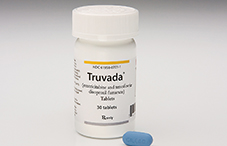

In 2012, the U.S. Food and Drug Administration (FDA) approved the use of the first-ever drug to protect against HIV in high-risk uninfected individuals. Studies showed that Truvada, when taken consistently, greatly reduced the risk of infection in men having sex with men and transgender women having sex with men, prompting one FDA panelist to say Truvada was "an amazing opportunity to turn the tide on this epidemic."
Two years later, the number of Americans taking the pill is minute compared to the half-million who the Centers for Disease Control and Prevention (CDC) thinks could benefit from Truvada, otherwise known as pre-exposure prophylaxis or PrEP. Its manufacturer, Gilead Sciences, surveyed 55 percent of pharmacies in the United States and found they had issued only 2,300 prescriptions for the drug.
Why has adoption been so slow? Some health-care providers and HIV/AIDS organizations frown upon PrEP. They worry that lack of adherence could lead to drug resistance, and that the drug could encourage condom-free sex that spreads other STDs.
Patients, meanwhile, may lack access to or even knowledge of the drug, or have underlying psychosocial conditions that prevent them from taking it correctly and consistently.
That's where psychologists come in. They can play an important role in drug uptake and maintenance, and in helping at-risk patients determine if PrEP is right for them, according to David Martin, PhD, senior director of APA's Office on AIDS.
"What's common to all of these recent approaches, including post-exposure prophylaxis (PEP) and treatment as prevention (TasP), is that they entail some form of behavior change, and certain groups of people are going to have more difficulty engaging in these change behaviors. We're beginning to see an increasing integration of mental and behavioral health that may help in addressing these behavior-change difficulties, and HIV/AIDS is leading the way down that road," Martin says.
Psychologists can offer behavioral approaches to support PrEP adherence, says Eugene Farber, PhD, professor at Emory University School of Medicine, who helped draft the APA's 2012 resolution on approaches to optimize HIV prevention.
"The evidence base shows that adherence is a key factor in the success of PrEP. Therefore, psychologists have the opportunity to contribute to optimizing the use of PrEP for HIV prevention through research and by applying behavioral strategies that help to maximize adherence," he says.
Here are some of the barriers to adoption that therapists may face, and ways some psychologists are approaching them.
Overcoming stigma
Any biomedical protocol faces uptake challenges, particularly those that require regular use, experts say. APA's resolution emphasizes "behavioral interventions that enhance knowledge and build skills," while incorporating attention to patient factors, such as health conditions and substance abuse problems — both key for populations at high risk for contracting HIV.
One intervention may be to help alleviate the stigma associated with taking PrEP. Some in the gay men's community fear that the drug will invite promiscuity and unprotected sex.
Adam Zeboski, a 26-year-old who works at the San Francisco AIDS Foundation, began a Twitter and T-shirt campaign, #truvadawhore, co-opting a popular "slut-shaming" insult and hoping to increase awareness of PrEP's benefits. (For the record, a 2013 study in PLOS ONE suggested that those taking it don't increase risky behavior. Zeboski says PrEP is a big cultural shift from the days when being responsible meant only one thing: Using a condom.
"The resistance to PrEP is coming from older folks who have come through decades of HIV trauma and the thought of sex equaling death," he says. "Young gay men like me are interested in exploring sexuality."
Jeffrey Parsons, PhD, professor at Hunter College, says taking a positive tack during therapy may alleviate some of the guilt and anxiety that has accompanied sex for so long among high-risk populations.
"I would say, ‘Think of the ways taking this medication can improve your health and your sexual life.' We need to get pleasure back into the discourse. It's what resonates with people, particularly with a younger generation coming into a very different kind of HIV world," he says.
Manuel Rodriguez, who directs two national outreach programs to increase HIV testing and HIV-prevention communication among gay and bisexual men for the nonprofit group FHI 360, says of PrEP, "Taking it, you feel empowered. You feel in control of your sexuality by adding another layer of protection. You start to break free of the fears that have haunted you for all these years. Taking control of your health can have positive ramifications on the rest of your life."
Another important role for psychologists is recommending PrEP in the first place when appropriate.
"We as psychologists see gay men who might be at risk, and it's incumbent on us to say, ‘This is something you might consider.' Sexual risk is part of the package that the client brings to psychotherapy, and we should recognize that we have whole human beings in front of us," says Steven Shoptaw, PhD, professor at the University of California, Los Angeles.
However, that only works for people who are already seeing a mental health care provider. It can be difficult to identify and reach others at risk, particularly if they don't have a relationship with a primary-care provider. Even then, some may feel embarrassed asking their providers for PrEP, because many men will not admit to their physician that they have condom-less sex or multiple partners, says Steven Safren, PhD, director of behavioral medicine at Massachusetts General Hospital. For their part, some primary-care providers are not comfortable talking about issues dealing with sexuality, he says.
"Physicians have gotten better about addressing mental health issues, but as soon as you start talking about putting body part A into body part B, that's when things get weird," he says.
In Gilead's survey, almost half of the Truvada prescriptions were for women. Joanne Mantell, PhD, professor of clinical psychology (in psychiatry) at the HIV Center for Clinical and Behavioral Studies, New York State Psychiatric Institute and Columbia University, says that it is easier to identify at-risk women as a group that might benefit from targeted PrEP (or PEP), such as those with an HIV-positive partner who wish to get pregnant, or those who use intravenous drugs. But it is not necessarily easy to identify individual women — for example, those who have an HIV-positive partner in jail or women desperate for a covert means to protect themselves, particularly if their partners are resistant to using condoms.
"I don't care if you're talking about physicians or mental health practitioners — we should all be talking to clients and patients about PrEP and risk behavior," she says, adding that both groups could use protocols and information tools to help them identify those who might benefit.
Improving adherence
Getting patients to take the pill regularly is another hurdle. In a major study of PrEP use, the iPrEx Open-Label Extension, participants who took the pill at least four times a week did not became infected with HIV. (The Lancet Infectious Diseasesopens in new window, 2014). However, only 33 percent of them did so, and adherence lessened over time.
Psychologists can help assess a patient's initial willingness to take his or her medication as prescribed, which can change over time, and help patients in sustaining their adherence, according to Farber, of Emory University. Further, HIV infection rates are higher in people with severe mental illness, such as those with bipolar or psychotic disorders, or even those with depression, and they may find adherence challenging. Their cognitive capacity can suffer, and they may forget to take their pills, Farber says.
Patients may also fear Truvada's side effects, which can include headaches, diarrhea and liver problems. Couple that with the potential unease of being on the frontlines of a new treatment, and adherence can decline.
"You also can't remove years of, for the lack of a better term, societal crap from the equation. You're talking to African-American and Latino men who have an understanding of Tuskegee and a general mistrust of the U.S. medical system," Parsons says.
Here, too, psychologists can help patients weigh benefits and risks to make sure PrEP is a good fit.
"You're asking men to take one pill every day to avoid taking another antiretroviral medication. Patients are very good at picking that up. But sexual risk is concentrated in the early part of the lifespan," and so taking one pill a day while young might help avoid a lifetime of pills later, Shoptaw says. There are all sorts of factors like these that a psychologist can help patients explore and make sense of.
"We are good translators of science to the people," he says.