

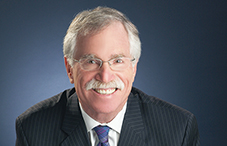

As a new child psychologist in the 1970s, Barry S. Anton, PhD, was providing integrated care before he'd ever heard the term. Once a week after conducting clinical evaluations of preschoolers at a local hospital, he sat down with a team that included a child neurologist, social worker, physical therapist and occupational therapist to devise a treatment plan for each child.
"I never had a label for it at the time, but I remember thinking ‘Wow, this is pretty comprehensive,'" recalls Anton, who had trained at Colorado State University in a traditional clinical model. "Integrated care isn't a new idea but it's really clear that working as a team provides better health care at lower cost."
Providing integrated care is still part of daily life for Anton, who works closely with psychiatrists, social workers, school psychologists, school nurses, teachers and administrators through his clinical work at Rainier Behavioral Health in Tacoma, Washington, where he treats children and adolescents struggling with such issues as anxiety, grief, parental divorce and school challenges.
As APA's 2015 president, Anton has chosen to focus on furthering comprehensive care — a priority for psychology now more than ever thanks to the Affordable Care Act. Anton's major initiative of the year will be convening a two-day International Summit on Psychology and Integrated Care in November at the new Capitol View Conference Center at APA headquarters.
"The Affordable Care Act has encouraged the evolution in health-care delivery toward integrated care," says Anton. "Psychologists will play an integral part in enhancing the health and mental health of all of our citizens."
He will invite psychologists, physicians, nurses, economists, social workers, demographers, health-care administrators, consumer advocates, educators and other stakeholders from around the world to share best practices, talk about ways to reduce health disparities and discuss strategies for training the next generation of health care professionals in an integrated approach.
Anton also hopes the conference can identify the best ways to deliver care to people in rural areas, as well as how to use social media and technology to enhance health-care services. Education and training — including how to create a curriculum that teaches team care — will likely be another cross-cutting theme, he says.
In addition, to address cost-saving concerns, Anton will invite behavioral economists to explore such issues as whether neighborhood clinics are a more practical and efficient option for comprehensive care than big hospital multiplexes.
APA will broadcast the conference via a livestream. Anton plans to develop several educational tools from the meeting, including webinars, and would like to develop a demonstration project of best practices.
Anton's other presidential goals include advocating for research and graduate education funding, as well as showcasing the value of psychologists' research findings and the ways they contribute to society's biggest challenges.
"We don't always market ourselves as well as we could, and I think APA could be even more responsive when there's a public issue that we could address," says Anton, pointing to how the association has offered guidance during the Ebola epidemic. "The public needs to understand how valuable our research is and that it is based on sound principles."
No small job
Anton's service to psychology started when he volunteered to stuff envelopes at the Washington State Psychological Association (WSPA) as a new psychologist. He worked with such enthusiasm that the staff asked him to take on more substantive committee work.
"One thing kind of led to another, and as Yogi Berra once said, ‘When you come to a fork in the road, take it,'" he says.
He served on the WSPA executive committee for 12 years and as the state's federal advocacy coordinator for five years. Along the way, Anton became involved in APA governance, serving on the Board of Professional Affairs in 2002, Board of Educational Affairs in 2006 and on eight task forces and working groups. Anton also served a term on APA's Board of Directors as a member at large from 2003 to 2005, and two terms as the board's recording secretary from 2007 to 2012.
In 2008, he successfully campaigned to bring the National Conference on Undergraduate Education in Psychology — the meeting that set new standards for the psychology undergraduate curriculum — to the University of Puget Sound, where he taught in the psychology department for 34 years and is now professor emeritus.
Anton is known for coaxing the best work out of his colleagues without pushing them too hard, says Jean Carter, PhD, who met Anton when he was first on the board and she was a member of the Council of Representatives.
"He has a great deal of respect for other people's capabilities," she says. "To be able to encourage, support and empower people without pressuring them is a really amazing quality."
When he's not volunteering or working, Anton nurtures his adventurous spirit. Both he and his wife, Maren, a pediatric nurse practitioner, like to travel, scuba dive and fly — both are licensed amateur pilots who make local and cross-country flights.
He also devotes as much time as possible to his two children: Amy, 31, who lives in Nairobi, Kenya, working as a business consultant for a global consulting firm, and Eric, 29, who lives in New York City and works in finance. With Eric, who played soccer for Colgate University, Anton has attended the last three World Cup tournaments and the two are planning to attend the next event in Russia in 2018.
Nurturing his relationships — both personal and professional — comes naturally to Anton, says Kevin David, PhD, associate vice president for institutional effectiveness at Tulsa Community College, who taught with Anton at the University of Puget Sound.
"He really knows how to work with different people and bring them together," says David, who still calls on Anton for career and personal advice. "There are a lot of people who can do that, but often with a self-centered motivation, and never has that been the case with Barry. He is always mission-driven and as president of APA, that mission will be promoting mental health nationally and internationally."