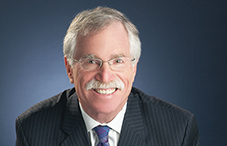

As faculty senate chair at my university, I knew about "herding cats." Listening carefully to differing opinions and seeking compromise are in my blood. But I have to admit; I have been surprised by the complexities of the APA presidency, even though I had served nine years on APA's Board of Directors.
The responsibilities of the APA president include five major challenges: planning a convention; organizing a presidential initiative; leading a newly organized Board of Directors and Council of Representatives; communicating with constituents and the public through the Monitor and other media; and representing APA domestically and internationally. (Oh, and dealing with crises is also on the menu.)
Perhaps the most exciting responsibility for me is planning APA's 2015 Annual Convention, to be held in Toronto, Aug. 6–9. Among the myriad and rewarding convention challenges are planning the opening session, selecting the opening session speaker and Lifetime Achievement Award winner from a slew of outstanding candidates, and developing presidential programming, as well as crafting the presidential speech and multiple ceremonial duties. Whew!
I'm also thrilled to be organizing my presidential initiative: an international summit on integrated care and psychology, which includes global themes on health disparities, training and education, access to services and best practices. Streamed globally from APA's new Capitol View Conference Center, my hope is that we will learn from each other and create further opportunities to collaborate.
As APA's 2015 president, I will also help implement the association's new governance system. Over the last few years, the Council of Representatives has taken bold steps to reorganize into a bicameral body where financial responsibility rests with the Board of Directors and policy decisions lie with the Council, led by a newly elected Council Leadership Team. As with all new governance structures, we will fine-tune our process over time.
I am most awed — and deeply moved — by my duties representing APA at conferences and other meetings worldwide. For example, when I attended the International Conference on Violence, Abuse and Trauma in San Diego last September, I was on a panel with Nicole Hockley, mother of 6-year-old Sandy Hook victim Dylan Hockley. Words cannot describe what it felt like to listen to her pain.
There have been other very meaningful moments representing APA, such as at the Caribbean Regional Conference of Psychology in Paramaribo, Suriname. Because Suriname is a former South American Dutch colony, I was advised to fly through Amsterdam, where I visited the Anne Frank Museum during my layover. I was extremely moved by the courage and prescience that led Anne Frank to document the Jewish persecution. The experience gave me an opportunity to reflect on how psychology's research on discrimination, stereotyping and hatred can help change behavior. It also enhanced my appreciation of the Caribbean conference topics, which included peace and conflict resolution, cross cultural studies, migration, human trafficking and disability, and marginalization, among others.
Shortly before I attended the Caribbean conference, I made presentations at The Chicago School of Professional Psychology and the Illinois Psychological Association (IPA). My presentation at IPA, "Creating diverse and inclusive organizations," dovetailed nicely with events in Suriname. These honest conversations reflected my long-term commitment to diversity as a core APA value. Robust discussions about racism, inclusion, privilege, ethics, and science and practice figured prominently in our conversations. Coincidently, Illinois affirmed marriage equality only four months before my visit, becoming the 16th state to do so. The conversations around marriage equality and diversity at IPA were exciting and poignant.
While I am humbled by the extent of my new role, I have not been surprised by the outpouring of support offered by APA's staff, board of directors and my council colleagues as well as by many friends. Not only am I grateful for this support, I know that no leader can be successful without it.