


In 2013, psychology research doctorates reported low unemployment relative to the overall unemployment rate (8 percent) in the United States.1,2
About 87 percent of people with psychology research doctorates were employed, 1 percent were unemployed and 11 percent were not in the labor force.1,3
Psychology doctorates also reported lower unemployment than the scientific workforce. About 86 percent of people with science and engineering doctorates were employed, 2 percent were unemployed and 12 percent were not in the labor force.
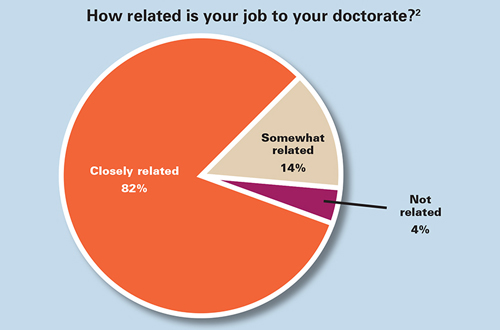
Of those employed, the most common occupations were psychologists (47 percent), social science postsecondary teachers (19 percent), and top- and mid-level management positions (8 percent).1 Nearly all psychology doctorates reported working in jobs closely or somewhat related to their doctorates.1
— Karen Stamm, PhD, and Peggy Christidis, PhD
1 National Science Foundation, National Center for Science and Engineering Statistics, Scientists and Engineers Statistical Data System (SESTAT). (2013). Survey of Doctorate Recipients [Generation of custom tables]. Retrieved from www.nsf.gov/statistics/sestat/. This report includes weighted estimates on approximately 840,000 individuals with research doctorates in science and engineering fields, including about 120,000 psychology doctorates. The use of NSF data does not imply NSF endorsement of the research, research methods, or conclusions contained in this report.
2 U.S. Department of Labor, Bureau of Labor Statistics. (2015). Labor force statistics from the Current Population Survey. Retrieved from https://data.bls.gov/timeseries/LNS14000000opens in new window. The reference period was February 2013.
3 Totals do not sum to 100 percent due to rounding.