

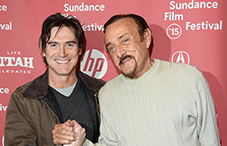

One of social psychology's most famous studies is now a dramatic film. "The Stanford Prison Experiment" debuted at the annual Sundance Film Festival for independent and documentary films, held Jan. 22–Feb. 1 in Park City, Utah. The film won the Alfred P. Sloan Feature Film Prize, a $20,000 award presented by the Alfred P. Sloan Foundation to honor a movie about science. The film also earned the Waldo Salt Screenwriting Award.
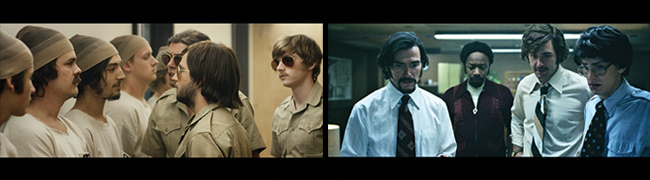
The movie stars Billy Crudup as social psychologist Philip Zimbardo, PhD, who conducted the study in August 1971 in the basement of the Stanford University psychology building to simulate the conditions of prison and examine the power of social situations over individual personality. Zimbardo, who was involved with the script and visited the movie set in Burbank, California, says the movie stays close to the events and details of the study. The experiment was to have lasted two weeks, but ended after just six days due to the emotional abuse by the students assigned as guards and the distress of the students assigned as prisoners.
"There is nothing in the film that didn't happen in the study, and in fact there are many things in the study they didn't get into the film," Zimbardo says. "The original had even more drama."
With the exception of Zimbardo and his then-girlfriend and now wife, Christina Maslach Zimbardo, PhD, played by Olivia Thirby, the movie version alters the names of everyone else involved in the study. Zimbardo had recruited 24 male college students through a newspaper advertisement to serve as prisoners and guards; two graduate students and one undergraduate student helped with the research. Zimbardo also enlisted prison consultants and Palo Alto law enforcement to help with the faux arrests at the beginning of the study.
While the study has been widely criticized for ethical and validity concerns — including that participants were purposely dramatizing the roles assigned to them — Zimbardo says he hopes that having the study back in the public eye will spur more interest in prison reform. "I would like to try to use the notoriety of the study in a positive way," he says.
One way he has already done that is through the Heroic Imagination Project, a nonprofit organization he founded that promotes using social psychology research to teach people ways to resist bullying and oppression and to encourage acts of heroism.
Movie producers first approached Zimbardo about a dramatic film about the study 35 years ago. A script for the movie circulated among various movie studios for several decades, with a variety of actors and directors attached, including Leonardo DiCaprio as a participant and Benicio del Toro as Zimbardo. When Crudup was cast, Zimbardo met with him on set to share his experience running the study.
"I told him he needed to wave his hands around a bit more to portray an Italian," Zimbardo says.
Director Kyle Patrick Alvarez says he hopes that the film inspires people to learn more about the experiment and its relevance to modern debates about abuse of authority. "I hope it incites conversation, arguments, concerns … about how we act as humans, and doesn't just show a singular ‘good guy/bad guy' point of view."
Another psychology-centric film, "Experimenter," also debuted at the 2015 Sundance Film Festival. That film details the work of now-deceased social psychologist Stanley Milgram, who attended James Monroe High School with Zimbardo in New York City. "Experimenter" stars Peter Sarsgaard as Stanley Milgram and Winona Ryder as Milgram's wife, Sasha.
"The Stanford Prison Experiment" is slated to appear in theaters later this year.