

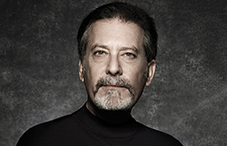

More than two decades ago, Jonathan Kellerman, PhD, spent long days as a childhood cancer researcher and clinical psychologist in Los Angeles before returning home to write crime fiction in an unheated garage while his children slept.
He wrote for 13 years before he found a publisher in 1985 for his first novel featuring child psychologist Alex Delaware, who solves murder cases with a Los Angeles police detective. The enthusiastic reception for "When the Bough Breaks" launched a literary career that has included more than 35 best-selling crime novels and honors including the Edgar Allan Poe and Anthony awards for mystery writing.
"I've never stopped thinking of myself as a psychologist even though I've been writing full time for 25 years," Kellerman says. "I feel so privileged to have worked in two wonderful professions."
Kellerman will return to his psychologist roots as the keynote speaker at APA's Annual Convention in Toronto, Aug. 6–9, where he also will receive the APA Award for Outstanding Lifetime Contributions to Psychology.
Captivated by human behavior
Kellerman received his doctorate in psychology at age 24 from the University of Southern California (USC). During internships and a postdoctoral fellowship at Children's Hospital of Los Angeles, he researched innovative treatment methods for children with cancer, including hypnosis and school-based interventions. In 1977, he became the founding director of the hospital's groundbreaking psychosocial care program for children with cancer, now called the HOPE Program. He also served as a psychology and pediatrics professor at USC, where he still holds an appointment, although he stopped teaching and practicing psychology in 1990.
"When I was a psychologist, every hour in my life was scheduled months in advance," he says. "Writing fiction is a great profession for someone with discipline. A novel is a yearlong project, so it requires the ability to impose structure on one's self."
He was drawn to crime fiction because of the psychological nature and high stakes involved in murder cases. Confidentiality rules that prohibited the use of former patients as models for fictional characters made him a better writer because he had to delve into his imagination, he says.
"I've always been fascinated by human behavior, so it was kind of a natural thing to write fiction, and I've had these dual loves of art and science," he says. "I'd like to think my experiences as a psychologist give the books a certain authenticity."
Kellerman was born in 1949 in the slums of the Lower East Side of Manhattan, where his parents bounced from one dilapidated tenement to the next, he says. After they had saved enough to buy a small house in Queens, the home was condemned for the construction of the Clearview Expressway, and the family moved to Los Angeles in 1959. His father, a decorated World War II veteran who took part in the D-Day invasion in France, invented electronics components and ran an electronics business, while his mother was a homemaker and employee at the Social Security Administration.
Kellerman met his wife, Faye — also a best-selling crime novelist — as an undergraduate at the University of California, Los Angeles. They married a year later and have four children. She has a bachelor's degree in mathematics and a doctorate in dentistry, but she left dentistry and began writing during the day while taking care of their children. Her first novel was published in 1986, a year after Kellerman's first novel. He says they aren't competitive as novelists because neither pursued traditional creative writing degrees, and they had been married for more than a decade before their first novels were published.
"Probably neither of us would have been published without each other's support," he says.
Kellerman says both he and his wife prefer to work in the morning from their home offices and will write four to 10 hours a day. Kellerman has kept up a prolific schedule, publishing at least one novel each year. He recently had four books published within 14 months, including two novels co-written with his eldest son, crime novelist Jesse Kellerman. Two of Kellerman's daughters followed their father's path in psychology. Rachel Kellerman Kessler has a doctorate in neuropsychology and has conducted research on Alzheimer's disease and Parkinson's disease, while Ilana Kellerman Moss is a doctoral candidate in clinical psychology at USC. His youngest daughter, Aliza, wrote a young adult novel with her mother when she was 15 and now writes for a wine-and-spirits magazine.
APA President Barry S. Anton, PhD, chose Kellerman as keynote speaker because of his work as a clinical psychologist and researcher. Kellerman says he feels honored to receive APA's lifetime achievement award, but he won't reveal much about his keynote speech.
"I write fiction and know about suspense, so I don't want to give too much away," he says. "I'm going to talk about some of my personal experiences as a psychologist and some of the overarching trends. I think psychologists as a group have one of the highest levels of competence I have seen."
Brendan L. Smith is a journalist in Washington, D.C.