



John F. Dovidio, PhD
"Bias Without Awareness: Racism Among the Well-intentioned"
 Many well-meaning people who believe that they are not prejudiced show signs of subtle racial bias, says Dovidio, a psychology professor at Yale University. In his talk, he will discuss how this bias is expressed, how it can produce unfair outcomes and interracial distrust, and what people can do to counteract it.
Dovidio will focus in particular on how subtle bias affects health-care delivery. "Doctors think they're not prejudiced and they want high-quality health care for everyone," he says. "But the tragedy of these subtle biases is that they create outcomes that are not desired by the doctor or the patient. Good intentions aren't enough."
Dovidio will highlight his research on strategies health-care providers can use to overcome these unintentional biases and produce better outcomes for their patients.
Angela Lee Duckworth, PhD
"Matter over Mind: Situational Strategies for Self-control"
 Around Halloween, many adults go into candy-avoidance mode. They buy their least-favorite treats, hide the candy in the back of the pantry or wait until Oct. 30 to stock up, all in an attempt to avoid eating more candy than they hand out to trick-or-treaters.
Such strategies are a cornerstone of self-control, says Duckworth, a professor at the University of Pennsylvania and the recipient of a 2013 MacArthur "genius grant" for her research on what she calls grit — the determination that allows people to reach their goals.
"Successful people don't just rely on willpower," she says. Instead, they often employ strategies, like hiding the candy, that allow them to succeed.
In her talk, Duckworth will discuss her newest research on how encouraging people to make proactive changes to their environments can help them achieve their goals.
Jennifer L. Eberhardt, PhD
"Race and Policing in America: Mapping a Way Forward in the 21st Century"
 With concerns about police bias making headlines nationwide, Eberhardt's research has never been more timely. The Stanford University social psychologist studies how subtle, often unconscious racial biases influence people's impressions and behaviors, especially within the criminal justice system. Her research has found, for example, that when whites were primed to think about a crime, they were more likely to focus on black faces than on white ones.
Last year, her research on race, crime and inequality earned her a $625,000, no-strings-attached MacArthur Fellowship.
In her convention presentation, Eberhardt will discuss some of the solutions she is exploring, particularly in her role at the new Stanford center she is co-directing, known as SPARQopens in new window — Social Psychological Answers to Real-world Questions. The group's mission is to create and share social psychological insights with people working to improve society.
Dorothy L. Espelage, PhD
"School-based Bully Prevention: Translating Rigorous Research Findings into Practice"
 One of the foremost experts on school bullying, Espelage will discuss how bullying is linked with other forms of violence, including dating violence, and why researchers should design developmentally appropriate prevention efforts.
"Bully prevention programs in high schools are making things worse, that is, the victimization increases," says Espelage, who has 22 years of research experience on bullying, homophobic teasing and dating violence. "This is likely due in part to the lack of developmental fit between the program and what we know about high schools and high school students."
Such programs need to focus instead on preventing sexual harassment and promoting healthy dating relationships, says Espelage, the Edward William Gutgsell and Jane Marr Gutgsell Endowed Professor in the department of educational psychology at the University of Illinois, Urbana-Champaign.
Her research regularly informs national policy on bullying and is funded by the Centers for Disease Control, the National Institute of Justice and the National Science Foundation.
Pamela A. Hays, PhD
"Compassion, Gratitude, and Growth Opportunity: Well-Being Strategies for Life"
 In the midst of texts, emails and long to-do lists, cultivating well-being in ourselves and others can be challenging. Remedies like a day at the beach may bring short-term relief, but what brings the lasting changes that help us be our best selves?
In her latest book, "Creating Well-Being: Four Steps to a Happier, Healthier Life," the author and clinical psychologist discusses the latest research on happiness and well-being along with a practical road-map, from self-assessment to tackling "thought traps," for achieving them.
"My approach to counseling emphasizes the importance of balance and meaning in life," she says. "Even during our most difficult times, each of us has an internal strength that points us towards wellness."
In her talk, she will discuss specific well-being boosters that are backed by research, positive psychology and indigenous spiritual traditions, Hays says.
Hays has provided multicultural practice for decades. She practices in the Kenai Peninsula of Alaska — the state ranked No. 1 in well-being, according to a Gallup survey.
David R. Matsumoto, PhD
"Reading People: How the Science of Nonverbal Communication Informs Everyday Interactions"
 There's a whole world of nonverbal communication that most people don't focus on, says Matsumoto, a professor of psychology at San Francisco State University and the founder of Humintell, a company that provides training in microexpression recognition, nonverbal behavior and deception detection.
In his convention talk, Matsumoto will give a brief overview of the past 50 years of nonverbal communication research, and then focus on how that science can help anyone who interacts with people for a living, including industrial/organizational consultants, therapists and others.
Using videos to illustrate his points, Matsumoto says he will help attendees "separate the signal from the noise" and discuss what they can and can't learn from facial microexpressions, voice cues, gestures and body language, and other forms of nonverbal communication.
Vickie M. Mays, PhD
"Racial/Ethnic Minority Lives Matter: Bridging Science and Practice in Policy Solutions"
 Psychological research and practice has revealed a tremendous amount about race, racism and implicit bias, but psychologists haven't done a good job of translating that knowledge into policy that can improve lives, says Mays, a professor in the department of psychology and the health policy and management department in the Fielding School of Public Health at the University of California–Los Angeles.
"Psychology is in a place in which its science can contribute to bringing about the change that campaigns that we have seen, such as ‘Black Life Matters' and ‘Ethnic Life Matters', are advocating," says Mays. "And not only do we have the science, we have the responsibility to use our science and our practice to help develop policy that can make a difference. I will talk about the science and practice that can address these issues."
Mays says psychology can make a difference by helping people who are being victimized, as well as helping others to be more tolerant of differences and to lessen the stereotypical fears people have that are based on evolutionary responses to danger.
"Psychology is well aware of these things and we have the capacity to address this," she says.
James L. McGaugh, PhD
"Making Lasting Memories"
 What factors influence how we remember things over time? A professor of neurobiology and behavior at the University of California, Irvine, McGaugh has studied how stress hormones and drugs can influence learning and memory consolidation. At convention, he will discuss the neurobiological systems that create lasting memories of significant experiences and what he has learned from studying people with highly superior autobiographical memories (HSAM) who are able to remember details of most days of their lives.
In the past 15 years, McGaugh and his team have identified fewer than 100 subjects with HSAM. In ancient times, the trait might have helped preserve knowledge passed from generation to generation. Although in today's era of computers and smartphones, there is clearly decreased need for such memories, investigating the nature and bases of this rare memory ability may provide new and important understanding of brain processes underlying learning and memory, he says.
Benjamin F. Miller, PsyD
"Evolution or Revolution? The Future of Psychology in Integrated Health Care"
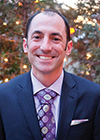 Health care is experiencing a revolution and psychologists have a choice to make about the role they will play in that transformation, says Miller, who directs the Eugene S. Farley Jr. Health Policy Center in the department of family medicine at the University of Colorado Denver School of Medicine.
Miller will discuss how history and culture have led to a fragmented health-care system and how psychologists' joining integrated teams can decrease costs, improve outcomes and enhance the patient experience.
"I will highlight both the promise and the peril for professional psychologists if they do not participate in health care's redesign," says Miller.
Miller is the principal investigator on several federal and foundation grants and state contracts related to comprehensive primary care and mental health, behavioral health and substance use integration. He is the principal investigator for the Agency for Healthcare Research and Quality's Academy for Integrating Behavioral and Primary Careopens in new window, a project focused on promoting integrated care. Follow his health-care updates on Twitter at @miller7.
Glenn E. Smith, PhD
"Can We Prevent Dementia? Progress and Challenges"
 New developments in the ways clinicians diagnose dementia are creating prevention opportunities for psychologists, says Smith. In his talk, Smith will review the latest approaches to dementia prevention and the increasing evidence that psychologists can help lessen the effects of the disease.
"Behavioral interventions can limit cognitive and functional decline and enhance quality of life as we age," says Smith, professor of psychology at the Mayo Clinic College of Medicine and chair of APA's Committee on Aging.
Smith is the creator and director of Mayo's Healthy Action to Benefit Independence and Thinking program, an intensive intervention for people with mild cognitive impairment that combines state-of-the-art physical and mental exercise, memory compensation training, and patient and caregiver education and support. Research shows the program helps people in preclinical stages of Alzheimer's disease maintain their functional independence.