


When APA launched the Archives of Scientific Psychology in 2013, it aimed to change the way psychological research is published. The digital, open-access, open-methods, and collaborative data-sharing journal is the first in psychology to require authors to release their datasets to other qualified researchers. The system was designed to encourage scientists to replicate others' studies, undertake more comprehensive meta-analyses, and foster research partnerships and new analyses of existing data.
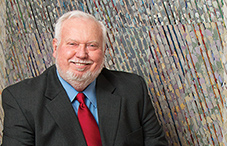
It's a model of scientific publishing whose time has come, says Cecil Reynolds, PhD, professor emeritus of educational psychology at Texas A&M University. In April, Reynolds joined APA's publisher, Gary VandenBos, PhD, as co-editor of Archives.
Under Reynolds's leadership, Archives will continue to publish articles that span the entire discipline of psychology, from neuroscience to political psychology and the many topics in between, using any methods, including experimental, descriptive, research synthesis and quantitative or qualitative analyses.
Recently, Reynolds spoke with the Monitor about his plans for the journal and his thoughts on the future of scientific publishing.
Why were you excited to take the helm at Archives?
I've been a journal editor-in-chief for more than 20 years, first of the Archives of Clinical Neuropsychology, then Applied Neuropsychology, and most recently Psychological Assessment. I've enjoyed the whole process of science as seen from the peer-review perspective. Archives, though, is a really new concept for the psychological sciences that takes peer review to another level. It also helps us publicize psychological science at another level.
How does the journal bring psychological science to the public?
Anyone in the world who has access to the Internet has free access to everything that's published in Archives. That gives authors the maximum possible exposure for their science, not just to other scientists but to the entire world.
To facilitate that exposure, we require authors of accepted papers to write a second abstract in lay language that summarizes what they've found and why it's useful and important. Secondly, they include a lay-terminology methods section in the body of their paper that describes in everyday language what they actually did. We think that will lead to greater exposure and greater understanding — and hopefully greater impact.
In what other ways is the process different for authors publishing in Archives?
Archives promotes data sharing and transparency in science. When you publish, you agree to make your data available to other qualified scientists so they can replicate your work or extend your work with your involvement. There is an application process to get access to the data — it isn't just sitting there for anyone to see. Qualified researchers are granted access and agree to offer you a chance to be involved with any extension of the work using those data. That creates great transparency, but it also gives your data the opportunity to have maximum impact. That is a truly unique aspect of Archives.
How have authors responded to this data-sharing model?
People often shy away from sharing their data. They feel, rightly so, that they've worked very hard to design and conceptualize the data generation, and they should have some ownership of that. That's a valid concern. In some instances they're afraid people will take their ideas and get ahead of them. But we do ask other qualified researchers to collaborate with the person who generated the dataset. Designing and collecting data are major contributions. We want to give them that greater recognition and to allow those data to have the maximum impact on the field that they can have.
We think this is beneficial to everyone, but some people are afraid they'll lose good ideas. Our experience is that is not a valid fear, and that in fact this leads to greater collaboration and better idea generation.
What's the process for determining whether a researcher is qualified to access others' datasets?
The process of gaining access to Archives' data is outlined on the journal's home page. All requests are reviewed by the journal's review committee, which consists of the editors and, in some cases, associate editors responsible for a particular journal section. We ask that researchers indicate their credentials, describe how they intend to use and store the datasets, formally agree to offer co-authorship to the generators of the data on any subsequent publications, and always properly acknowledge the original source of the data. We also welcome requests that may not result in publications — for example, requesting access to data for use in the classroom for instructional purposes.
Do you think the open-access, open-methods, collaborative data-sharing model is the wave of the future?
This model of open-access, transparency, and innovation through data sharing is already the new model in the physical sciences, but the psychological sciences haven't done a great deal with it. The physical sciences are ahead of us in this game, and we're playing catch-up a little bit. But this is the coming model.
[Open-access publishing] is now a requirement of NIH grants, and the Wellcome Trust also now requires data sharing and open-access publishing for all of their grant recipients. It's not a matter of whether or not this is going to happen. The question now is how quickly this is going to become the standard in the psychological sciences. Archives is APA's initial effort in this realm, so we can educate psychological scientists about this process and bring them onboard with what is going to be the scientific model of the future.
We're seeking the maximum exposure for strong psychological science, and the maximum impact that can be obtained from these very expensive, hard-to-get datasets. Far from being afraid of data sharing and transparency, we should be welcoming it with enthusiasm. It leads to better science, more innovation, and greater creativity.
Prospective authors are required to complete method questionnaires describing details of the study's rationale, method, results and interpretation. Isn't that a lot of extra work for authors?
It looks like a lot more work than it is. The questionnaires are a way for authors to review what they've done in terms of preparing their paper. Authors who go through the process find that if they have written a good paper that conforms to the APA Publication Manual, this is a simple process. If they haven't written their paper in that way, it becomes apparent to them very quickly — and they're prompted to make the necessary changes to their paper before they submit it. The process increases the probability their paper will be accepted.
The questionnaires also facilitate the review process. The reviewers get to see these forms. These materials often answer questions about the papers that would have been raised in the reviewers' minds, and as a result there are fewer revisions that have to occur. What at first glance looks like a lot of work turns out not to be, if you've written a really good paper.
Archives is free to readers. How is it funded?
We're open access, and that typically does involve authors having to make some payment. APA has agreed to waive all fees for publishing in Archives through the end of 2016 in order to promote this model of open access, data-sharing and transparency in science.
After 2016, there will be some publication fee for authors, simply because you can't operate without some source of funding. It's important for folks to understand, however, that our peer review standards are as high as all the other APA journals. You can't buy your way in. You don't get into this journal unless your science is strong.
Also, most grant agencies such as the NIH and the Wellcome Trust now anticipate that people applying for grant money will add these costs into their budgets. They want to promote open access, they want to promote data-sharing and transparency, and they are aware there are costs associated with that. These grant agencies are willing to bear those costs. Asking for that money won't hurt your prospects of getting a grant funded, and in fact it's now expected.
What are your plans for the future of Archives?
Conceptually, we are going to continue doing what the journal has already done. We hope to continue to have very quick turnaround times on our reviews. But we are going to be making some modifications to make the submission process a bit faster and even more streamlined.
We also plan to solicit papers on some special topics that deal with controversial issues in science. These will be substantive issues, areas of controversy within the psychological sciences where we hope to be able to move the field forward. Before the end of the year, we'll initiate the process and begin targeting people to bring us high-quality work on those topics. That work still will have to go through the same rigorous peer-review process. There won't be any laxity there. We want to see if we can promote further resolution of those issues.
Peer-reviewed publishing has come under scrutiny lately. We hear so often of papers being retracted, and some influential studies in psychology have failed to stand up to replication by other researchers. How does Archives address those concerns?
Part of the mission of Archives is to provide peer-reviewed support for replication and failure to replicate work. We will certainly publish those; that's part of the scientific process. In the psychological sciences, replication hasn't received the attention that it deserves in terms of actual presentation in the scientific literature. It's important to our progress as a science.
As far as falsification, I don't know that it's any more of a problem than it has ever been, but because of our ability now to communicate globally, an unfortunate incident in science garners a great deal more attention. I do think open-access data sharing and transparency will have the effect of reducing the incidence of any form of falsification in science. That's important, and it has become even more important as our science becomes more sophisticated and as our society, our governments, and our corporations become more adept at applying the psychological sciences. The work has the potential to have greater impact. We don't want things out there that are inaccurate — we want to make sure we get it right. That's part of what the open-access, open-data process will do.
Kirsten Weir is a freelance writer in Minneapolis.