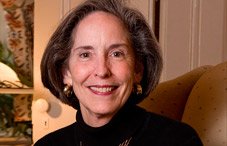

Tobacco use is the leading cause of preventable death in the United States, contributing to more than 480,000 American deaths per year (CDC, 2014). DePaul University researcher Leonard A. Jason, PhD, has devoted years to addressing youth tobacco use, and has developed and empirically verified the value of new ways of reducing underage youth access to tobacco. These approaches have been implemented in communities across the nation, and he was asked to testify at congressional hearings on the 1998 Tobacco Master Settlement Agreement. In addition, Dr. Jason has established the scientific basis of chronic fatigue syndrome/myalgic encephalomyelitis and has demonstrated the effectiveness of recovery homes, known as Oxford Houses, in preventing resident relapse. In recognition of his outstanding work, Dr. Jason is one of four individuals who will be honored with Distinguished Professional Contributions Awards at APA's 2015 Annual Convention in Toronto, Aug. 6–9.
Recognizing contributions to the profession of psychology is part of the mission of the Board of Professional Affairs (BPA), one of APA's several standing boards. BPA also recommends APA policy, standards and guidelines related to psychology practice to enhance the profession and foster the application of psychological knowledge to promote public welfare.
Each year, BPA undertakes a thoughtful review of candidate material to make recommendations on various Distinguished Professional Contributions Awards and, with input from the American Psychological Association of Graduate Students (APAGS), the Graduate Student Award.
In addition to honoring Dr. Jason, at convention APA will also present:
- The APA Award for Distinguished Professional Contributions to Independent Practice to Glenn J. Larrabee, PhD. Dr. Larrabee has excelled in clinical practice, research and publication, and test authorship. He has conducted innovative research on assessment of memory functions, Alzheimer's disease, age-related memory change, test validity and forensic neuropsychology. In 1997, he co-authored the widely cited meta-analysis on mild traumatic brain injury. Dr. Larrabee has authored more than 100 publications and 35 book chapters.
- The APA Award for Distinguished Professional Contributions to Institutional Practice to Rosie Phillips Bingham, PhD. BPA is honoring Dr. Bingham for her many contributions over 30 years as a counseling psychologist, especially in the areas of assessment and multicultural issues. She serves as vice president of student affairs at the University of Memphis, where she previously was director of the counseling center. Dr. Bingham has authored more than 30 scholarly publications, and counts more than 125 presentations on career development, with a special focus on black men and women.
- The APA Award for Distinguished Professional Contributions by an Outstanding Graduate Student to Adam Reid. Mr. Reid is a doctoral candidate in clinical and health psychology in the College of Public Health and Health Professions at the University of Florida. He was nominated for this award for his work with the university's Equal Access Clinic, one of the largest student-run free health-care clinics in the United States. As clinical director, Mr. Reid has worked tirelessly behind the scenes to keep the clinic open and establish it as a practicum placement for graduate students.
Award winners are offered the opportunity to present at the APA convention, and invited to submit articles on their work for publication in American Psychologist. If you'll be attending convention, use the APA convention app or pick up a program to find and attend the presentations by these award winners. Also be sure to stop by the Practice booth to learn more about APA's Practice Directorate and what we're doing to support the practice of psychology.