


Member since
1990
Her job
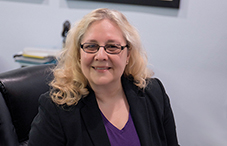
In her private practice in Lacey, Washington, Thompson counsels victims of trauma and violence. She also conducts forensic risk assessment and offers counseling for sex offenders. In addition, she teaches psychological assessment to graduate students at Brandman University in Lacey.
A trailblazer
Psychology was not her first career choice. Thirty years ago, Thompson was one of two female officers on the small, rural police force in Lacey. She became a detective after four years, specializing in child abuse and drug crimes. To better understand the complex area, she took psychology courses to improve her skills at interviewing victims and offenders and to better understand criminal behaviors. "I was lucky to be there during the transition [in national law enforcement] when we stopped blaming victims and their moms for somehow contributing to the abuse, and looked at these crimes as the offenders' responsibility."
Ripped from the headlines
Not surprisingly, the work could be highly demanding. Among her most stressful experiences was running a major narcotics task force during her last six years as a police officer, working with federal investigators. Her work involved surveillance of multistate drug cartels and drug traffickers, even kicking in doors to confront armed drug dealers. The reality of policing narcotics was horrific, especially when it involved children, she remembers. "People would show up with pounds of drugs to sell with their children in the back seat."
Transition to psychology
As her career progressed, Thompson felt drawn more closely to psychology, so she decided to pursue a doctoral degree in the field at Fielding Graduate University. She retired from police work in 2011 to become a full-time psychology practitioner.
Treating first responders in her practice is "a nice way give back a little to my former profession," she says. "People are willing to get help now. There is less stigma, especially with police and vets, who knowingly have to go into these high-risk situations because it's their jobs but often have been told to have the mindset to just suck it up."
A curious mind
While she loves practicing psychology, Thompson keeps an open mind about her future. "I always see where life takes me." Her advice: "Never be afraid to improve your skills in other areas. … You're never too old to do things."
— Stacy Lu
Each month, "Random Sample" profiles an APA member. You may be next.