


In May, major news outlets reported the story of Lamont Cathey, a Chicago high school basketball player who'd been charged with stealing money from a pizzeria safe in 2014. Unable to post bond, the 17-year-old languished in Cook County Jail for months and began ingesting bits of metal, leather and scrap materials from around the detention center, resulting in two dozen hospitalizations, multiple surgeries and more than $1 million in medical care, according to jail officials. He is still an inmate in the jail, awaiting trial, and now has a guard assigned to him 24 hours a day to ensure his safety.
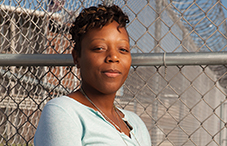
Cathey is a drastic example of how the justice system is failing, says clinical psychologist Nneka Jones Tapia, PhD, who in June began serving as the jail's new executive director. She's one of the first mental health professionals to lead a major correctional facility.
After receiving her doctorate from the Virginia Consortium Program, Jones Tapia began working as an intern at Cermak Health Services, a branch of the Cook County Health and Hospitals System that serves as the medical and mental health provider at Cook County Jail. She went on to spend three years as chief psychologist there and then joined Cook County Sheriff Tom Dart's office in 2013. There, she helped launch the jail's Mental Health Transition Center, dedicated to providing extensive therapy, job skills training and discharge planning to nonviolent inmates with a mental illness. About 30 percent of Cook County Jail's 9,000 inmates have serious mental health issues, with high rates of mood and psychotic disorders, making it one of the largest mental health institutions in the country.
The Monitor spoke to Jones Tapia about her new role and the need for more mental health professionals in correctional facilities.
Why is it so important for a psychologist to oversee Cook County Jail?
One reason is the number of mentally ill people we have in our custody now. Sheriff Tom Dart has long indicated that a jail is no place for mentally ill people, but if they're going to come here, he wants to offer them the best resources possible. We have excelled in the behavioral health services that are offered, but we continue to face challenges. I have no doubt that he considered that when he was thinking about who he wanted to appoint to the position.
What will your responsibilities be?
In my previous role I helped to bring the sheriff's vision to life by managing many of the jail's mental health initiatives, and now I am taking on the role of overseeing larger jail initiatives, which will continue to include those focused on the mentally ill. I'm also focusing on staff well-being. Given that they have to be first responders to so many different situations, the sheriff wanted to make sure we were continuing to provide support for them as well. We have been facilitating town hall meetings with staff members to hear about some of the challenges they face and will identify ways to minimize those challenges, and we will continue to research other opportunities to improve staff quality of life.
What is most urgent for you at this time?
My first priority is to obtain a detailed understanding of the security operations. I'm learning more about the jail divisions that hold our general population inmates, and I'm finding that they face similar challenges as those that hold our mentally ill, including de-escalating volatile inmates, managing self-harming behavior and offering better coping skills to individuals that have a history of resorting to violence as the first line of defense. Because we have so many individuals in our custody who are battling social ills, they may sometimes present with behaviors similar to those who have a mental illness.
What needs to happen to ensure inmates get the mental health care they need?
We have a number of individuals who would have been better served in the community before they are even charged with a crime, so diversion for low-level offenders is the place to start. That means police appropriately identifying someone with a mental illness and taking them to a mental health assessment center to try to keep them from coming into the jail.
For people charged with more violent offenses who have to come into jail, it's about identifying those with a mental illness at the point of arrest and making sure their illnesses are communicated to the courts and jail staff. By giving the court system the tools they need to make effective judgments, we would hope to resolve cases as quickly as possible so we don't continue to have them in a correctional facility setting where it's difficult to get their symptoms to subside.
The final piece is comprehensive discharge planning, which we start from the moment offenders come into custody. We work with the inmate to identify the neighborhood they'll be returning to, and then we get medical and mental health information to our community health partners to make sure they're willing to take the case, and then they meet with the individual while they're still in our custody. That's what we've found has really worked best with regard to maximizing treatment compliance postrelease.
How do you know that this approach is working?
Since the initiation of our Mental Health Transition Center in August 2014, we've had approximately 25 individuals released from custody to the community and most of them are either continuing their education, which they started here, or they've been placed with an employment opportunity. All of them are receiving ongoing mental health treatment services and none has returned to jail. We're quite proud of that program's success to date.
What does it say that a psychologist has been hired to run a major jail?
It sends a powerful message to the public and to lawmakers that we have to do something different. It's not surprising that Sheriff Dart appointed a psychologist to lead the jail because he has done a great job of making sure people are aware of the mental health challenges we're facing, with approximately 30 percent of our inmates suffering from a mental illness.
What are some of the unique qualities that you as a psychologist bring to this position?
As psychologists, we study human behavior. I make it a priority to talk to the staff about ways that we can positively model appropriate behavior for the inmates. They've been great about showing inmates that there's a different way to resolve conflicts, and the dynamic has been quite inspiring when you see how some of the detainees respond to the staff. I think that speaks to the training our staff receives. Since 2009, everyone coming into the jail for employment receives at least 100 hours of mental health training, including crisis intervention. It gives them the tools to identify someone with a mental illness who may not already have been identified. There are different points of incarceration — such as going to court and facing charges — where different symptoms may begin to manifest, and the staff do a great job of identifying when someone may be possibly deteriorating or having an exacerbation of symptoms, and then getting them to the appropriate treatment provider quickly.
What about your work might surprise other psychologists?
I don't think there's ever been a day that I wake up and feel as though I'm fully prepared for the things I see when I come to work. With the severity of mental illness that we have, coupled with being a correctional institution — a place no one wants to be — I'm always in awe of the behaviors I see. For example, there's been a lot of news coverage lately about a gentleman we have in our custody who is literally eating our jail. We have staff assigned to him for constant monitoring to try to ensure his safety. That's something you don't see in a typical office setting.
What does work about the jail system?
We were never meant to be a mental health facility, yet under the direction of Sheriff Dart, Cook County Jail has become one of the best mental health treatment facilities in the area. It's sad that people have to come here for treatment, and that the treatment services that we are offering far outweigh the scope of some of the services that individuals are able to receive in the community. Sheriff's Office mental health staff work collaboratively with our contracted service provider to offer quality care to all of the individuals that come into our custody. We diligently advocate for mentally ill individuals charged with low-level crimes to be placed in the community, but it is going to take ongoing partnerships and bold lawmakers to really push that message.
How have some of the latest state mental health funding cuts affected your work?
They definitely make it more difficult for us to identify treatment facilities to come in and offer discharge planning, particularly psychiatric services. There are a number of local social service agencies that can provide counseling, but the reality is that many of the people in our custody also need ongoing psychiatric services. While I can't make a direct correlation between the closing of facilities in the community and the increase in our mental health population at the jail, I can say that as the number of facilities have closed over the years, our numbers of mentally ill have gone up, so we clearly are doing something wrong.
What else do you want psychologists to know about correctional facilities?
There is great intrinsic reward in this work, so I would encourage new psychologists to consider going into this field. Correctional facilities hold populations that have historically been forgotten, and when you have the experience of helping someone who has had very little assistance, the gratitude they express is enough to keep you going, despite the challenges and this crisis we're facing.