


While a formal education in the field of psychology provides training for a wide variety of careers in behavioral health, these psychologists are using their background outside the traditional career paths. They are leveraging their research and clinical skills to influence public policies, research priorities, patient outcomes and more. Below they share how their psychology background is making a difference.
William Riley, PhD
Director of the Office of Behavioral and Social Sciences Research, National Institutes of Health
 Right now is a "really exciting time to be a behavioral or social scientist" because technology is changing the field so rapidly, says William Riley, PhD, the new director of National Institutes of Health Office of Behavioral and Social Sciences Research (OBSSR).
"We are able to measure things that could only be measured by retrospective self-report in the past," he says. "Now we can collect data more frequently and more precisely, and this new information allows us to study behavior and context in a way that we've never been able to do before."
Smartphones and other mobile devices, for example, can provide information about someone's location, activity level, heart rate and speech patterns, providing crucial data to researchers who study tobacco use/cessation, diet, physical activity, sun exposure, stress and sleep, he says.
Riley, whose research interests have included the application of technology to preventive health behaviors and chronic disease management, is eager to continue advancing that research in his new role at the NIH, which he began in August. As director of the OBSSR, his overarching mission is to integrate behavioral and social science perspectives across the NIH and disseminate the office's research findings. He also advises NIH leadership, governmental agencies, the research community and the general public about issues related to behavioral and social sciences research.
But when he launched his career as an assistant professor of psychiatry and health behavior 30 years ago, he says, he never foresaw a high-level position in NIH in his future.
"My path into the NIH was more by accident than by planning," he says. Riley earned his doctoral degree in clinical psychology at Florida State University. He started his career in academia working in the department of psychiatry at the Medical College of Georgia and later at Virginia Commonwealth University. He then worked in the private sector as director of research at PICS Inc., a health behavior and research technology firm.
After years in the lab, he started longing for a change and to have a broader impact. He applied for a position at the Division of AIDS and Health and Behavior Research at the National Institute of Mental Health — and got the job. He later moved on to positions at the National Heart, Lung, and Blood Institute and the National Cancer Institute.
Riley believes his research background in psychology has given him invaluable expertise in the area of designing, validating and testing measures for studies, which was critical when, for example, he partnered with other scientists to design the Patient-Reported Outcomes Measurement Information System, an NIH initiative that uses modern psychometric theory to more precisely and efficiently measure patient outcomes.
"I've had postdocs who told me about their long-range plans for their careers, but there are many seasoned psychologists who are not doing what they had originally planned. The key is being aware of opportunities when they arrive, and sometimes those opportunities may not be the traditional career paths in the field of psychology," he says.
Vicky Kelly, PsyD
Director of the Division of Family Services, State of Delaware
 When Vicky Kelly became the first psychologist to head Delaware's Division of Family Services in 2011, her first priority was to use her background and training to help one of the most underserved groups in the family welfare system — teens in foster care.
Although almost 50 percent of the youth in Delaware's foster care system were teens, the family services department was not geared to meet their needs, she says.
"Most people think of child welfare as a service for young children and systems are set up to serve younger kids," Kelly says. "We found that the majority of teens in foster care had been separated from their families due to significant parent-child conflict, but there were no specialized services to help the teens with their behavior."
The right program, Kelly realized, could help these families learn conflict resolution and other skills, which would increase the odds that these families could stay together.
Kelly's psychology training helped her assess a variety of evidence-based clinical intervention models and identify which had the highest probability of working. Her training included graduate school at the Institute for Graduate Psychology at Widener University in Pennsylvania followed by work as a therapist, clinical supervisor and clinical director in several large nonprofit social services agencies. In 2010, she was appointed deputy director of the Division of Child Mental Health in Delaware.
To better assist the teens in foster care, she selected an intervention called FAIR, or Family Assessment and Intervention Response, a program that serves as an alternative to protective service investigations and teaches families to resolve conflict and negotiate. She launched the program in Delaware three years ago and so far more than 500 families have been served — and 98 percent of the teens who have completed the program have been safely diverted from entering foster care, she says.
Kelly also pioneered the first Office of Evidence-Based Practice in Delaware, which is staffed by two psychologists and two counselors. They research evidence-based practices to formulate recommendations for Kelly and the child welfare staff. They also perform behavioral health and trauma screenings on all the youth who enter foster care, and communicate their findings to case managers and foster parents.
"This information from the screening is helping foster parents and case managers understand the past trauma that may be causing difficult behavior, which can have a dramatic impact on stabilizing foster care placements," she says.
Kelly says that it was surprising to her that this "trauma-informed" approach was not already part of the system — especially because many families have experienced multigenerational neglect, abuse, poverty and violence.
"Trauma is my primary area of interest as a psychologist, and I am trying to include more awareness about it in the policies and practices while I am the director," she says. "It is not only important to the families, but also the case workers who are incredibly vulnerable to vicarious trauma as they do this challenging work."
Deborah Ossip, PhD
2016 President of the Society for Research on Nicotine and Tobacco
 During graduate school at the University of Pittsburgh, Deborah Ossip wanted to choose a research specialty that would enable her to make a significant impact on health. With cigarette smoking responsible for hundreds of thousands of preventable deaths in the United States every year, her decision was clear: She would focus her career on tobacco control research.
After more than 30 years of conducting research at the University of Rochester in New York, she was elected president of the Society for Research on Nicotine and Tobacco for 2016. Ossip's training as a psychologist positions her to not only understand basic research, but also translate that basic science into public health practices. "There is a lot of research about why tobacco is bad and the underlying pathology, but we need to continue to find ways to create environments conducive to change and also tailor this message to the public in a way that will empower them to change their behaviors," she says.
If the current trajectory continues, 1 billion people will die this century from tobacco-related causes, mostly in low- and middle-income countries, according to the World Health Organization. Ossip hopes to continue to forge partnerships with communities in other countries that are interested in reducing tobacco use. In many cases, programs that worked in the United States or other high-income countries may not be effective in low- and middle-income countries, she says.
For example, smoking-cessation hotlines — known as quitlines — have been successful in the United States and other parts of the world, but people in communities without electricity have limited or no access to landlines or cell phones, she says. In Ossip's National Cancer Institute-funded project in the Dominican Republic, some communities trained tobacco control specialists to go door-to-door to answer questions and offer tobacco cessation services. Others delivered public service messages and cessation classes over the radio.
"I have seen communities outside the U.S. generate extraordinary ideas about how to translate the science into practice," she says. "Our organization can facilitate the spread of information about what is working and not working in communities abroad."
The art of translating evidence-based tobacco control messages to a variety of people is becoming more important than ever as new nicotine products, such as electronic cigarettes, continue to proliferate, Ossip says. In the future she expects to see different forms of smokeless nicotine administration.
"New products are emerging at a faster rate than we can get the research and evidence out," she says. "As a society, we have to remain vigilant. We need a rapid response that will monitor and disseminate scientific information quickly to people who can implement new programs and policies that will protect public health."
Alison Cernich, PhD
Director of the National Center for Medical Rehabilitation Research at the National Institutes of Health
 As a clinical psychologist working with physicians to help patients with traumatic brain injury (TBI), stroke and Parkinson's disease, Alison Cernich always found that her role was to look at the patient as a whole rather than focusing on specific impairments.
"Some members of the team, for example, would focus on getting an arm to move, but my biggest question was always, 'What does the person want to use the arm to do in everyday life, and how can we use this information to incentivize the patient?'" she says.
Now, as the first psychologist appointed director of the National Center for Medical Rehabilitation Research at the National Institutes of Health, Cernich is eager to keep patients' goals at the fore as the organization sets research priorities. She began the job in February, and she has already started identifying different patient groups that could partner with the NIH to provide input. "I've been involved in a lot of strategic planning and it is easy to get distracted by the organization's goals and forget about the people you are serving," she says.
Cernich's background includes doctoral training at Fairleigh Dickinson University in New Jersey and positions as director of neuropsychology and director of the Polytrauma Support Clinical Team at the Veterans Affairs Maryland Health Care System. She was also an assistant professor of neurology and psychiatry at the University of Maryland School of Medicine in Baltimore.
Her experience in TBI rehabilitation has also made her keenly aware of the unanswered questions in this area, and she hopes to support research that will address these questions. For example, it is still unclear why people with similar injuries respond differently to the same treatment. "Is it the environment, the injury they came in with, genetics or the treatments they received?" she asks. Another factor is age variation within the patient population. A child, adult or elderly patient may receive the same treatment, but developmental factors and co-morbidities can make it difficult to design studies that will find a specific outcome.
"My psychology training gave me the opportunity to work with patients across the entire life span, and this helps me understand the specific challenges researchers face when trying to validate a rehabilitation approach," she says. "I hope to encourage those investigators because it is truly an exciting time to be in research. There are so many treatments becoming available to help patients get better."
David Marrero, PhD
President, Health Care and Education at the American Diabetes Association
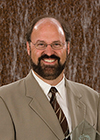 When David Marrero was diagnosed with diabetes at age 25, he was disappointed to find little in the university library about the mental health aspects of living with the disease. A doctoral candidate in social ecology at the time, he decided to redirect his research focus — and eventually his entire career — to the psychological and behavioral factors related to diabetes.
Earlier this year when Marrero was elected president of Health Care and Education at the American Diabetes Association, he was the second behavioral scientist to step into the role. Although there have been significant advances in diabetes treatment in the past 40 years, there has been scant research on the mental health issues of people living with diabetes, says Marrero. He intends to change that.
"People with diabetes are significantly more prone to depression and anxiety disorders than the general population, and this can have a huge impact on the effectiveness of treatment," says Marrero, who trained in psychology at the University of California, Irvine and is director of the Diabetes Translational Research Center at the Indiana University School of Medicine. "Diabetes is a lifestyle disease, and mental health can affect decisions people make about what and when to eat, or whether or not they choose to take their medication."
To increase awareness, Marrero has supported ADA initiatives that educate providers and patients about the prevalence and impact of mental health disorders in the diabetic population. He is also partnering with APA to pioneer a program to train licensed psychologists to more effectively treat people with the disease.
"Psychologists who treat people with diabetes are dealing with a whole layer of behavioral complexities, such as scheduling and timing of meals, exercise and medication, and the consequences can be very serious if patients do not follow these routines," he says. "The anxiety issues related to the disease are also often different than for other types of patients."
Marrero also speaks and blogs about the psychological issues that can accompany sophisticated treatment methods. For example, insulin pumps may stabilize glucose levels, but wearing a pump can be a constant visual reminder to people with diabetes that they are different from others, he says. Continuous glucose monitors provide real-time glucose readings, but this information may create a variety of emotional responses. There are those who feel extremely guilty when they see the impact of a poor eating decision, or others who are frustrated by the constant stream of information.
"Whatever the technology brings, there will always be a behavioral and psychological component that should be considered," Marrero says. "My job is to continually keep mental health issues at the forefront."
Dennis Freeman, PhD
CEO of Cherokee Health Systems, Knoxville, Tennessee
 July marked Dennis Freeman's 37th year as CEO of Cherokee Health Systems in Knoxville, Tennesee, and during that time he has seen the organization grow from 33 to 620 employees. His psychology training has always influenced his goals during his tenure as CEO, most notably increasing access to mental health services, he says.
"Many people who need mental health care don't have access, either due to the stigma associated with behavioral health or the long wait times," Freeman says. "One of my goals was to expand access by integrating mental health and primary care. Most people see a physician on an annual basis, and this seemed like a logical way to increase the percentages."
After earning his doctoral degree at the University of Tennessee, Freeman began his career as a psychologist at the Mental Health Center of Oak Ridge in Tennessee, where he served as director of community services. In that role, he started reaching out to primary-care practices to offer behavioral health care in tandem with traditional medical care. In 1978, he was hired as CEO at Cherokee Health Systems, which is a nonprofit corporation that provides community-based services.
At Cherokee, a psychologist is a member of the primary-care team and is available to assess patients and help them improve health behaviors. Many of these psychologists have prepared for this role by training in primary-care psychology for one year in Cherokee's APA-approved clinical internship program.
"It is not the traditional 45-minute psychotherapy session," Freeman says. "Psychologists in primary care learn how to make a very quick assessment and communicate information to the primary-care provider. Psychologists who do this type of work must have a willingness to learn new information about things like chronic medical conditions and the interaction between physical and mental health."
Freeman has also worked to increase access to this integrated model of health care by opening facilities in underserved areas, such as rural and inner city communities where unemployment rates are high and English is sometimes not the primary language.
This integrated system has even garnered the attention of insurance payers. One recently told Freeman that Cherokee Health System's model reduces costs by about 20 percent compared with other primary care practices. When more patients receive health care from an integrated team, there are fewer emergency room visits, use of specialists is lower, and patients spend fewer days in the hospital — all of which saves money, Freeman says.
"For me, the ultimate reward is seeing patients thrive and do well," he says.
Terry Stancin, PhD
President, Society for Developmental and Behavioral Pediatrics
 This year Terry Stancin became the third psychologist — and first female psychologist — named president of the Society for Developmental and Behavioral Pediatrics (SDBP). The 33-year-old organization, composed largely of physicians, is dedicated to improving the health of infants, children and adolescents by promoting research, teaching and clinical practice in developmental and behavioral pediatrics.
"I feel strongly that psychologists need to have a presence in medical and health-care organizations, because there is such an emphasis on interprofessional teams today," says Stancin, director of Child and Adolescent Psychiatry and Psychology at MetroHealth Medical Center in Cleveland, Ohio. "By being involved in leadership with physicians and other professionals, they are reminded of what we have to contribute," she says.
For the organization's annual meeting in October, Stancin selected a psychologist as the keynote speaker — Bruce Chorpita, PhD, a child clinical psychologist from the University of California, Los Angeles, who has focused on advancing the effectiveness of mental health practice technologies for children and adolescents. Stancin also formed a special interest group specifically for members interested in promoting the participation, interests and professional development of psychologists within the SDBP. She has also worked to include psychologists within SDBP committees.
Stancin earned her doctoral degree in clinical psychology at Kent State University in Ohio. Her interest in interprofessional teams started early in her career when she trained pediatric medical residents about development and behavior in children at MetroHealth Medical Center. Since then, she has become a strong advocate for including psychologists in primary-care settings.
"Many children who come to primary-care doctors have developmental and behavioral problems, yet they have trouble accessing mental health services," says Stancin, who is also a professor at Case Western Reserve University School of Medicine. "By bringing psychological services to primary care, we can address mental health and behavioral problems at the same time children are receiving medical services."
This perspective was critical recently when the SBDP was collaborating with the American Academy of Pediatrics to conduct a workforce survey to assess demand for health professionals who treat behavioral and developmental conditions such as autism, attention-deficit hyperactivity disorder, learning disorders, anxiety and depression. Initially the organization planned to send the survey only to physicians, but Stancin and other psychologists asked leaders to consider including psychologists and nurse practitioners in the survey, and they agreed.
"Had we not been there, the survey would have just gone out to the physicians," Stancin says. "To do an accurate survey of workforce demands, we need to understand all of the people involved in caring for these kids."
Although Stancin's role as president will end at the close of 2015, she will continue looking for other leadership positions within interdisciplinary organizations — and she encourages others to do the same.
"Many health-care organizations are looking for input from behavioral health experts such as psychologists," she says. "Many psychologists have been focused on their own guild organizations, but I think we should have a second academic or professional home in an interdisciplinary organization so we can have a voice among decision-makers pioneering change."
Marian Fitzgibbon, PhD
President, Society of Behavioral Medicine
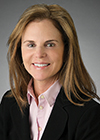 As soon as Marian Fitzgibbon, PhD, took the helm as president of the Society of Behavioral Medicine (SBM) in April, she started leading an organization that is pursuing the ambitious goal of promoting better health through behavior change.
The multidisciplinary society includes students, researchers, clinicians and professionals from a wide variety of fields including epidemiology, nursing, clinical psychology, public health, medicine and exercise physiology. As a psychologist, Fitzgibbon hopes to offer perspectives on the personal, family and community factors that can influence the decisions people make related to their health.
"I understand people often face formidable challenges when trying to make good choices about their health," says Fitzgibbon, a professor of medicine and health policy and administration at the University of Illinois. "Most people do not set out to make poor choices but they sometimes do, and I have been trained to try and understand the psychological underpinnings that often drive these patterns."
As the organization strives to develop evidence-based standards for integrative behavioral care and expand the role of technology in health-care delivery, she plans to share strategies that have proven effective with her own patients. For example, she has worked with individuals who are trying to change lifestyle patterns without the support of a family or spouse. "Finding alternative sources of support is key," she says. "It's exciting to help people understand that they can identify such sources, whose support often leads to real change."
Fitzgibbon, who earned her doctoral degree at Long Island University in New York, has seen throughout her career how environmental, socioeconomic and other factors affect health decisions. Some people have easier access to options that are healthful, such as a physical environment that includes parks or stores stocked with a wide variety of fruits and vegetables. "We need to address issues of access on a policy level if we want to make healthier options more accessible," she says.
She is also launching a leadership institute through SBM focused on helping mid-career members advance their careers. "We do a lot to nurture and mentor our junior members, but mid-career people tend to get less attention," she says.
Fitzgibbon hopes that the leadership institute will help mid-career members map their career trajectories and develop negotiation, conflict resolution and leadership skills. They will also learn how to hone scientific writing and deliver dynamic presentations.
With more leaders in the making, SBM will be positioned to help its members improve the nation's health through behavior change. "I am eager to see psychologists from a variety of sub-specialties participate in the institute," she says. "Their expertise, as well as others', is needed to make it successful."
Arthur C. Evans Jr., PhD
Commissioner of Philadelphia's Department of Behavioral Health and Intellectual disAbility Services
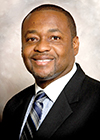 Over the past decade, Philadelphia Commissioner of Behavioral Health and disAbility Services (DBHIDS) Arthur C. Evans Jr., PhD, has moved his $1.2 billion agency from a service model focused only on treating symptoms to one based on a recovery-oriented framework that provides health education and community integration for people with mental health or substance use conditions. He also started advocating for data-driven initiatives such as a pay-for-performance system in which providers are rewarded for better outcomes.
Those changes hinged upon his psychology training, he says, and his desire to find a program that would lead to better patient outcomes.
"We are spending millions of dollars and seeing tens of thousands of people come into care each day," Evans says. "In order to do this job effectively, I've used my data analytic training as much as my clinical background."
He received a master's degree in experimental psychology at Florida Atlantic University before completing his doctoral training in clinical/community psychology at the University of Maryland College Park. Evans began his work in public policy as the Director of Managed Care for the Connecticut Department of Mental Health and Addiction Services and later became the Department's Deputy Commissioner, where he led major strategic initiatives for the Connecticut behavioral health-care system. In 2004, Evans became commissioner of Philadelphia's Department of Behavioral Health and Intellectual disAbility Services.
His interest in community health inspired him to partner with the director of the city's Mural Arts Program to recruit thousands of community residents to help create murals aimed at reducing the stigma associated with behavioral health issues such as gambling addiction, suicide and homelessness.
"It has been enormously successful," he says. "One of the biggest issues in mental health treatment is the stigma surrounding it, and this has been a nonthreatening way for us to engage and educate communities about these issues. The images create a sense of safety and hope."
During the last two years, the innovations implemented by Evans have saved the city of Philadelphia more than $6 million as public health improves, according to an analysis performed by Community Behavioral Health, a not-for-profit corporation contracted by the City of Philadelphia. Patients, for example, are more frequently connected to appropriate care, which reduces recidivism and unnecessary hospital admissions.
For Evans, this is very good news — and his success is attracting attention. Delegates from across the country and around the world are traveling to Philadelphia to learn how to implement similar programs in their cities and nations. In 2015 Evans was also recognized by the White House as one of nine "Advocates for Action" — individuals doing extraordinary things to improve the health and safety of their communities.