
Psychological science often gets "lost in translation," Jim Diaz-Granados, PhD, told participants at APA's 2015 Education Leadership Conference.
The public often reduces psychology to Freud's couch and padded rooms and views the discipline not as a science but as the realm of intuition, said Diaz-Granados, executive director of APA's Education Directorate.
But as a "hub science," psychology has much to offer in so many fields. "Public health, neuroscience, medicine, education — psychology is very relevant given that we study behavior," Diaz-Granados said.
Finding ways to ensure that psychological science gets put to use was the theme of this year's Education Leadership Conference. The event brought what Diaz-Granados called the Education Directorate's "brain trust" — almost 150 psychology educators, members of APA governance groups and others — together in Washington, D.C., Oct. 17–20 to discuss "Translating Psychological Science to Educational Practice, Policy and the Public." Participants explored ways of increasing understanding of psychological science and expanding its use in the classroom and beyond.
Participants, who included several graduate students, also visited elected officials and staff on Capitol Hill to urge Congress to help solve the student debt crisis by restoring graduate students' eligibility for federally subsidized loans.
With unsubsidized loans, graduate students start accruing interest the moment they sign a loan agreement, said Nabil H. El-Ghoroury, PhD, executive director of the American Psychological Association of Graduate Students. "We're burdening the next generation of psychologists with a lot of debt," he warned.
Using psychology in the classroom
Education is one realm where psychological science's contribution is frequently lost in translation, said Daniel Willingham, PhD, a psychology professor at the University of Virginia.
Psychological science has much to offer teachers, but they don't always receive that information in ways they can put into use in their classrooms, said Willingham. A 2012 survey from the American Federation of Teachers found that teachers' top complaint about their training was that it was too abstract, Willingham noted.
There have been efforts to make teacher training more practical, with more examples of how theory plays out in class. But that's not enough, said Willingham.
Instead, teacher training programs should strip down their cluttered curricula and replace often-confusing and contradictory material on theory with what Willingham called "empirical generalizations" — findings about teaching and learning that are almost always true regardless of settings, populations and subject matter. These include several "bedrock" principles: Learning requires attention and practice, learning a new skill is rapid initially but then slows down, and probing memory improves retention.
Another priority should be training teachers to put these kinds of empirical generalizations to use. "One of the ways psychological science goes wrong in practice is when teachers hear an accurate empirical generalization but end up applying it in a way that it wasn't meant to be applied," said Willingham.
Take the fact that active learning enhances retention. Researchers want teachers to use this finding by linking new learning to what students already know. "Teachers sometimes think that means that if kids are moving around and doing something with their hands, that's active learning," said Willingham. "But that's not what the principle means."
Students' beliefs about how learning works can also undermine learning, said Stephen L. Chew, PhD, who chairs the psychology department at Samford University in Birmingham, Alabama. Research shows that the typical college student is inadequately prepared for college but nonetheless over-confident. And there's lots of evidence that students' favorite study strategy — re-reading material — is also the least effective. Teachers themselves may have false beliefs about teaching and learning, said Chew. Instead of basing their pedagogy on science, he said, they are relying "on untested intuitions, biases and assumptions." Even among ELC participants, not all could identify the most important ingredient of successful learning on a list of learning strategies, despite the fact that researchers have known for nearly half a century that the answer is the deep processing that takes place when students link new information with their prior experience.
What's needed is to replace untested assumptions with research-based principles boiled down in a way teachers can easily use, said Chew. That's the idea behind Chew's new series of YouTube videos. Available at YouTubeopens in new window, the five brief videos outline the cognitive principles of effective teaching.
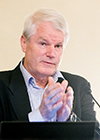

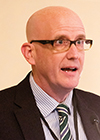


Presenters at APA’s 2015 Education Leadership Conference included: (left to right) Dr. Brian Baird, Dr. Tammy Hughes, Dr. Daniel Willingham, Dr. Roseanne Flores, and Dr. Jim Diaz-Granados.
Spreading the word
APA's Coalition for Psychology in Schools and Education is also working to ensure that psychological science gets used to improve education at all levels.
As one example, the coalition is developing "High 5," a brochure for parents who are trying to choose high-quality early childhood education programs for their children. "What the research shows over and over is that it's not just any early childhood education program that matters; it's high-quality programs," said Roseanne L. Flores, PhD, an associate professor of psychology at Hunter College.
The brochure will help parents identify the program that's best for their individual child by listing five questions parents should ask program administrators, including what three skills the program believes are most important for children to have and how the program manages difficult behavior. There are also five questions to ask teachers and five qualities parents should look for as they observe classrooms. "Decisions should be made based on the best science available," said Flores. "And parents should understand what's developmentally appropriate."
The coalition has also surveyed kindergarten teachers to assess such early childhood education changes as the growing pressure to make pre-kindergarten and kindergarten more academic and the increase in the numbers of children who attend pre-K.
Despite those trends, "there are vast numbers of children teachers view as not ready," said Timothy Curby, PhD, an associate professor of applied developmental psychology at George Mason University. And while teachers ranked children's socioemotional skills — such as getting along with others and knowing how to calm themselves — as most important, these are the very skills that many children have difficulty with, the teachers reported.
Teachers felt unprepared for the challenges they faced, the survey found. Almost half reported that a majority of their students were living in or near poverty and 21 percent said more than half their students were English-language learners. Yet most reported that their teacher certification programs hadn't prepared them for such challenges.
"We have an enormous and disgraceful gap in outcomes among kids in our schools," said the Education Directorate's Rena Subotnik, PhD, who directs APA's Center for Psychology in Schools and Education.
To help improve teacher preparation, an APA task force produced a report called "Assessing and Evaluating Teacher Preparation Programs." The task force brought together education experts to review the science behind teacher preparation programs.
Aimed at Congress, the federal government and accreditors, the resulting report recommends using three sources of data to evaluate teacher preparation programs: direct observation of teaching, students' scores on standardized tests and surveys of program graduates, their employers and their students.
That's in direct contrast to federal proposals, which focus almost exclusively on standardized test scores, said Subotnik.
Accrediting bodies and state agencies are already using the report, Subotnik said. The task force is also hoping the report will inform federal regulations due out this month.
Explaining psychology for journalists
Journalists are another audience that needs to have psychological science translated so they can use that science effectively, said Elana Newman, PhD, a psychology professor and research director of the Dart Center for Journalism and Trauma at the University of Tulsa.
"Journalists don't learn science," Newman said. And they need information fast, thanks to ongoing deadline pressure.
To help journalists get the story right, Newman suggested cultivating relationships with journalists — relationships based on more than expectations that journalists will provide free PR for researchers' labs. She also suggested that psychologists admit what they don't know, suggest alternative sources, speak in jargon-free language and define their terms when talking to reporters. "I assume that reporters will know what PTSD is, but was once quoted as talking about post-dramatic stress disorder," Newman said.
Most importantly, said Newman, psychologists should start thinking of translation as a new competency. Newman asks her graduate students to imagine they're at a cocktail party and must summarize their dissertation, for example. "I drill them on how to talk about their research in three minutes," she says. She also asks students to create jargon-free fact sheets about their work.
Informing policy
Translating psychological science effectively can also help state and national legislators make more informed policy decisions, said psychologist Brian Baird, PhD, founder and president of 4Pir2 Communication and a former six-term member of the U.S. House of Representatives.
Although psychology is central to addressing such societal challenges as climate change, education and national security, said Baird, psychologists aren't being as effective as they could be in conveying and applying their findings. "We punch way below our weight," he said.
To be more effective, psychologists should understand policymakers' situation. "They're overwhelmed," said Baird. "I may meet with you for 15 minutes; next it's Iraq, then Social Security, then nuclear power, fisheries and on and on." Make your research relevant to the policymaker by saying how it will improve something and be worth the taxpayers' money. Ideally, relate it to an upcoming event, such as a bill's reauthorization.
Telling a compelling story is also key, said Susan Hattan, who spent almost three decades as a Senate staffer.
Stories don't just help legislators remember what you've told them, said Hattan, now a senior consultant at the National Association of Independent Colleges and Universities. Stories also help put a face on an issue. They help build connections between you and the legislators and their staff. And they can help people understand your issue and correct misconceptions.
"The old joke on Capitol Hill is that the definition of a fact is two numbers and an anecdote," said Hattan. "Storytelling is how to get your message to stand out among the multitude of issues on Capitol Hill."
For Diaz-Granados, the key message to Congress is how relevant psychological science is to everything they do.
"Psychology has a connection to lots and lots of fields, and so should be at the forefront of people's minds," he said. "That should be an antidote to getting lost in translation."