

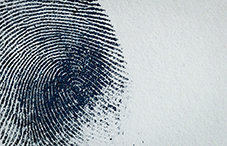

Neuropsychologist Paul L. Craig, PhD, has treated patients in his private practice in Anchorage for 34 years without any complaints. Now, he says, Alaska's psychology licensing board wants to treat him like a potential criminal.
Earlier this year, the state legislature considered a bill that would require all psychologists and master's-level psychological associates applying for their first licenses to be fingerprinted. The bill could open the door to requiring even psychologists renewing existing licenses to undergo criminal history checks. Although the legislation — which was pushed by Alaska's Board of Psychologist and Psychological Associate Examiners — was tabled this time, Craig and others expect it to return in the next legislative session.
"I have nothing to hide," says Craig. "I just don't feel like fingerprinting psychologists is necessary or appropriate."
Alaska is among a growing number of states that are requiring such background checks when psychologists apply for their first licenses, and some are requiring fingerprinting even for psychologists seeking license renewals. The issue is dividing psychologists. While some see fingerprinting as an inconvenience, an invasion of privacy and even a violation of equal protection rights, others view it as a natural next step in enhancing patient protection.
An emerging trend
Technological advances have made it easier than ever for the Federal Bureau of Investigation to check fingerprints against a database that can identify criminal convictions anywhere in the country, even if someone has changed names or used an alias. To help protect patients, state boards that license health-care professionals are increasingly taking advantage of the technology, according to a 2014 article by the Council of State Governmentsopens in new window.
Fingerprint checks for health professionals began in 1990, when California's state board of nursing began requiring that nurses in the state undergo fingerprint-based background checks. By 2014, 37 states were requiring fingerprinting as part of nursing licensure. Other health-care professions have followed suit. Today, at least 29 states require fingerprinting for physicians, 13 for emergency medical technicians and 11 for physical therapists, for example.
Over the last decade, a growing number of psychology licensing boards have also begun requiring fingerprints, iris scans or some other way to check psychologists' backgrounds beyond simply taking license applicants' word that they aren't criminals, says Stephen T. DeMers, EdD, chief executive officer of the Association of State and Provincial Psychology Boards (ASPPB).
"The move to fingerprinting is really due to the minuscule number of cases where people have fabricated their credentials and applied for licenses," says DeMers. "But the risk is so great, boards have had to protect themselves."
He points to a 2010 case in Indiana in which a "psychologist" practicing with a temporary license turned out to have fabricated his education credentials and a letter of recommendation and hidden a criminal past. "We presented the case at one of our meetings, and I think it really chilled a lot of the board representatives," says DeMers. "They were thinking, ‘That could be me up there.'"
While ASPPB doesn't track the number of boards that require such checks, DeMers estimates that at least half the jurisdictions in the United States now do so when it comes to initial licenses.
And while fewer states require investigations for psychologists who already have licenses and are seeking license renewals, doing so could give boards a way to be more proactive about detecting problems among practicing psychologists, says DeMers. "A psychologist could do a lot of damage before a client complained," he says. "Now the licensing board could find out a psychologist has had three DUIs and not have to wait until a patient says, ‘I smelled alcohol on his breath during my session.'"
Of course, says DeMers, licensing applications already include questions designed to ferret out a history of wrongdoing. Applications typically include questions about whether applicants have ever been convicted of a crime or been denied malpractice insurance, for instance. And to help confirm that licensure applicants are telling the truth, state boards have traditionally done random checks to verify university transcripts, letters of recommendation and other supporting materials. But, says DeMers, "it's a very spotty kind of system."
Psychology licensing boards can also check an ASPPB database to see if boards in other jurisdictions have taken disciplinary action against applicants, a way to weed out those who are "jurisdiction hopping." But that system isn't failproof, thanks to name changes after marriage, divorce or other circumstances.
That's why several states are looking to improve the way they do background checks. In Kansas, for example, a new law requires that all licensed mental health providers be fingerprinted. The regulations detailing how the law will work — and whether it will apply only to new licensees or also those seeking renewal — haven't been promulgated yet, says Bruce Nystrom, PhD, who chairs the Kansas Psychological Association's state legislative committee.
While the association won't have an official position until those regulations come out, Nystrom doesn't have a problem with the idea. There have always been protections against granting licenses to criminal offenders, he says, but new fingerprinting technology makes it easier to do such checks than ever before. "Plus, it takes it beyond the borders of Kansas," says Nystrom, a psychologist with River Park Psychology Consultants in Wichita.
Concerns among practitioners
Texas is one state that now requires fingerprinting not just for would-be licensees but also for psychologists who already have a license.
This year, the Texas State Board of Examiners of Psychologists began requiring fingerprints of psychologists who applied for licenses before October 2007 and who have never undergone a criminal history check as part of the board's licensing process. Psychologists must be fingerprinted specifically for this purpose since the board won't accept background checks performed for other government entities. Because so many psychologists are affected, the board is phasing in the requirement over four years.
James H. Bray, PhD, a past president of APA and now the president of the Texas Psychological Association, was fingerprinted as part of the first wave. He made an appointment with a company that contracts with the state, showed up with the required identification and paid about $80 for the service. While the process was efficient, he says, it was still an inconvenience.
"It's just a hassle and an expense," says Bray, an associate professor of family medicine at Baylor Medical College in Houston.
For Craig, the prospect of psychologists being fingerprinted is more than just an inconvenience — it's an unwarranted invasion of privacy. In the absence of probable cause — a legitimate complaint filed against a psychologist, for example — fingerprinting violates the right to privacy granted by Alaska's state constitution, he says. This isn't a personal fight, he adds, explaining that the federal government already has his fingerprints since he has enrolled in the Global Entry program for expedited re-entry into the United States.
"I don't have any criminal history that would make this uncomfortable to me," he says. He just doesn't think it should be a requirement for psychologists. "I understand that licensure is a privilege and not a right and that it's important the public be protected from individuals who would use the cloak of licensure in ways that would be destructive to others," says Craig. "I just see the arm of government reaching into our personal lives further and further."
Plus, says Craig, Alaska's proposed law would only cover psychologists and psychological associates, not other licensed mental health professionals. To him, that's a double violation of the Alaska constitution's equal protection clause: It doesn't offer equal protection to all consumers of mental health services and doesn't provide equal protection of psychologists' right to privacy compared with that of other practitioners. If psychologists are required to be fingerprinted, he says, then social workers, marriage and family therapists and similar practitioners should be, too.
Joel B. Wieman, PhD, a member of Alaska's Board of Psychologist and Psychological Associate Examiners, doesn't agree with those objections.
The proposed law's purpose was greater consumer protection, says Wieman, who spoke to the Monitor as an individual and not on behalf of the board.
Currently, says Wieman, the board can't do much to investigate a license applicant who checks a box indicating a brush with the law in his or her past. The board is allowed to contact the applicant for more information, Wieman says, but that person doesn't have to say anything. And some people just won't confess past problems, he adds.
"It could be they were arrested as a 20-year-old for possession of alcohol or some minor thing like that," he says. "Our statute doesn't allow us to investigate that beyond what the applicant states, so we can't do a background check; we can't call the state of Illinois or Texas and say, ‘What's the deal on this charge 10 years ago on Joe Blow?'"
The board isn't after psychologists, emphasizes Wieman, adding that it isn't interested in checking up on current practitioners. For one thing, the board lacks the resources to do background checks on hundreds of psychologists. But checking out would-be licensees is a different story, he says.
"What we're charged with as a board is protecting the public," says Wieman. "We're not an advocate of the profession; we're an advocate of the public."