Scrolling his Twitter feed over coffee in October, Ali Mattu, PhD, spotted an article that made his blood boil: Republican presidential candidate Jeb Bush had told a crowd on the campaign trail that while psychology is a popular U.S. major, these students might make a greater contribution to society if they pursued careers in such fields as welding or information technology.
"It pissed me off," recalls Mattu, a clinical psychologist who works with anxiety disorders at Columbia University Medical Center in New York.
Five hours later, Mattu had written, filmed and starred in a three-minute video response full of facts on how valuable psychology is to the world. He uploaded the video to his YouTube channel, promoted it on his social media accounts and encouraged people to share how they use their psychology degrees with the hashtag #ThisPsychMajor. Within three days, the posting had generated 3 million impressions on Twitter, Facebook, Instagram and YouTube, with psychologists, psychology degree-holders and psychology students from all over the world promoting their contributions to society.
Mattu felt vindicated, and ever hopeful about social media's value to the field. "People really need our science," he says.
With social media emerging as one of the best ways to share psychological research and promote help-seeking to the public, psychologists need not be shy. "We get a lot of training on how to be exhaustive in reviewing research, but we don't always get training on how to give it away."
Feel inspired? See how he and three other mental health professionals are putting psychology front and center via Twitter, podcasts and other social media.
The superhero psychologist
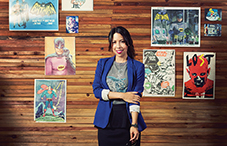 As host of the popular podcast "The Arkham Sessionsopens in new window" that psychoanalyzes TV's "Batman: The Animated Series," Los Angeles-based psychologist Andrea Letamendi, PhD, caught the attention of "Batgirl" author Gail Simone. Simone asked Letamendi to teach her about psychological trauma for a storyline she was writing. In the next issue of the comic, Letamendi was thrilled to see that Batgirl was depicted as a patient in therapy with a psychologist named after her.
"Here you have this superhero not just asking for help, but getting help from a psychologist, who is also a woman and an ethnic minority," says Letamendi.
From that point on, she was determined to bring Simone's character to life and do whatever she could to educate people about psychology's value. "I saw it as an important step for the comic book world and for our field," she says.
As such, her professional life has a superhero-like duality: When she's not at her day job — director of clinical training at the nonprofit mental health agency Hathaway Sycamores Child and Family Services — she's podcasting or writing her blog, "Under the Mask," which explores the psychology of comic book heroes and villains. Meanwhile, "The Arkham Sessions" podcast covers all topics in psychology, including brain trauma, mental illness and interventions as they relate to the Batman stories — and has had 275,000 downloads. She promotes her blog and podcast to her 12,000 Twitter followers at @arkhamasylumdoc. (Arkham Asylum is the psychiatric hospital featured in the DC Comics Batman stories.)
Letamendi believes people are drawn to her use of superhero narratives to discuss mental health. "These stories are universal," she says. "One hundred percent of the time we can find something very human and relatable in these characters to draw us in."
To those who want to follow her social media lead, she recommends classes in communications and public relations. "In graduate school, I never thought I needed to know about communications and then suddenly I found myself giving a TEDx talk," she says.
The social media maven
 Even in the early 1990s, San Francisco-based psychologist Keely Kolmes, PsyD, was tinkering with social media when it was merely AOL chat rooms and Usenet. When she launched her clinical practice in 2008, Kolmes assumed she would have to ditch her social media passion to maintain her professional identity. But a friend convinced her that she could do both.
"He told me, 'You're not most people — you're mindful of the things you say,' and that drove me into creating my professional Twitter account," she says.
Kolmes already had a blog on social media ethics and began sharing her posts and other mental health news via Twitter. Then she developed and released a social media policy to guide her private practice that she disseminated on Twitter. It quickly earned the attention of mental health professionals worldwide who were seeking guidance on the topic. Within just a couple of years, Kolmes became a sought-after expert and speaker on social media ethics and her Twitter following grew to 86,500 at @drkkolmes. She published an op ed in The New York Times about the challenges of consumer review sites for psychotherapists and is a frequent news source for the media.
She admits that her online presence can have drawbacks, such as having to tamp down her sense of humor. "I have an online persona, and it's still me ... but sarcasm and complaints about customer service, for example, don't always wear well on a psychologist's professional persona."
She cautions psychologists who want to be as active on social media to be humble: "Don't be afraid to be wrong or to say you're sorry," she says. In a world where one offensive tweet can become national news, learn when to rein in your emotions. "If something someone says makes you angry, take a break," she says.
The geek therapist
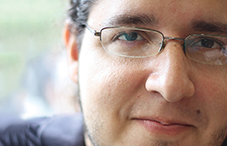 When he was a grad student at the Albert Ellis Institute in New York City, Josué Cardona launched a curated news website called "Geek Therapy: How Geek Culture is Saving the World" with articles on the mental health value hidden in watching such pop culture stories as "Game of Thrones" and "Doctor Who." The site, which now gets around 8,000 visitors per month and includes a weekly podcast and blog, helped him get an internship at a practicum site where the supervisor required them all to develop a professional presence online. "Before he hired me, I saw him tweet about my website, so I knew my chances were very good," he says.
In 2015, he started co-hosting a weekly podcast series called PsychTechopens in new window on how psychology and technology interact, with such episodes as "Anti-social Behavior and Game Design" on how technology could be designed to promote social behavior.
Producing his podcasts relaxes him after seeing clients all day. "It doesn't feel like work as much as recharging my batteries. Doing something creative feels really good," he says.
His social media presence has opened up opportunities to speak to the public in person. Last fall, he spoke to parents and children about bullying as part of the family programming at the New York Comic Con. Last year, he traveled to Colombia for a Comic Con-like event to speak to attendees and psychologists about how comic books can aid psychotherapy.
Lately, he's challenging himself to streamline his media. While it can be tempting to promote content on Vine, Instagram, Snapchat, YouTube, Twitter and Facebook, he says, it's best to pick three platforms and manage them well.
"Don't be everywhere," he says. "The point is to interact with the audience and that's hard to do if you have too many accounts."
The forward thinker
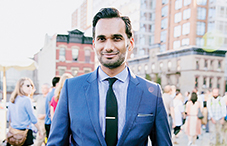 Long before he took on Jeb Bush, Ali Mattu, PhD, experienced a steep learning curve as he built his online persona: He wrote a few blog posts on the psychology of science fiction he was proud of — but no one read them. So he sought the help of a journalist who offered pointers on how to write for an Internet audience and expanded his blog, Brain Knows Betteropens in new window, which explores the psychology of science fiction with such articles as "What Battlestar Galactica Can Teach Us about Suicide Prevention." Once he got more comfortable with blogging, he debuted his podcast "Super Fantastic Nerd Houropens in new window" on how psychology and pop culture intersect, which taught him how to develop audio content and engage an audience through social media.
Lessons from a videographer friend taught him lighting, sound and post-production editing so he could shoot videos for his YouTube channel "The Psych Show,"opens in new window which aims to make psychology fun and easy to understand for young people.
Giving away psychology has given back to him professionally. With 3,000 followers on Twitter (@alimattu) — many of whom are also psychologists — networking is a cinch. "You don't have to wait for conferences and cocktail hours anymore," he says.
His experience with social media also helps him speak from the heart about modern social anxiety with his adolescent clients. "If I didn't have a working knowledge of Snapchat, it would be much harder for me to understand cyber-bullying," he says.
His main advice for psychologists who want to be effective online is to learn to communicate well. "Write clearly in a jargon-free, concise way — whether it's a tweet, a status update, a YouTube video or for whatever hologram technology is coming next," he says.