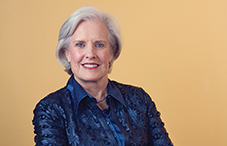

Susan McDaniel, PhD, promoted integrated health care long before most people knew what the term meant. In her first job in 1981 at the department of family medicine at the University of Rochester Medical Center (URMC), she was the first woman and the first non-physician faculty member. In that role, with her family physician colleague, Thomas Campbell, MD (now department chair), McDaniel (now associate chair) developed a psychosocial medicine curriculum for primary care, including an emphasis on collaboration with psychologists.
"Though the residents learned to identify patients with depression and anxiety, they were having a hard time hearing back from the mental health clinicians in the community to whom they were sending these patients. We thought, 'Why don't we have mental health services right here?'" she says.
McDaniel brought behavioral health specialists on board at URMC, a rare practice in the 1980s, but one that quickly showed results. "It reduced barriers to access and immediately improved communication," she says. "Patients loved being able to come to their physician's office for their mental health care. We were able to provide truly comprehensive care instead of siphoning off the mental health issues."
The program grew, leading to greater patient and family engagement and changing the way physicians at URMC learn and work, Campbell says. Now, URMC residents generally insist on having psychologists and other mental health professionals where they work, believing that it's helpful to them as well as their patients.
"Susan was able to build bridges and convince the administration that this model was important and not only beneficial to our patients, but also to our residents and our training program," he says.
Since the beginning of her career at URMC, McDaniel has also worked in the department of psychiatry, conducting research and developing curricula for mental health professionals to work in primary care. In addition to her leadership role in family medicine, she is the director of the Institute for the Family in the department of psychiatry. Through her role in psychiatry, McDaniel continues to expand the comprehensive care mandate, training psychology students, interns, fellows and later career members on behavioral health care, patient-centered communication and integrated care, while also treating patients and their families.
She is known for bringing her values to all facets of her work as an administrator, teacher and mentor. "She attends to the interpersonal development of people she works with, and is willing to be a cheerleader and champion," says her URMC co-worker Lauren DeCaporale-Ryan, PhD.
McDaniel is extending this work as APA president to push for integrated care nationwide. Her presidency is timely and likely to have a big impact on the field, colleagues say.
"I can't imagine a better APA president, especially now with the rollout of the Affordable Care Act," says Suzanne Bennett Johnson, PhD, former APA president and professor at Florida State University. "She has a vision of psychology as a health-care profession, not just a mental health profession — and she gets things done."
McDaniel has also been president of Div. 43 (Society for Family Psychology) and chair of APA's Publications and Communications Board. She has also been a member of the association's Committee for the Advancement of Professional Practice, Council of Representatives and Board of Directors.
As APA president, one of McDaniel's top priorities is organizing a conference of leaders from diverse health-care organizations to help them better understand psychology and how adding psychologists to care teams improves mental health access and helps control costs. Her goals are to form alliances to implement comprehensive care and tackle legislative, regulatory, payment and training hurdles.
"The need is great and the opportunities considerable for psychologists to contribute to primary health care," says McDaniel. "People suffer because of not receiving care that includes psychology." The time to act is now, she says, when the fluid health-care environment offers many opportunities for change under the Affordable Care Act.
Another of McDaniel's presidential priorities is promoting psychology within interprofessional education, working with pioneers in the field to ease curricula and financial barriers to make a "paradigm change in the way we think of graduate education."
"I hope psychologists can learn more about early intervention, prevention and population health — what it means to care for a community and how that affects the way you think about treatment, assessment, and research" McDaniel says.
Also critical, she says, is "learning to be part of a team and gaining the skills needed for that."
She plans to gather seasoned and early career psychologists in integrated specialty care — particularly in the areas of diabetes, cardiology, surgery, transplants and fertility — to exchange ideas on the "innovative and exciting things happening in those areas," McDaniel says, and to showcase their work in a journal special issue. She also hopes to produce a special journal issue on teams and team science.
Her presidency will also include addressing the findings of the independent review released last summer. (See the September Monitor.)
"It is a time of self-evaluation," she says. Her priorities include strengthening APA's conflict of interest policies, reviewing ethics policies and procedures, and "ensuring our commitment to human rights and public welfare is clear in all that we do."
— Stacy Lu