
The University of Missouri (MU) flagship campus in Columbia made international news in November when student protests over the institution's poor racial climate led to the resignation of the school's top administrators, Tim Wolfe, the state university system's then-president, and R. Bowen Loftin, then-chancellor of the Columbia campus.
The students accused the leaders of failing to adequately address overt racist incidents on campus — including white students' use of racial slurs against black students and racist graffiti — and of fostering a climate of indifference to racial and other diversity issues. The students also felt the leaders avoided dealing with such hot-button topics as the August 2014 shooting death of black teenager Michael Brown by a white police officer in nearby Ferguson, Missouri.
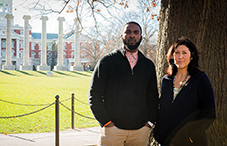
Less prominent in the news, however, was the role the university's counseling psychology department played as these events unfolded. For example, department faculty and doctoral students helped to ensure that students could share their concerns about the campus climate or their experiences with racism one on one in counseling settings, in small groups and in classes, says the program's director, Lisa Flores, PhD.
The program also hosted town hall meetings on diversity-related topics, and program faculty members have regularly consulted with college administrators to design meetings where students, staff and faculty can address some students' feelings of marginalization and work to enhance their inclusion on campus.
"An ongoing issue has been, how can we be more responsive to some of these societal events [like the Michael Brown shooting], and how do they mirror experiences of students and faculty on our campus?" Flores asks. Students and faculty of color have long noted instances of overt and subtle racism on the MU campus, she says, where white students and faculty make up more than three-quarters of the campus population.
Students have also been leading reform efforts. Third-year counseling doctoral student Reuben Faloughi was one of 11 student activists who formed a group that spearheaded the activities that prompted Wolfe's resignation. Faloughi says his passion was fueled following the school's lack of leadership after Michael Brown's death.
"When I saw the administration's inaction [in addressing this event] on campus, I felt something was wrong and it wasn't being addressed appropriately," Faloughi says.
During the school's homecoming parade in October, Faloughi and other members of the activist group stood in the way of the president's vehicle — a red convertible — broadcasting through a megaphone about significant events from MU history involving African-Americans that he says are neither discussed nor celebrated.
Wolfe remained in his car during the protest, and his staff tried to drive around the student protesters, who rearranged themselves to continue blocking the path of the car as it moved along. His failure to face the protesters, as well as his perceived lack of concern and understanding related to the content of the protests, was what finally pushed the group to demand his resignation, Faloughi says.
"It's important to realize that [the president's failure to respond] during the homecoming parade and other [recent highly publicized] incidents … are not the only instances of racism at MU," Faloughi says. "There are things that occur on the micro level every day in class, every day at people's jobs and assistantships, and they're still going on today."
For the counseling psychology department, the events represent an extremely important "teachable moment," both for the training of students in the department and relatedly, for students and faculty campuswide, Flores and other department faculty say.
To this end, the department is holding a graduate-level "difficult dialogues" seminar this semester that includes both didactic and experiential components. The aim is to help students come to a deeper understanding of one another from racial, cultural and privilege perspectives, and to gain the skills to facilitate similar dialogues across campus, says Sonia Dhaliwal, PhD, an assistant professor who will co-facilitate the class. In addition, through assistantships and practica, graduate students will continue to teach and provide counseling in venues across campus to help students process the events of the fall and learn more about the history and effects of racism.
The department is committed to working with the university's leadership to create a new history that is healthier for all, Flores adds.
"Our program has their attention, and I think they'll be leaning on us for assistance in developing action plans and other initiatives in the short- and long-term future," she says.