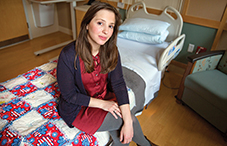

When clinical psychologist Kristen Dillon, PsyD, learns about a behavioral or psychological issue faced by a veteran in the hospice unit, she checks in with the patient's integrated-care team. If someone is having trouble sleeping, for instance, the team will identify the most likely problems feeding the insomnia, which could be anxiety, symptoms of post-traumatic stress disorder (PTSD), family issues or the wrong dose or type of medication, to name just a few possibilities.
Then the team develops the treatment plan. Dillon might teach the veteran mindfulness and meditation techniques. The nurses might encourage him or her to be more active during the day and go to bed a little later at night, or to try reading or watching TV if he or she still can't sleep. The physician might check the medications to see if one or more might be provoking the sleeplessness.
"Everybody has a different piece of the puzzle, and we all have to put it together to benefit the veteran the best way we can," says Dillon. In addition to the psychologist, the team includes a physician, several kinds of nurses, a social worker, an occupational therapist, and a speech pathologist, as well as dieticians, documentation specialists, pharmacists, a chaplain and trainees.
Such teamwork is standard procedure for Dillon at the 14-patient hospice unit at the Edith Nourse Rogers Memorial Veterans Hospital in Bedford, Massachusetts. The hospital campus also includes several community living centers, some of which also have palliative and hospice care components. It's a great fit for her background, which includes a specialization in geropsychology from William James College, a research focus on alleviating caregiver stress, and a keen interest in the lives and stories of older people.
Veterans' challenges in the unit are, of course, significant. Medically, they may suffer from cancer, amyotrophic lateral sclerosis, the effects of Agent Orange or other serious conditions. Psychologically, they often face depression, anxiety and PTSD.
Team members create their own schedules based on team conferences and their individual professional roles. Dillon's schedule, for example, includes morning meetings with the team; psychosocial support meetings with veterans, their families and sometimes other team members; and individual therapy appointments with veterans or family members as needed. Similarly, nurses create their own schedules based on team discussions and on providing care related to veterans' activities of daily living, meals and medications, for example.
Dillon also leads the team in using STAR-VA, an interdisciplinary behavioral intervention used throughout the VA that is designed to help manage veterans' dementia-related behaviors. Features include minimizing the use of antipsychotic medications and using positive reinforcement and environmental and staff changes to make veterans' lives as comfortable as possible. For instance, Dillon might create a "pleasant events" schedule that involves supplying a veteran with relaxing music, arranging daily times for him or her to have conversations with staff, or even ensuring that favorite foods are a regular part of meals. With a veteran who is acting aggressively because of PTSD or dementia, she might discuss with staff the possibility of cutting down on the number of staff hovering around the patient or moving him or her to a quieter room.
In partnership with a social worker, Dillon also runs anticipatory grief and bereavement support groups for families and staff. And she oversees informal memorial services that allow staff to process their feelings about clients who have died in hospice — approximately 80 veterans in the 14 months since the unit opened in 2014.
Besides such structured activities, Dillon spends a lot of time fielding behavioral and psychological crises as they arise.
"I'm constantly on call," says Dillon, who also provides psychological services at several palliative care centers on the hospital campus. "I'll get a call from a physician or nurse in the hospice unit or one of the centers saying, ‘This person is dying, can you come and be with their family?'"
Given the importance of teamwork with this population, one of her most important jobs is fostering relationships with and between team members, Dillon adds. In the beginning of her time at the hospital, for instance, she hung out in the nurses' station to learn about their rhythms, strengths and needs. Staff debriefings and memorial services for veterans who have died have also proven wonderful bonding opportunities, she has found.
Such activities are good for staff and especially good for those they serve, says Dillon.
"You're going to be working so closely together that you have to rely on each other," she says. "The only way to get a holistic view of the person, to have the greatest continuity of care, is to have everyone involved in discussing his or her needs and treatment. Our whole aim is to support veterans in having the best quality of life they can have at this time."