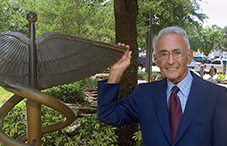

It took Walter Katkovsky, PhD, a while to warm up to the idea of prescription privileges for psychologists. But after years of working in a hospital, he became convinced that prescriptive authority could increase psychologists' influence and opportunities and bring an important voice to patient care in medical settings.
"Psychologists' emphasis on understanding individual differences in mental health and medical problems, and our knowledge of theoretical and research-based interventions, gives us a more holistic and individualized approach to patient care than is typical in medical settings," he says. These skills, he believes, can lead to more judicious decisions about adding or discontinuing medications, less redundancy in the health-care system, and lower costs. In addition, access to care increases when psychologists have prescription authority in areas with a shortage of psychiatrists.
To help psychologists who want training in psychopharmacology, Katkovsky has donated $250,000 to APF to support up to nine training scholarships a year for five years. The grants will go to licensed, postdoctoral early-career clinical, counseling or neuropsychologists.
"Psychologists are trained to conduct assessments of personality traits, abilities and lifestyle factors that lead to a treatment plan that generally involves psychotherapy," says Katkovsky, who retired as professor emeritus at Northern Illinois University in 1992, then spent 21 years in applied settings first as director of a Biodyne clinic in Illinois and then as a clinical psychologist at Winter Haven Hospital in Florida.
Integrating decisions about psychoactive medications with psychological consultations and psychotherapy is a logical extension of patient care, he believes.
Patients benefit when they're treated as whole people with complex psychological, health and social backgrounds, Katkovsky says. That view is supported by research showing that combined psychotherapy and medication is more effective than medication alone.
"While psychologists must be familiar with the medical model and its predominance in health care," he says, "it is important to recognize its limitations and the value of alternate models. The ultimate goal is finding what is most likely to help patients."
For more information on the APF Walter Katkovsky Scholarships, contact Erin Carney at (202) 336-5984 or go to https://www.ampsychfdn.org.