


Rarely have geopolitical tensions been as high as they were in 1939 as APA held its 47th Annual Convention. In the run-up to World War II, APA members came together to discuss psychology's role in effecting change on the world stage, with sessions such as "Psychology of International Relations and the Prevention of War."
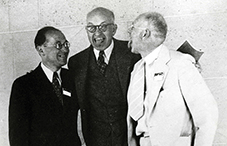
Perhaps in an attempt at comic relief, eminent psychologists Kurt Lewin, Edward Tolman and Clark Hull stopped to strike this playful pose at the convention, held that year at Stanford University. Lewin, a key figure in social psychology, drew on his experience fleeing the Nazis in 1933 to explore the impact of racism and discrimination on minority populations. Tolman and Hull, both past APA presidents, were pioneers of behaviorism's second wave: neobehaviorism. Their rival theories of learning left a lasting imprint on how we understand behavior.
Also at this convention, APA's Committee on Displaced Foreign Psychologists, formed in 1938, discussed ways to aid psychologists seeking asylum. Committee members, including Tolman, provided resettlement assistance, such as facilitating temporary research and teaching positions and helping immigrants with cultural adjustment.
Vanessa Facemire and Charity Smith are graduate assistants at the Cummings Center for the History of Psychology at the University of Akron.