
About CE
"CE Corner" is a continuing education article offered by the APA Office of CE in Psychology.
To earn CE credit, after you read this article at www.apa.org/ed/ce/resources/ce-corner, purchase the online exam.
Upon successful completion of the test — a score of 75 percent or higher — you can immediately print your CE certificate.
The test fee is $25 for members and $35 for nonmembers. The APA Office of CE in Psychology retains responsibility for the program. For more information, call (800) 374-2721.
Overview
CE credits: 1
Learning objectives:
After reading this article, CE candidates will be able to:
- Discuss the links among guilt, spirituality and suicide risk among veterans.
- Discuss the interventions, including brief cognitive-behavioral therapy, that can help these clients.
- Discuss other options that can help these clients.
As an active-duty psychologist serving in Iraq, Craig Bryan, PsyD, was treating a Vietnam veteran in his 60s who was struggling with post-traumatic stress disorder (PTSD). For years, the veteran had feared intimacy with his family and felt more comfortable in combat zones, which prompted him to seek employment as a government contractor in the Middle East. For decades, he had been oppressed by a profound sense of guilt after witnessing atrocities in Vietnam, and had suicidal thoughts.
Through therapy, Bryan learned that his patient's guilt was fueled by memories of a battle in Vietnam. American soldiers had killed innocent people who were difficult to distinguish from combatants. The veteran felt he had sinned by failing to prevent unintended civilian deaths during several firefights.
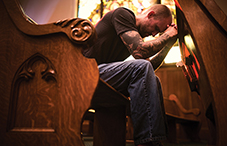
 Bryan knew the veteran was wrestling with spiritual questions, and asked him what God would think about this choice. "We talked about the fact that it was not fair or reasonable to look at his decisions separate from the insanity that was happening around him," says Bryan, who is now executive director of the National Center for Veterans Studies at the University of Utah. "He was being fired upon, there were dead bodies on the ground and there was incredible confusion and chaos."
Eventually, Bryan helped the veteran forgive himself, and his PTSD symptoms lifted. His panic attacks decreased, his sleep improved and he had better relationships with co-workers. He decided to return home to his family when his contract in Iraq ended.
"Military service really pushes spiritual issues to the forefront," says Marek Kopacz, MD, PhD, a health science specialist with the U.S. Department of Veterans Affairs in Canandaigua, New York. "Veterans have to reconcile their experiences with their understanding of God, life and living. Some can do this and manage to achieve a sense of spiritual well-being, but others have difficulties with this."
Addressing these spiritual dilemmas is an essential—and often overlooked—aspect of treatment when working with patients who are grappling with suicidal ideation, says Kopacz, who published a paper about this issue in Spirituality in Clinical Practice opens in new window in 2015. According to new data from a VA study that examined more than 55 million veteran records, an average of 20 veterans a day died from suicide in 2014, and the risk of suicide among veterans is 21 percent higher than civilians.
"Any kind of trauma increases the risk of a variety of things, such as substance abuse, bad relationships, health problems and suicide," says William Gibson, PhD, a clinical psychologist and neuropsychologist at the VA in Canandaigua. "Unfortunately, the spiritual issues underpinning veteran struggles are often unaddressed because psychologists are not very well-trained in how to deal with this. Most have taken a course on diversity in which religion and spirituality were very briefly discussed, and that's it."
A quest for meaning
In the case of the Vietnam veteran, the spiritual struggle started after he experienced what is known as "moral injury," or distress related to seeing things that violated his sense of right and wrong. People suffering from moral injury often feel guilt or shame, and a recent study led by Bryan showed that guilt was a better predictor than depression of people who will act on suicidal ideation ( Depression and Anxiety opens in new window, 2013).
Research also suggests that spiritual struggles are not restricted to people with a traditional religious faith. In a survey of 250 Iraq and Afghanistan War veterans, Joseph Currier, PhD, at the University of South Alabama, found that roughly one in three to four reported moderate to severe struggles with spirituality in some form—including those who were not associated with a religious organization.
The researchers asked participants to rate their spiritual struggles in both religious and nonreligious areas. Religious questions covered one's relationship with God, demonic or supernatural evil, doubt about one's faith and interpersonal issues with other religious people. The nonreligious questions covered issues with personal morality and meaning.
Preliminary findings of this ongoing study suggest that struggles with personal meaning were the strongest predictor of risk for suicidal behavior. "Veterans with the greatest risk for suicide seem to be struggling to feel like life has any ultimate meaning or that they matter in the universe," Currier says. He believes difficulty with finding meaning may be particularly salient among the new generation of returning veterans.
"Historically, many people embarked on this journey toward significance or meaning in the context of a conventional religious tradition, but this is happening less and less in our society," Currier says. "With younger vets, their personal meaning systems are not as likely to be formed by conventional religion."
Spiritual well-being may also be a factor in whether the treatment is effective. In another study, Currier and his colleagues assessed more than 500 veterans who were seeking intensive residential treatment for PTSD, and those who scored higher in positive spiritual behaviors, such as prayer and meditation, had a greater likelihood of responding well to psychological treatment for PTSD. Those who were struggling spiritually—by feeling, for example, that their mental health difficulties were a form of punishment from God—were less likely to benefit from treatment (Journal of Traumatic Stress, 2015).
"These findings underscore the need for clinicians to assess for spiritual struggles," Currier says. "We need to train psychology students to handle spirituality in the same way we would equip them to have competence with disability, race and age differences."
How to help
Although a spiritual assessment may not yet be common practice, Gibson encourages psychologists to start with a few simple questions to broach the topic. He asks patients if they were raised in a particular religious tradition and whether they practice the tradition now. If they don't identify with a tradition, do they practice anything else that is spiritual? And most important, how does their current practice feel and is it comforting as they struggle with whatever is causing their suffering?
Julie Exline, PhD, a professor in the department of psychological sciences at Case Western Reserve University in Cleveland, recently first-authored an assessment tool called the "Religious and Spiritual Struggles (RSS) Scale." The tool is an alternative to the "Brief RCOPE," a 14-item measure of religious coping with major life stressors that was developed by Kenneth Pargament, PhD, a professor at Bowling Green State University in Ohio. Pargament also worked with Exline on the new tool.
"The previous scale mostly focused on issues related to God," Exline says. "Our team thought that there are a lot of struggles people have around religion and spirituality that are not connected to struggles with God, and we wanted to measure that as well."
The RSS Scale, described in a 2014 study, taps into struggles related to God, evil forces, morality, interpersonal conflicts, doubts and life's ultimate meaning ( Psychology of Religion and Spirituality opens in new window, 2014). When assessments reveal that patients are struggling spiritually, Exline urges psychologists to view these issues as an opportunity for patient growth, rather than a problem to eradicate.
"There is quite a bit of evidence that people take good things from these struggles," she says. "They are grappling with important questions of life, and they may have to go through struggles to find out what they believe or change their views about God or religion."
She encourages psychologists to provide a safe environment for patients to explore their spiritual dilemmas, and says this is more important than offering quick, simple answers about why bad things happen, such as "God's ways are mysterious" or "It must be God's will." People who experience a positive response when they disclose their struggles are more likely to benefit from therapy, while those who experience a negative response are more likely to suppress their anger and turn to unhealthy behaviors, she says.
Bryan has found that brief cognitive-behavioral therapy is effective for patients facing spiritual struggles related to guilt, shame and suicidal thinking. For patients with suicidal ideation, he starts with emotional-regulation skills training. This involves teaching patients that their desire to kill themselves may be a coping strategy to escape painful emotions, rather than a desire not to live. He offers to teach them other ways to manage their suffering.
The next phase of therapy focuses on their belief systems. For example, veterans may assume that they are bad people as a result of their actions in combat. This can lead them to believe that their PTSD symptoms are punishment from God for their actions.
"I introduce the possibility that they may have done everything right, but bad things can happen to good people," Bryan says. "I help them start recognizing that just because they are experiencing hardship doesn't mean they are a bad person."
Chaplains as partners
While some veterans may feel comfortable talking to a psychologist about spiritual struggles, Jason Nieuwsma, PhD, associate director of the VA Mental Health and Chaplaincy program in Durham, North Carolina, has found that others prefer discussing these issues with a chaplain or other spiritual leader. He encourages psychologists to become familiar with the chaplaincy services in their facilities and develop a working relationship with these providers.
Although collaboration between mental health and chaplaincy services is ideal, results from a large-scale study in the VA showed that frequently the two disciplines did not work together. The main reason for this was lack of awareness of services available, not distrust of one another ( Journal of General Internal Medicine opens in new window, 2014).
"This was encouraging given the fact that there are a number of prominent figures in psychological history who have been overtly antagonistic toward religion, such as Freud and Ellis," Nieuwsma says. "Instead, we found that there was generally enthusiasm about the potential for collaboration once the idea was introduced."
In an effort to better integrate the services, the VA started offering a one-year subspecialty training to teach chaplains how to use evidence-based therapeutic principles. For example, they learn about practices within acceptance and commitment therapy. "Chaplains don't diagnose mental health problems, but they can learn how to help patients hold their experience, whether negative or positive, and then move forward in a direction toward their values."
More outreach needed
Psychologists who are interested in learning more about how to help patients navigate spirituality can join APA's Div. 36 (Society for the Psychology of Religion and Spirituality). The division holds an annual spring conference and publishes the journal Psychology of Religion and Spirituality .
Competence in handling veteran spiritual struggles is important not only for psychologists within the VA system, Bryan says. Most veterans do not have VA benefits, he says, because there are restrictions, such as the amount of time served, the type of discharge and whether a health condition is attributable to military service.
"We tend to push the responsibility for veteran health care on the VA, but this is a cop out," Bryan says. "We have a shared responsibility."
Although psychologists are only beginning to understand veterans' spiritual struggles and the subsequent health implications, a willingness to begin addressing these issues can change lives, Currier says. He remembers one veteran in his early 40s who had joined the Army National Guard to supplement his income as a youth pastor in an evangelical church. After serving in Iraq, he was tormented by nightmares and unable to socialize as a result of PTSD. He couldn't eat dinner with his wife and children, and sometimes showered with a gun to feel safe.
The veteran had seen several psychologists, but dropped out of treatment because he wasn't confident that his practitioners appreciated the important role of his faith. He couldn't forget one night in Iraq when he gave orders to men to shoot at a vehicle that was disregarding their attempts to change its course. After inspecting the vehicle, it became clear that the grossly disfigured occupants included four Iraqi children and their parents. One little girl had survived.
"One of his abiding beliefs that was making it difficult to engage in treatment was that God was the God of absolute truth," Currier says. "He was concerned that the secularized nature of the goals and tasks in treatment would not connect with his evangelical meaning system."
Rather than implementing prolonged exposure treatment without attention to his religious concerns, Currier worked with the patient to help him find the narrative truth in his own story, encouraging him to face emotions that he had not yet confronted in a meaningful way. This discussion allowed the patient to see that he had done everything possible to save the Iraqi family. He had ultimately given the order to use heavy artillery out of a duty to protect his men, rather than an intent to kill.
Once the veteran felt safe spiritually, he was a diligent client and completed the full prolonged exposure protocol. He experienced significant relief from his PTSD symptoms, and later forgave himself for making a decision that led to shock and pain for the little girl who survived. The veteran started eating dinner with his family again, and is ready to consider work as a youth pastor again.
Although the nature of the spiritual struggles may vary from veteran to veteran, this man's story represents the potential for positive outcomes when psychologists are prepared to talk about these core issues. And with 21 million veterans in the United States, there is a tremendous opportunity to begin practicing