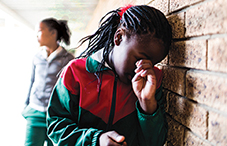

Research has long shown that bullying can lead to mental health and behavior problems among children and youth. But a growing body of evidence shows that the pain of bullying can persist long beyond adolescence. A study in the August issue of Social Psychology of Education, for example, found that childhood bullying inflicts the same long-term psychological trauma on girls as severe physical or sexual abuse and that the behavior can undermine victims' mental health into adulthood.
"Bullying victimization significantly predicted students' current levels of depression and anxiety—over and above other childhood victimization experiences," says study lead author Dorothy Espelage, PhD, a professor of psychology at the University of Florida.
Those pervasive mental health effects—and the evidence that bullying hurts the teaching and learning environment and increases mental health and behavior problems—are among the reasons APA has supported efforts aimed at preventing this behavior.
How is bullying defined?
Bullying is characterized as aggressive behavior that is intended to cause distress or harm, involves an imbalance of power or strength between the aggressor and the victim, and commonly occurs repeatedly over time. Bullying takes many forms, including physical bullying; teasing or name-calling; social exclusion; peer sexual harassment; bullying about race, ethnicity, religion, disability, sexual orientation and gender identity; and cyber bullying.
How pervasive is it?
Bullying is widespread in the United States. According to the latest data from the Centers for Disease Control and Prevention (CDC, 2015):
- 20 percent of high school students reported being bullied on school property in the 12 months preceding the survey.
- An estimated 15 percent of high school students reported that they were bullied electronically in the 12 months before the survey.
- Lesbian, gay and bisexual students are significantly more likely than their heterosexual peers to report being bullied at school or online (at school, 34 percent versus 19 percent; online, 28 percent versus 14 percent).
What does psychologists' research say about bullying?
Psychologists have found that:
- Bullying undermines psychosocial functioning among children and youth who are victimized, causing lowered self-esteem, higher rates of depression, anxiety, feelings of loneliness, suicidal ideation and higher rates of school absenteeism.
- Children and youth who bully are more likely than their peers to hold beliefs that support violence and are more likely to influence their peers to bully others.
- There is no single cause of bullying. Individual, familial, peer, school and community factors may place a child or youth at risk for bullying his or her peers.
- Perpetrating bullying is related to other problem behaviors, including vandalism, fighting, drinking alcohol, smoking, truancy, dropping out of school and carrying weapons.
For more information on these findings, go to www.apa.org/about/policy/bullying.pdfopens in new window (PDF, 40KB).
What is APA doing?
In 2004, APA approved a resolution calling for the association to integrate bullying prevention into its violence prevention activities, encourage funding of research on bullying behavior and anti-bullying interventions, work with other groups on the problem and encourage the evaluation of current programs.
In August, APA and several psychologists participated in the 2016 Federal Bullying Prevention Summit, hosted by the U.S. Department of Education and the Federal Partners in Bullying Prevention. In particular, the summit highlighted recent guidance to schools on protecting transgender and gender non-conforming students and students with disabilities.
Is there new federal legislation on bullying?
The newly reauthorized Every Student Succeeds Act includes a number of bullying prevention provisions. The updated law requires reporting on the incidence of bullying and harassment in state plans and in state report cards. In addition, the law includes a section devoted to "Safe and Healthy Students" that supports bullying and harassment prevention initiatives and supports school mental health and relationship-building activities.
APA is working to advocate for strong funding for these federal programs. The amount they get will be determined by a final resolution for the 2017 fiscal year budget.
What resources does APA offer?
These free resources are available on APA's website, www.apa.org:
- Bullying Prevention Strategies for Schools: A list of ways to stop bullying recommended by Stopbullying.govopens in new window.
- LGBT Youth Resources: Research-based recommendations and resources for psychologists, educators and policymakers to make schools safe and supportive for LGBT students.