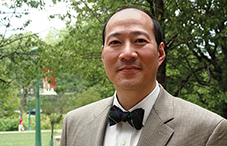

The Orlando nightclub shootings last June left Y. Barry Chung, PhD, feeling despondent about rising intolerance in the country. The string of shootings throughout 2016 of African-American men by police officers heightened his melancholy. "It was an emotional year," he says. "The targeted violence, conflicts during protests, all of these things are disheartening." After months of reflection, Chung decided to stop just worrying about the future and take steps that he hopes may strengthen it. He made a bequest in his will to APF to fund research scholarships and grants aimed at enhancing the well-being of lesbian, gay, bisexual and transgender (LGBT) populations and people of color.
"There is clearly so much to be done still," says Chung, a professor and program director of counseling psychology at Indiana University Bloomington. While many states have made advancements in the protection of LGBT rights, his home state of Indiana still passed legislation in
2015 that would allow for discrimination based on sexual orientation or gender identity. "If I can do something to support research that can lead to advancements for the LGBT community and people of color, I am all for it."
Chung's gift will fund research on either topic by an early career psychologist or a psychology graduate student (in alternating years), a decision fueled by his longstanding passion for mentoring and creating opportunities for up-and-coming psychologists. As 2012 president of APA's Div. 17 (Society of Counseling Psychology), for example, Chung launched the division's now biennial Leadership Academy, a program where ECP and student members of Div. 17 learn leadership skills.
He hopes his gift will produce research on topics such as how marriage equality laws affect life quality and how to promote resilience among people of color. He also believes psychology needs to identify better interventions to prevent suicide among LGBT populations.
Born into poverty in Hong Kong, Chung says he relied on creativity and resilience to find the resources he needed to come to the United States in 1988 to pursue his graduate education—an experience that has shaped his professional choices and inspired his desire to give back to psychology. He hopes his donation provides resources for future scholars who want to make the world a more affirmative place for everyone.
"I had this existential reflection that, in the end, I want to do what I can to make a difference," he says.