


One-third of employed psychologists—those whose highest degree is a doctoral or professional degree in psychology—worked part-time at their principle jobs in 2013.1,2
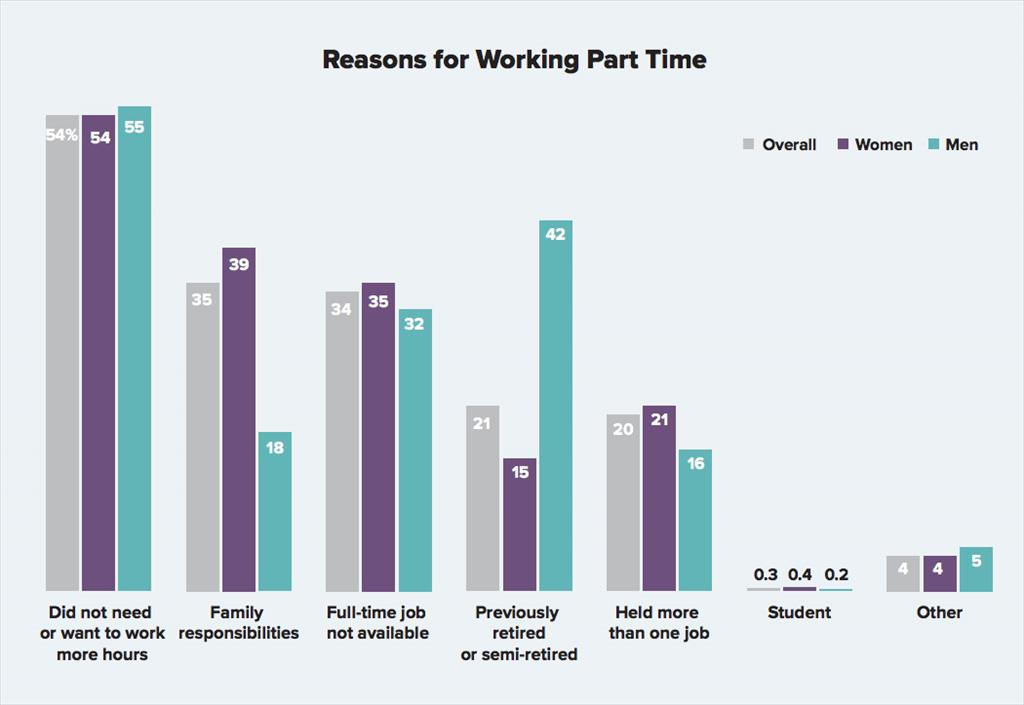
- The top reason they reported working part time was that they "did not need or want to work more hours" (54 percent), followed by "family responsibilities" (35 percent) and "full-time job not available" (34 percent).
- Women were more likely to work part time due to family responsibilities than men (39 percent versus 18 percent).
- Men were more likely than women to work part time due to previous retirement or semi-retirement (42 percent versus 15 percent)
By Luona Lin, MPP, Peggy Christidis, PhD, and Karen Stamm, PhD
For more information, contact cws@apa.org.1 National Science Foundation, National Center for Science and Engineering Statistics. (2013). National Survey of College Graduates Public Use Microdata File and Codebook. Retrieved from https://sestat.nsf.gov/datadownload/. The use of NSF data does not imply NSF endorsement of the research, research methods or conclusions contained in this report.
2 Working part time refers to working less than 35 hours per week in the principal job (job spent the most hours) in a typical week.