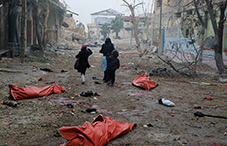

"Tonight we have no house, it's bombed & I got in rubble," a 7-year-old Syrian girl named Bana Alabed tweeted from Aleppo following a bombing in late November. "I saw deaths and I almost died."
Bana is just one of millions of children suffering in war zones around the world. But children aren't just victims of armed conflict, says psychologist Mike Wessells, PhD, a professor of forced migration and health at Columbia University's Mailman School of Public Health. They're also "untapped assets" who can help promote recovery in themselves and others, he says.
That theme suffuses two special issues of APA's Peace and Conflict: Journal of Peace Psychology that Wessells guest-edited. Drawing on children's own narratives, the August 2016 issue describes the problems of children who have experienced armed conflict in settings as diverse as Nepal, Sri Lanka and several African nations. The February issue explores how best to help.
Papers in the February issue include:
- "Children and armed conflict: Toward comprehensive, sustainable interventions."
- "Where there is no intervention: Insights into processes of resilience supporting war-affected children."
- "Raising children in conflict: An integrative model of parenting in war."
Both journal issues reflect major shifts in humanitarian efforts, says Wessells. First, the humanitarian field is shifting to a more holistic approach. While most of the psychological research has focused on depression, anxiety and post-traumatic stress disorder in these children, says Wessells, the evidence shows these problems affect a relatively small number of war-affected kids. What's needed, he says, is a more holistic approach that also addresses such issues as loss of belongings and homes and the lack of educational opportunities and jobs.
The issues also reflect a new awareness of children's agency, says Wessells. "Once you realize these children are resilient, you begin asking whether there are ways they themselves—particularly teens—can become partners in helping others get back on their feet again," he says.
Helping communities help themselves is also key, says psychologist Alastair Ager, PhD, author of one of the February issue's papers and director of the Institute for Global Health and Development at Queen Margaret University in Edinburgh. Just as psychotherapists bolster patients' capacity to cope, he says, so should humanitarian agencies bolster war-affected communities. "Our interventions should be supplementing and supporting community resources," he says. "We should lose the idea that somehow the intervention is what's going to make everything happen."