

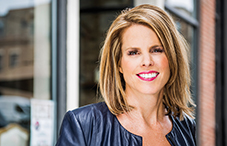

Elizabeth Lombardo, PhD, one of the nation's most high-profile psychologists, has appeared regularly on "Good Morning America," the "TODAY" show and "Dr. Oz." She's also well-known for her books, including "Better than Perfect: 7 Strategies to Crush Your Inner Critic and Create a Life You Love" (2014). To millions of Americans, she is the psychologist who translates the field's rich research into actionable steps that people can take to improve their lives. The Monitor asked Lombardo about her work.
What do you see as your mission for your career?
My underlying goal is to help people get out of their own way. We have a lot of thoughts that can be detrimental, and I teach people how to take control over what they are saying to themselves. When I was in graduate school, I remember learning about psychological principles and wondering why we waited for people to become depressed before we taught them these tools. My goal is to help people before they need to spend time on the proverbial couch.
What did you do before you became a psychology celebrity?
I went to Drexel University in Philadelphia to earn my PhD in clinical psychology, and I graduated in 2002. I did a postdoctoral internship and thought I would pursue a career in academia, but during that time I realized academia was not the path for me. I would go in at 7 a.m. and get home at 8 p.m. and continue working into the evening writing grants.
That's when I decided to start a private practice, and I saw patients who were dealing with chronic pain, marital issues, emotional eating and other problems. I started to realize that if I could see them before the symptoms became so severe, I could help prevent conditions from developing.
After three years, I had to close that practice when my husband took a job in Pennsylvania, and I started writing my first book, "A Happy You: The Ultimate Prescription for Happiness."
How did you break into the media world?
When I heard that the average book usually only sells 500 copies, I knew I needed to learn how to get my message out through marketing and speaking events, but I had a significant fear of public speaking.
So, I joined my local National Speakers Association to learn how to speak in front of large audiences, and pursued media training with professionals who taught me how to speak on television and give a great interview. I started doing public speaking events related to my book, and then I decided to send my information to a PR agency that could get my name out to a range of media outlets. They called a few months later with the news that the "Montel Williams Show" was interested in having me talk about the psychology of pain.
This motivated me to start pitching ideas to shows like "TODAY," but I got no responses from them for two years. Then I finally heard back and was invited to be on a segment about how to deal with happiness hangovers—the letdown after a big event like a wedding or having a baby. Now I'm at the point where the producers know me and will call if they want me to be on a show.
What do you enjoy most about your job?
I love getting this message out in new ways. And I enjoy seeing people apply the concepts that I teach. A national food service company, for example, hired me to lead a discussion about my latest book, "Better Than Perfect." One woman shared how the book helped her see not only her own perfectionistic tendencies, but also how these patterns were impacting her son. Recently, I had a handyman at our house, and he told me how my recent segment on the "TODAY" show about forgiveness had motivated one of his clients to call a friend she hadn't spoken to in 20 years. There is power when speaking in front of 4 million viewers, even if just one person has a breakthrough.
What do you find challenging?
One of the challenges is the last-minute travel involved in television appearances. In October, for example, I was excited when "Good Morning America" invited me to do a segment on tension between family members related to social media rants about the election, but my two children were upset when I was leaving. When I take a step back, though, I realize that I want my daughters to see that you can be a mom and also pursue your passions. This model for them is important, and I hope they feel empowered.
What else do you want readers to know about your work?
Psychologists' opportunities to help people are limitless. It's important to think about how we can reach a different audience and help more people, whether it be through blogging, writing, speaking or creating online videos. I recently teamed up with a colleague, and now we're developing a course about how to break into the media. We cover topics like how to pitch and feel comfortable on camera. It's important to make a pitch newsworthy, such as how to deal with stress during or after an election. If movies come out about something related to your expertise, pitch an idea related to that. I also encourage people to start by contacting their local media outlets because they have to fill hours of time every day.
To learn more about Dr. Elizabeth Lombardo, visit https://elizabethlombardo.com.opens in new window