


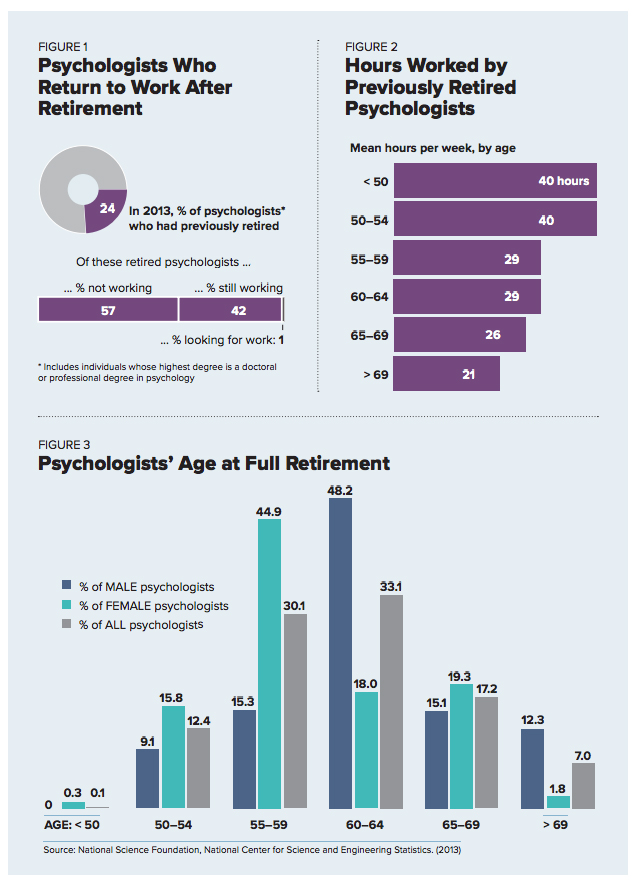
In 2013, about 24 percent of all U.S. psychologists (those whose highest degree was a doctorate or professional degree in psychology) had previously retired—that's approximately 53,000 retirees.1
- But 42 percent of them were still working, and 1 percent were looking for work. Fifty-seven percent were retired and not working. (Figure 1)
- Of those psychologists who were working after having retired, 80 percent were working in a psychology-related field, and 45 percent were working 35 hours or more per week. Psychologists worked fewer hours as they became older. (Figure 2)
- Of those psychologists who were retired and not working, the median age at full retirement was 61. Women tended to retire at earlier ages than men. (Figure 3)
For more information, contact cws@apa.org.
1National Science Foundation, National Center for Science and Engineering Statistics. (2013). National Survey of College Graduates Public Use Microdata File and Codebook. Retrieved from https://sestat.nsf.gov/datadownload/opens in new window. Examples of retirement include mandatory retirement, early retirement or voluntary retirement. Respondents over age 75 were not included in this survey. The use of NSF data does not imply NSF endorsement of the research, research methods or conclusions contained in this report.