


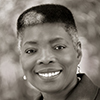
I have a strong history of providing leadership service. I serve on the APA Finance Committee and the board of the American Psychological Foundation. I served three terms on APA's Council of Representatives for Divs. 1 (Society for General Psychology) and 17 (Society of Counseling Psychology), and served as chair of the Caucus for the Optimal Utilization of New Talent and the Women's Caucus. While serving for Div. 1, I encouraged the involvement of more scientists and people of color.
I am past president of Div. 17. I have served on the APA Board of Directors for three years, and as co-chair of the Council of Student Affairs Board for the Association of Public and Land Grant Universities. I chaired the APA Board for Professional Affairs, served on the APA Ethics Committee, served on the task force to assess the change in structure of the APA Annual Convention and on the APA Good Governance Committee. I have served on APA's Board of Educational Affairs, APA President Robert Sternberg's Unity Group 2002, APA President Suzanne Bennett Johnson's Minority Advisory Group 2001, and on the transition team for APA President Richard Suinn. I chaired a committee for the Coalition of Scientists and Practitioners that worked to establish the top science priorities for the caucus. With Drs. Lisa Porche-Burke, Derald Wing Sue and Melba Vasquez, I founded the National Multicultural Conference and Summit in 1999, which continues as an APA biennial event.
My scholarship has focused primarily on multicultural career counseling. I have published two multicultural practitioner instruments, served on five journal editorial boards and currently serve on the board of the Journal of Career Assessment.
I am the recipient of numerous awards and recognitions. I am a fellow of Divs. 1, 17, 35 (Society for the Psychology of Women) and 45 (Society for the Psychological Study of Culture, Ethnicity and Race). I have won over 50 awards for distinguished professional contributions, career service, leadership, advocacy and mentorship.
I am a strong advocate for APA's mission to advance the creation, communication and application of knowledge to benefit society and improve people's lives. I embody these values both through my professional work and activities in my community. I am a founding board member and past chair of the Women's Foundation for a Greater Memphis. I serve on the Board of Trustees for the New Memphis Institute and the Board of Directors of the Baptist Women's Hospital. I recently completed service as a co-chair of Mayor Jim Strickland's Transition Team after he won the Memphis mayoral election.
Bingham's candidate statement
Colleagues, we are at a time in our history when we must be bigger than we ever thought we could be. We must be and do more than we ever thought we could be or do. APA, like the country, indeed the world, is going through a fractured time. Now is the time to deliver positive solutions that help and heal. We must own our problems and mistakes; forgive and move on to effective solutions. APA exists to benefit society and improve people's lives. As we attend to the healing within our own house, we must empower our Council of Representatives to lead us in determining what is best for our profession and society. We must call on the Board of Directors to deliver a financially sound organization that facilitates this vital work.
There are substantive problems in our society that require the knowledge and problem-solving approach that psychology offers—problems that lead to health disparities, harm, death from despair, deep poverty, pay inequity, inability to access health care, prejudice, discrimination, border conflicts and wars. This work will require that we reach out boldly to students and early career professionals, for they are the future of the profession. The task ahead requires solutions that enable us to function in a world that is more technological, more isolated, and more in need of scientific knowledge and people caring for people than at any time in history. As president, I would call on all psychologists to define the biggest problems and propose the best solutions. I want to work on healing divides in APA, overcoming the oppressions in our society, and building APA membership through outreach to psychologists who have not yet found a home in APA. Bigger than we thought; doing more than we dreamed. That's the APA I want.