
For psychologist Sarah Cleary, PhD, the Public Service Loan Forgiveness (PSLF) program isn't just about the money she hopes to save by having her loans forgiven after a decade of working with underserved populations. It's also about respect.
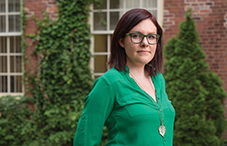 "Loan forgiveness is a way of saying, ‘We know you had a choice when you went into this career, and you chose to do something to better the country and fill a need," says Cleary, who recently finished a year as a postdoctoral fellow at Dartmouth-Hitchcock Medical Center in Lebanon, New Hampshire, where she helped children and adolescents struggling with emotional and behavioral problems. "It's like a ‘Thank you' for doing that."
But now Cleary and other psychologists, physicians, lawyers and other professionals who are counting on the PSLF program worry whether their jobs will qualify them for loan forgivenessopens in new window and whether the program itself will continue to exist.
Enacted in 2007, the program seemed straightforward: Spend a decade working in a public service job—either at a government facility or a nonprofit organization—and have the remainder of certain school loans forgiven. But in the midst of a lawsuit over which nonprofits qualify, the U.S. Department of Education announced earlier this year that program participants couldn't necessarily rely on the department's certification that their employment qualified and wouldn't know for sure until after they'd done their 10 years of service. In May, President Trump released a budget that called for eliminating the program altogether for those who start borrowing after July 2018.
"The program is under threat," says Jennifer B. Smulson, senior legislative and federal affairs officer in APA's Education Directorate. "This is at a time when we've seen an increase in the number of people living in mental health service shortage areas." And, she adds, the Bureau of Labor Statistics is predicting growing demand for entry-level employees with at least some graduate training—underscoring the need to eliminate financial barriers to graduate education.
The Monitor talked to Cleary and other psychologists whose work illustrates the important role the program plays in serving the underserved.
Strengthening the safety net
As Cleary's loans piled up during her counseling psychology program at the University of Denver, she began to worry she wouldn't be able to achieve her goal of helping the most vulnerable. Then she discovered the PSLF program and realized she could fulfill that dream without having to spend the next 25 years paying off loans. "The existence of the PSLF did play a role in informing my career choice," says Cleary, whose debt is just shy of $200,000.
In the $43,000-a-year position at Dartmouth-Hitchcock she started in July 2016, Cleary spent most of her time helping children and adolescents at West Central Behavioral Health, a Dartmouth-affiliated community mental health center in a rural area. "We saw a lot of really severe cases with intergenerational trauma and chaos," she says.
Cleary now has a new job serving an equally underserved population: the urban poor. As a psychologist at Truman Medical Center in Kansas City, Missouri, Cleary provides outpatient services to children and their families as well as to some adults. "I'll be able to help children and families, whether they can afford to pay for services or not," says Cleary, noting Truman's role as a safety-net hospital. "The earlier we're able to help children and families manage emotional and behavioral issues, the more chance those kids have at being successful later in life."
Managing serious mental illness
As a mental health practitioner at Marin County Behavioral Health and Recovery Services in San Rafael, California, Jayme L. Peta, PhD, is developing an early intervention program for low-income and uninsured people with psychosis.
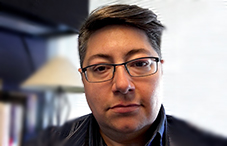 The project is also changing the dialogue about serious mental illness, says Peta. "We have a stereotype that being diagnosed with schizophrenia means a life living in supportive housing or being homeless, but that's not necessarily the outcome," says Peta, who earned a doctorate from Palo Alto University last year and started working for the county as a postdoc soon after. Catching schizophrenia early is an important part of improving the chances for recovery, says Peta. "We need to shift the way we think from a fail-first, meds-only model to full wrap-around, community-based interventions that get people back to school or work and return them to their roles in their families and communities," she says.
Peta has more than $215,000 in loans and a $65,500 salary. Without the PSLF program, she says, she would have been forced to choose a private sector job to earn the income needed to both repay her loans and save for her retirement.
More important, she says, eliminating the PSLF program would be devastating for the communities psychologists participating in the program serve. "If we're down to a trickle of psychologists and other mental health professionals able to afford working in public service, it's going to hurt the most vulnerable," she says.
Treating veterans
For Thorayya Said Giovannelli, PsyD, the real reward of working in a public sector job comes when veterans or their family members tell her what a difference she has made in her role as a staff psychologist at Virginia's Hampton Veterans Affairs Medical Center.
"A lot of veterans tell me they refrain from things like road rage because they hear my voice in their head, saying ‘Try something else,'" says Giovannelli, who has treated depression, anxiety, post-traumatic stress disorder, pain and other problems in the center's outpatient clinic for the last three and a half years. "Or if one person goes home and doesn't yell at his or her kids, that's a big change."
Knowing the PSLF program was available didn't just influence Giovannelli's career path, it also made it possible for her to consider an advanced degree.
"If I didn't have loan forgiveness on the horizon, I don't think I would have gotten a doctorate," says Giovannelli, whose educational loans are three times the size of her annual salary. Without the PSLF program, only students from well-off families could attend graduate school, she adds, limiting the diversity of the psychology workforce. "My dad was a first-generation immigrant who came to the United States from Lebanon during the civil war," says Giovannelli. "He put himself through school and got a master's. I knew I wanted to be like him."
Assisting asylum seekers
 Jessica Spigner, PhD, earns just $26,000 a year as a postdoctoral fellow at the Heartland Alliance's Marjorie Kovler Center, a Chicago nonprofit that provides comprehensive care to torture survivors seeking asylum. "Without the loan forgiveness program, I wouldn't be able to do this work and consider this for my career beyond my postdoc," says Spigner, who has $100,000 in student loans. "As much as I'm passionate about this work, I wouldn't be able to support myself."
But earning a big salary isn't why she earned her doctorate, says Spigner, who got her PhD in clinical and health psychology from the University of Florida in 2016. Instead, she is intent on serving people she calls "the least served of all people living in the United States." Fleeing political persecution, the asylum-seekers she sees aren't eligible for federal assistance and can't work. "A lot of times they've had to flee without preparation; they're just running for their lives," says Spigner. At the center, they receive free integrated physical and mental health care services.
That investment in these newcomers will pay off, says Spigner, noting that the center's clients are typically highly educated, motivated individuals who want to contribute to their new communities. "Our clients fight to be able to give back for what they've received from this country—basically their lives," she says. In the same way, she adds, she is trying to repay the nation for forgiving her loans. "Because of the way the country has invested in me, I should invest in the country by doing this kind of work," she says.
Ensuring healthy development
For Sharon Perugini, PhD, the job she has held at a Phoenix nonprofit called Southwest Human Development since 2013 is all about helping underserved minority kids get the right start in life. As part of a multidisciplinary team, Perugini assesses the development of children from birth to age 5—most of them low-income and Spanish-speaking—and provides therapy and other early intervention support as needed to the children and their families. "You get the biggest bang for your buck with the youngest population," she says.
Because of her passion for serving the most vulnerable, Perugini has intentionally chosen jobs with the PSLF criteria in mind since graduating with a doctorate from Loma Linda University in 2009. But now that she is halfway through the required 10 years of service, she is terrified that the government will renege on the deal. "My whole plan was to have my loans paid off in 10 years," says Perugini, whose educational debt amounts to four times her annual salary. If that doesn't happen, she says, it won't just mean her repayment will stretch far into her future. "Can I afford to have a family?" she asks. "It definitely has an impact on how you plan your life."
These days, Perugini isn't advocating only for her patients but also for the PSLF program, signing petitions and calling her representatives in Congress. "I don't want to sit back and do nothing," she says.
To learn more and take action, visit the Education Government Relations Office website.